


Some error occured while loading the Quick View. Please close the Quick View and try reloading the page.
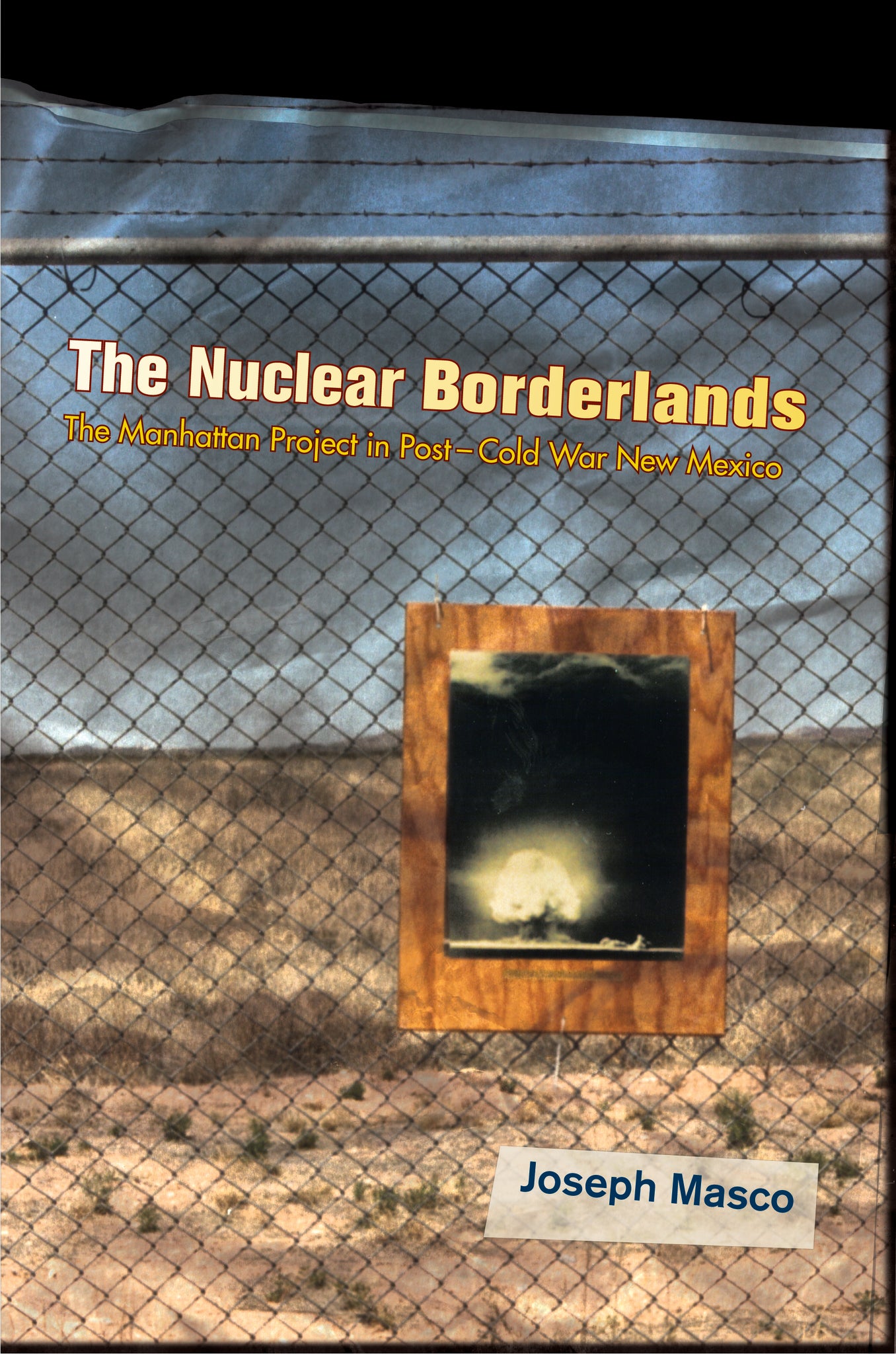
The Nuclear Borderlands explores the sociocultural fallout of twentieth-century America's premier technoscientific project--the atomic bomb. Joseph Masco offers the first anthropological study of the long-term consequences of the Manhattan Project for the people that live in and around Los Alamos, New Mexico, where the first atomic bomb, and the majority of weapons in the current U.S. nuclear arsenal, were designed. Masco examines how diverse groups--weapons scientists at Los Alamos National Laboratory, neighboring Pueblo Indian Nations and Nuevomexicano communities, and antinuclear activists--have engaged the U.S. nuclear weapons project in the post-Cold War period, mobilizing to debate and redefine what constitutes "national security."
In a pathbreaking ethnographic analysis, Masco argues that the U.S. focus on potential nuclear apocalypse during the Cold War obscured the broader effects of the nuclear complex on American society. The atomic bomb, he demonstrates, is not just the engine of American technoscientific modernity; it has produced a new cognitive orientation toward everyday life, provoking cross-cultural experiences of what Masco calls a "nuclear uncanny." Revealing how the bomb has reconfigured concepts of time, nature, race, and citizenship, the book provides new theoretical perspectives on the origin and logic of U.S. national security culture. The Nuclear Borderlands ultimately assesses the efforts of the nuclear security state to reinvent itself in a post-Cold War world, and in so doing exposes the nuclear logic supporting the twenty-first-century U.S. war on terrorism.
