


Some error occured while loading the Quick View. Please close the Quick View and try reloading the page.
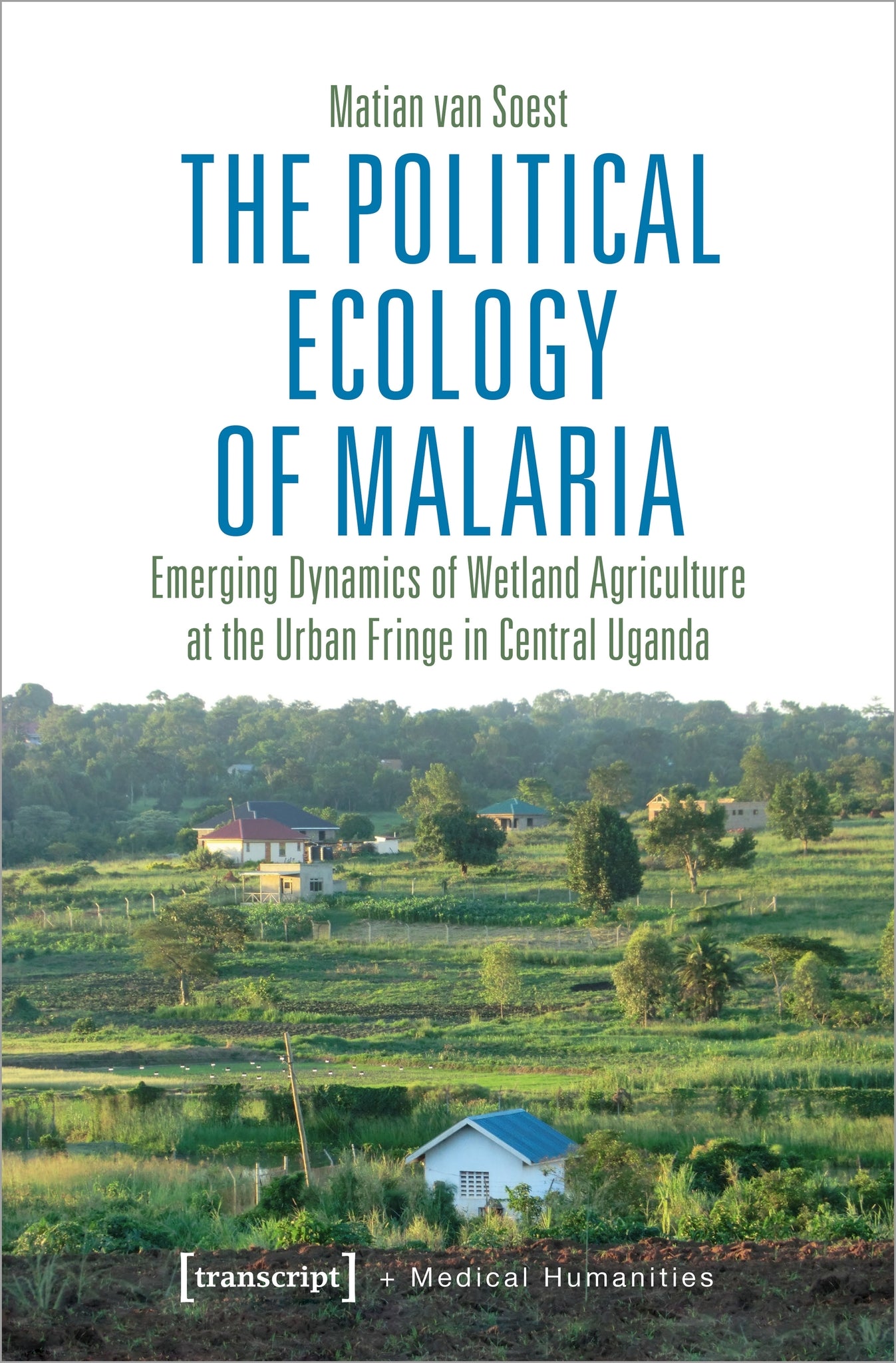
Malaria remains one of the main causes of mortality and morbidity in sub-Saharan Africa. Matian van Soest looks at the malaria epidemic in the peri-urban zones of Uganda's capital Kampala against the backdrop of recent socio-ecological transformations.
Based on long-term ethnographic research, the book provides a holistic picture of the malaria epidemic in central Uganda, revealing the highly localized character of an epidemic that once spanned across almost the entire globe. Understanding, and ultimately tackling the disease, requires an appreciation of the social, political, as well as ecological circumstances that frame this epidemic.

Frontmatter 1
Contents 5
Acknowledgments 9
Abbreviations 11
Figures and Tables 13
Relevance of the study and literature 16
The need for an ecological context 18
Research questions 20
Outline of the book 22
Introduction 25
Global Perspective 27
The parasite's life cycle 30
The interplay of humans, mosquitoes, and parasites 32
Malaria in numbers 34
Progression of the disease 40
Malaria testing and treatment of clinical malaria 43
Malaria treatment 44
Local understandings of malaria 45
Plurality of meanings, syncretic models 46
Perceptions of malaria: a "killer disease"? 48
Initial considerations 52
Interdisciplinary research projects and their methodological implications 54
Qualitative research in a foreign research setting: the issue of language 55
Working with an interpreter 57
Hiring an assistant 63
Doing research, constructing the field 65
Positionality: A German researcher in Uganda 69
Doing research in a health facility 74
Central Uganda 79
Infrastructure 84
The Namulonge Research Farm 86
Wetlands 88
Land ownership and land use 90
Structural adjustment: the 1998 Uganda Land Act 91
Colonial legacies: the introduction of mailo land 92
Mailo land in Namulonge 96
Health in local context 97
Health care in Uganda 97
Introduction 101
Self-medication and individualized conceptions of health 109
Mapping healthcare 112
Healthcare in Uganda: Historical Perspective 114
Formalized healthcare 117
Informal healthcare 119
Introduction 129
Costs of biomedical malaria treatment 134
Malaria treatment outside the biomedical arena 138
Peter 141
Gerald 146
Mukyala Nakakande 149
Wetland agriculture and mosquitoes 155
Malaria and Agriculture 157
Wetlands as economic resource 160
Wetland mining 163
Fisheries 165
Malaria and agriculture: local perceptions 167
Malaria campaigns and wetland agriculture 169
Wetlands as a last resort 170
The ambivalent character of wetlands 178
Introduction 181
Outlook 186
References 191