


Some error occured while loading the Quick View. Please close the Quick View and try reloading the page.
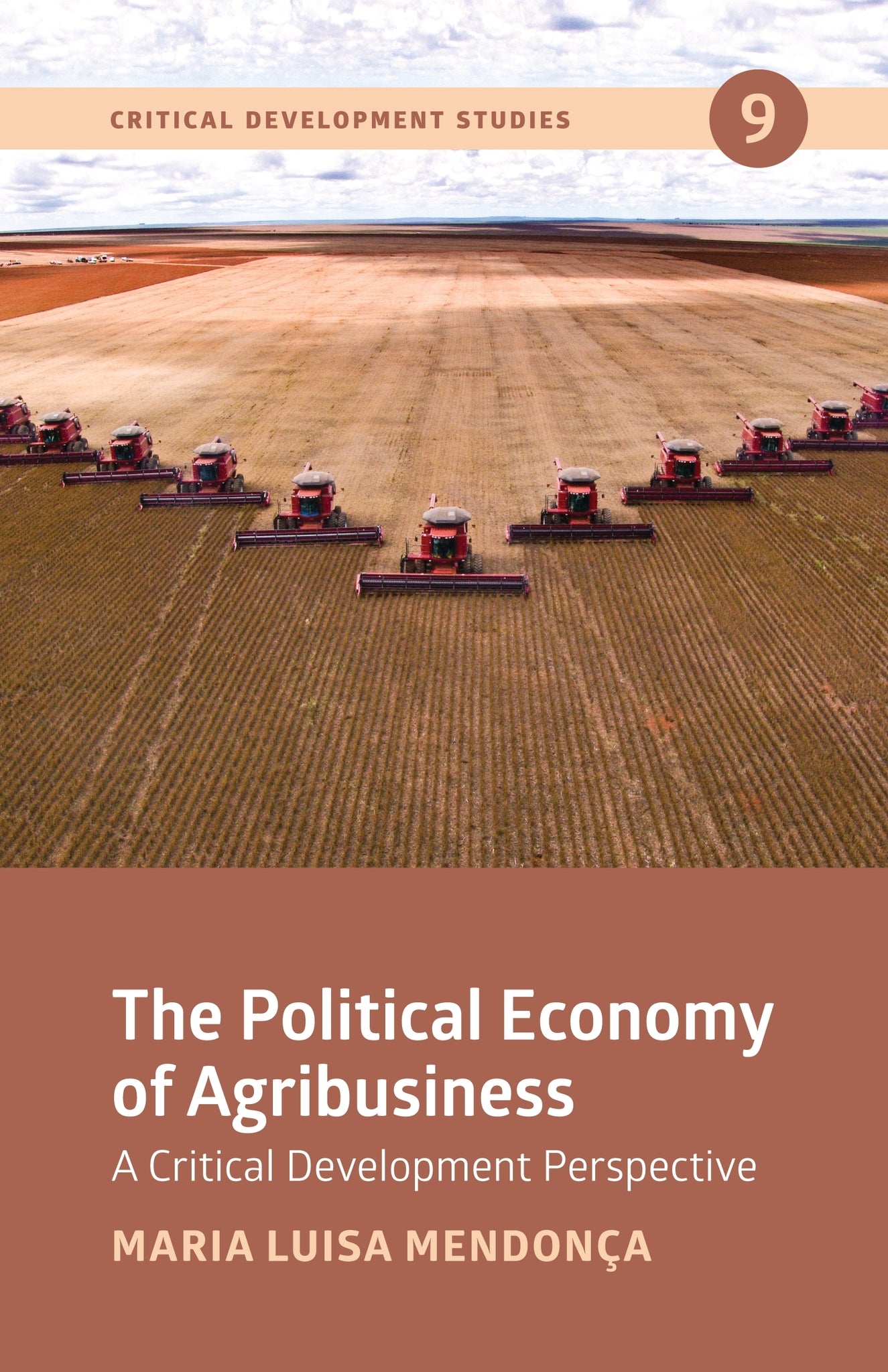
What is agribusiness? When did it emerge? In answering these questions, Mendonça traces the global contours of contemporary agriculture, bringing a critical analysis of the origins of agribusiness in the United States and its subsequent international signature. The investigation of historical dynamics reveals that the industrialization of agriculture was a result of a dialectical movement of economic crisis and expansion. This analysis sheds new light on current debates about food sovereignty, agriculture technologies, international financial markets and farmland speculation.
Mendonça challenges the established contemporary discourse regarding the contribution that agribusiness makes to economic development. Industrialization of agriculture demands increasing amounts of credit for capital inputs, which are captured by agribusiness corporations, leading to market concentration. This explains how global economic policies directly impact land and food systems, as across the production “chain” multinational corporations control production and trading mechanisms.
For those who are new to the study of agribusiness, this book provides a clear introduction to global trends. For those more engaged it serves as a valuable overview, an excellent text for students involved in studies of agriculture and food sovereignty.

The Political Economy of Agribusiness by Maria Luisa Mendonça is a
brilliantly written small book about a huge issue confronting humanity:
agribusiness – and how it causes social problems such as land grabbing,
inequality and exploitation, and provokes resistance. It is a must-read for
academics and activists alike.
— Saturnino M. Borras Jr., International Institute of Social Studies (ISS), Netherlands
Maria Luisa Mendonça is director of Rede Social de Justiça e Direitos Humanos (Network for Social Justice and Human Rights) and research scholar at the Center for Place, Culture and Politics, CUNY Graduate Center. She is the editor of annual book Human Rights in Brazil, and her publications cover the history and political economy of agriculture, food, land and water systems, as well as geopolitical processes of resistance by rural social movements. Her research anticipated a trend in financial capital to “migrate” to farmland markets in the Global South after the collapse of the real estate market in the US in 2008. Her experience includes documentary filmmaking, investigative journalism, and community-based research. She has taught international political economy at University of Rio de Janeiro (UERJ) and at Fundação Getúlio Vargas (FGV), and was a visiting scholar at Cornell University. Mendonça is a co-founder of the World Social Forum and has served in expert meetings on the Right to Food at the United Nations.
Chapter 1:: The Concept of Agribusiness
Chapter 2:: Land as a Mechanism of Financial Accumulation
Chapter 3:: Socioeconomic Impacts of Financial Speculation and Land Grabbing
Chapter 4:: Geopolitical Mechanics of Control Over Land
Chapter 5:: Resistance by Social Movements to Build Food Sovereignty