


Some error occured while loading the Quick View. Please close the Quick View and try reloading the page.
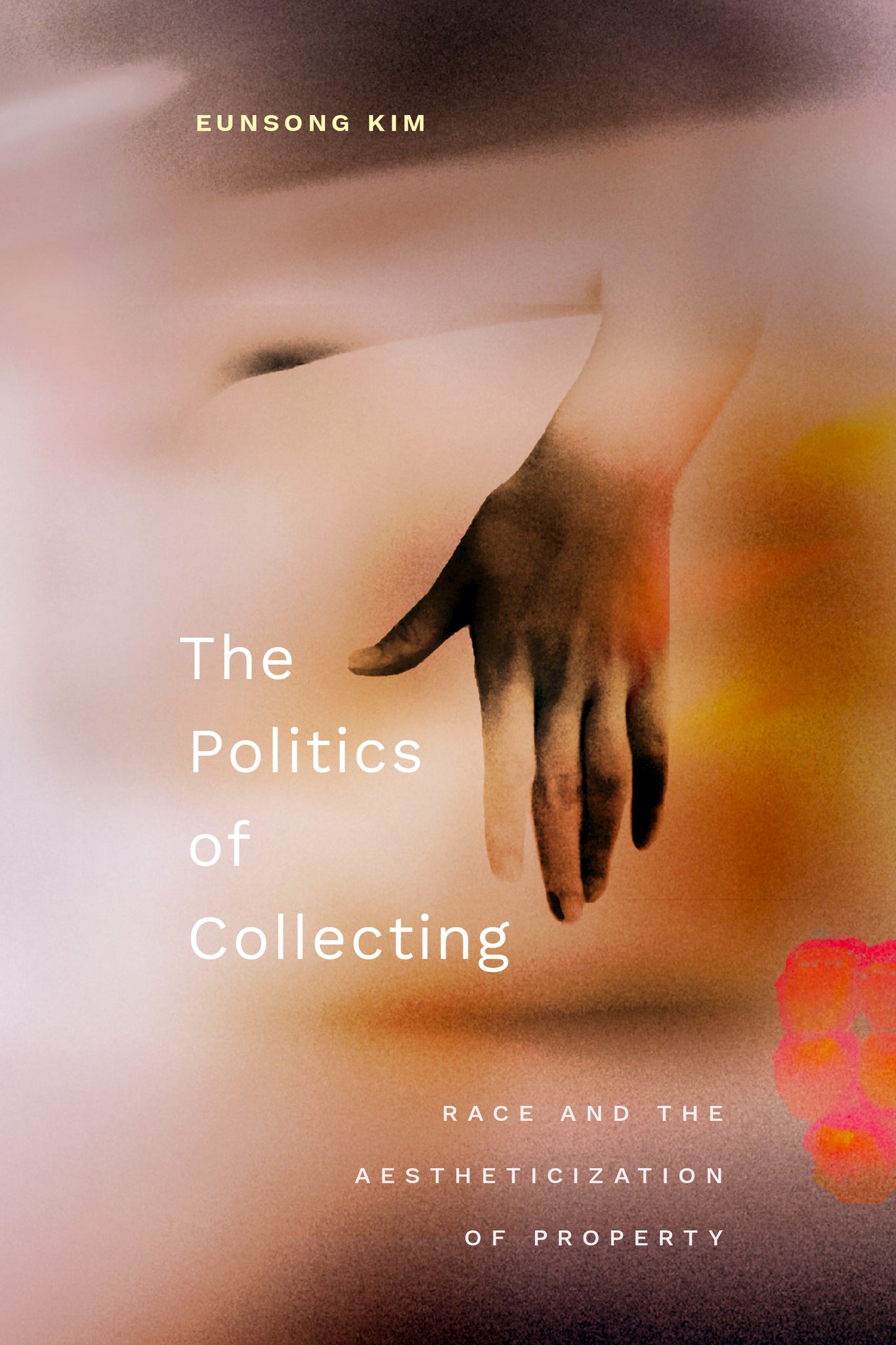
In The Politics of Collecting, Eunsong Kim traces how racial capitalism and colonialism situated the rise of US museum collections and conceptual art forms. Investigating historical legal and property claims, she argues that regimes of expropriation—rather than merit or good taste—are responsible for popular ideas of formal innovation and artistic genius. In doing so, she details how Marcel Duchamp’s canonization has more to do with his patron’s donations to museums than it does the quality of Duchamp’s work, and she uncovers the racialized and financialized logic behind the Archive of New Poetry’s collecting practices. Ranging from the conception of philanthropy devised by the robber barons of the late nineteenth century to ongoing digitization projects, Kim provides a new history of contemporary art that accounts for the complicated entanglement of race, capital, and labor behind storied art institutions and artists. Drawing on history, theory, and economics, Kim challenges received notions of artistic success and talent and calls for a new vision of art beyond the cultural institution.

Price: $28.95
Pages: 328
Publisher: Duke University Press
Imprint: Duke University Press
Publication Date:
02 August 2024
Trim Size: 9.00 X 6.00 in
ISBN: 9781478030485
Format: Paperback
BISACs:
“Eunsong Kim is one of the most original critics of art and poetics. In The Politics of Collecting, she deftly situates conceptual art and experimental poetry—their formal aesthetics, practices of collection, and market logics—within the history of capitalism and colonialism, demonstrating that colonial extraction and expropriation of land and labor are the condition of possibility for museums, archives, and poetry collection.”—Lisa Lowe, author of, The Intimacies of Four Continents
“Eunsong Kim’s The Politics of Collecting is a remarkable achievement, deftly weaving museum culture, aesthetics, and Marxist analysis together to grapple with what lies beneath: the pernicious effects of racial capitalism that pervade histories of museum collections. In her case studies, Eunsong Kim examines establishments from the Getty to the Carnegie, the Archive for New Poetry and the Frick in order to consider the production of art collecting as an archive of settler colonialism, white supremacy, and antiblackness. In the depth, elegance, and fluidity of her readings, The Politics of Collecting coalesces into a multifaceted book that only Kim could write.”—Kimberly Juanita Brown, author of, Mortevivum: Photography and the Politics of the Visual
"Eunsong Kim’s new book may very well upend many of the art historical orthodoxies of the last 40 years. . . . This is a very stimulating read, sure to ignite much debate and perhaps even shift the field in interesting new ways."—Hrag Vartanian, Hyperallergic
"The Politics of Collecting is a... challenging, but rewarding academic text that lays bare the often-hidden, tangled mechanisms of race, finances, aesthetics, and property at the foundation of art, archives, museums, and poetry."—Kara Carmack, H-Material-Culture
"Perhaps the most trenchant critique of the imbrication of art, property and racialization today can be found in scholar Eunsong Kim’s 2024 book The Politics of Collecting, in which she traces how the mid-19th-century consolidation of wealth in the hands of US robber barons and monopolies through violent union-busting also constructed the philosophies of accumulation, acquisition and taxonomization that characterize museums today."
—Simon Wu, Frieze
"Crossing boundaries in literary and critical digital studies, visual culture, museology, and modernity, Kim examines museums, avant-garde forms, digitization, and neoliberal aesthetics in terms of artistic institutional genealogy, particularly through the lenses of labor studies and art history, critical race studies, and material goods. . . . Stunningly researched, this volume is not to be missed. It will interest those studying the history of collecting, museum studies, art history, poetry, literary and critical studies, and labor studies. Highly recommended."—J. Decker, Choice
"Kim’s study provides a hugely important and nuanced assessment of the social and economic relationships between museums and academia."—Richard Hylton, Art History
"Exquisite. . . . An insight that has rich and wide resonances for our current moment."—Laura Elizabeth Vrana, ASAP/Review
“Eunsong Kim’s The Politics of Collecting is a remarkable achievement, deftly weaving museum culture, aesthetics, and Marxist analysis together to grapple with what lies beneath: the pernicious effects of racial capitalism that pervade histories of museum collections. In her case studies, Eunsong Kim examines establishments from the Getty to the Carnegie, the Archive for New Poetry and the Frick in order to consider the production of art collecting as an archive of settler colonialism, white supremacy, and antiblackness. In the depth, elegance, and fluidity of her readings, The Politics of Collecting coalesces into a multifaceted book that only Kim could write.”—Kimberly Juanita Brown, author of, Mortevivum: Photography and the Politics of the Visual
"Eunsong Kim’s new book may very well upend many of the art historical orthodoxies of the last 40 years. . . . This is a very stimulating read, sure to ignite much debate and perhaps even shift the field in interesting new ways."—Hrag Vartanian, Hyperallergic
"The Politics of Collecting is a... challenging, but rewarding academic text that lays bare the often-hidden, tangled mechanisms of race, finances, aesthetics, and property at the foundation of art, archives, museums, and poetry."—Kara Carmack, H-Material-Culture
"Perhaps the most trenchant critique of the imbrication of art, property and racialization today can be found in scholar Eunsong Kim’s 2024 book The Politics of Collecting, in which she traces how the mid-19th-century consolidation of wealth in the hands of US robber barons and monopolies through violent union-busting also constructed the philosophies of accumulation, acquisition and taxonomization that characterize museums today."
—Simon Wu, Frieze
"Crossing boundaries in literary and critical digital studies, visual culture, museology, and modernity, Kim examines museums, avant-garde forms, digitization, and neoliberal aesthetics in terms of artistic institutional genealogy, particularly through the lenses of labor studies and art history, critical race studies, and material goods. . . . Stunningly researched, this volume is not to be missed. It will interest those studying the history of collecting, museum studies, art history, poetry, literary and critical studies, and labor studies. Highly recommended."—J. Decker, Choice
"Kim’s study provides a hugely important and nuanced assessment of the social and economic relationships between museums and academia."—Richard Hylton, Art History
"Exquisite. . . . An insight that has rich and wide resonances for our current moment."—Laura Elizabeth Vrana, ASAP/Review
Eunsong Kim is Associate Professor of English at Northeastern University.
Prelude. On Motivations ix
Acknowledgments xiii
Introduction 1
1. Personal Collection and the Museum Form: Racial Capitalism, Settler Colonialism, and the Legacies of the Homestead Strike of 1892 33
2. Scientific Management and Conceptual Art: The Invention of the Artist Manager 62
3. Whiteness as Property and Found Object Art: Collecting and Canonizing Marcel Duchamp 92
4. Whiteness and the New: Neoliberalism and the Building of the Archive for New Poetry 118
5. Colonially Bound, Digitally Free: On the Distance between Object and Image 146
6. Neoliberal Aesthetics: The Legacies of the White Modernism 178
Coda. On Inoperation and Glory 208
Notes 215
Bibliography 273
Index 295
Acknowledgments xiii
Introduction 1
1. Personal Collection and the Museum Form: Racial Capitalism, Settler Colonialism, and the Legacies of the Homestead Strike of 1892 33
2. Scientific Management and Conceptual Art: The Invention of the Artist Manager 62
3. Whiteness as Property and Found Object Art: Collecting and Canonizing Marcel Duchamp 92
4. Whiteness and the New: Neoliberalism and the Building of the Archive for New Poetry 118
5. Colonially Bound, Digitally Free: On the Distance between Object and Image 146
6. Neoliberal Aesthetics: The Legacies of the White Modernism 178
Coda. On Inoperation and Glory 208
Notes 215
Bibliography 273
Index 295