


Some error occured while loading the Quick View. Please close the Quick View and try reloading the page.
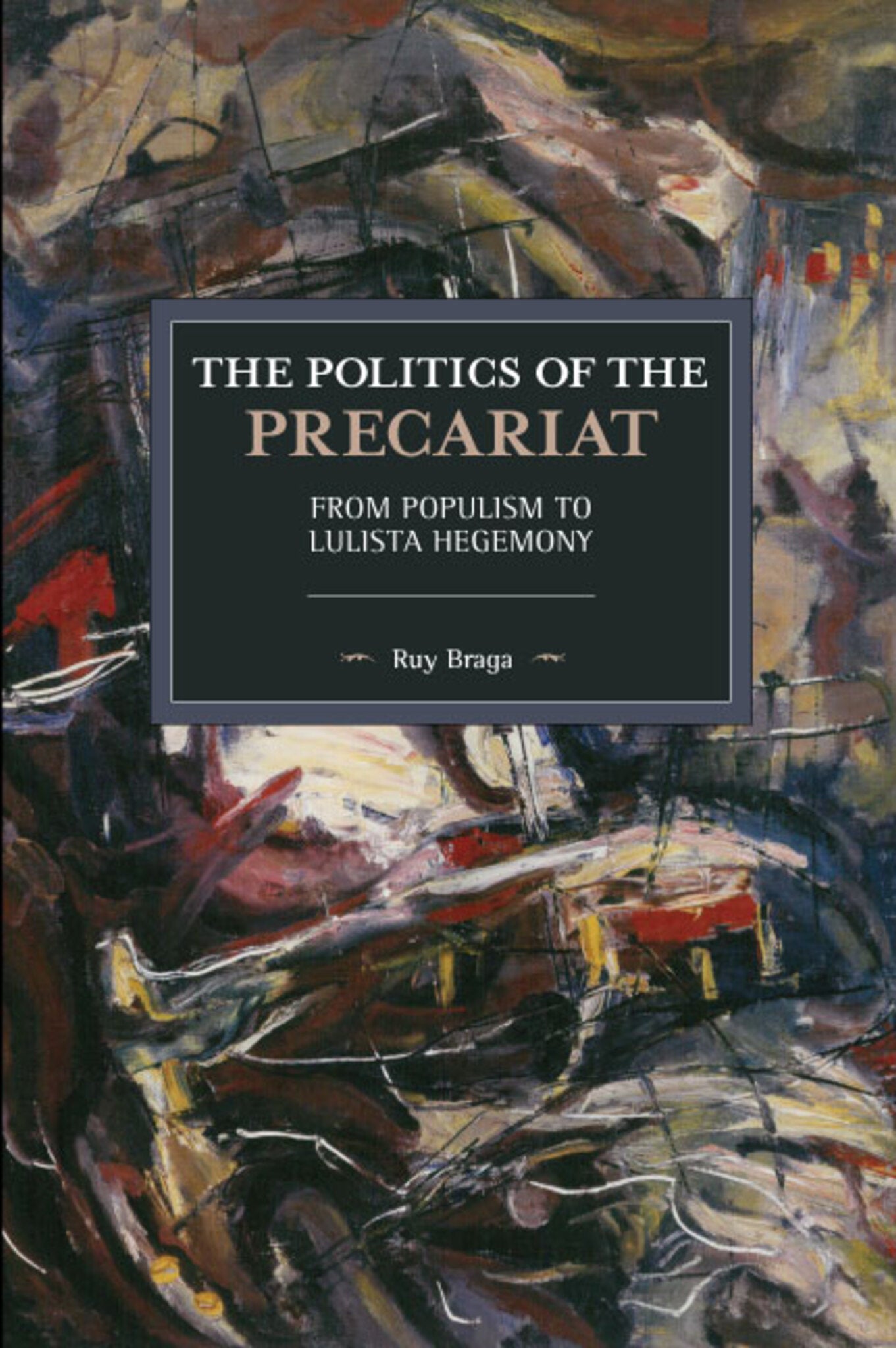
Making use of the theoretical tools of Marxist critical sociology, Ruy Braga proposes an innovative reading of the social history of Brazil—from Fordist populism to the Lulista hegemony—using the "politics of the precariat" as an analytical vector. Braga's analysis seeks to explain both economic and structural processes (peripheral Fordism, its crisis, the transition to financialised post-Fordism) and the subjective dimension of the proletariat suffering from precarity (the anxiety of the subordinate, the preoccupation of the worker, the plebeian or classist drive of the exploited). At the moment when the plebeian drive is once again stimulating strike activity in the country, underlined by the protests that have recently shaken Brazil, this book impels us to reflect on the limits of the current model of Brazilian development.
First published in Portuguese as A política do precariado: do populismo à hegemonia lulista by Boitempo Editorial in 2012.

“Basing himself extended ethnography, historical research, and Gramscian theory, Ruy Braga offers a brilliant diagnosis of the rise and fall of Brazil’s Workers’ Party, and of the fragility of the hegemony that held Brazil together for nearly 15 years. Necessary reading for anyone who wishes to understand the impasse of the present crisis.”
—Michael Burawoy, Professor, University of California, Berkeley
“Ruy Braga's new book is eminently radical, critical and subversive, inspired by an unyielding commitment to the cause of the 'precariat', its self-activity and its struggle for emancipation. This book proposes an innovative reading of the social history of Brazil from Fordist populism to the current political crisis.”
—Michael Löwy, Emeritus Research Director in social sciences at the CNRS
“Weaving together theoretical debate, historical analysis and ethnographic observation, Braga offers a brilliant portrayal of the contemporary Brazilian working class and creates a vibrant debate with European theorists of precarity.”
—Peter Evans, Professor Emeritus, University of California, Berkeley
“Braga's book has many merits [...] Despite focusing on the relationship between unions and precarious workers, it pays attention to alliances between unions and social movements, highlighting the interconnection between mobilisations in the sphere of production and reproduction.”
—Andréia Galvão, Global Labour Journal
“[A] fascinating and critical account of the precariat’s class politics in Brazil, from the 1950s till the end of Lula’s presidency.”
—Hugo Goeury, Capital & Class
Ruy Braga, Ph.D. (2002), University of Campinas, is professor in the Sociology Department at the University of São Paulo. He has published many books and articles on Brazil, including Hegemonia às avessas (Boitempo Editorial, 2010), along with Francisco de Oliveira, as well as Infoproletários (Boitempo Editorial, 2009), along with Ricardo Antunes.
Table of Contents
Preface
Michael Löwy
List of Tables and Figures
Introduction
Part 1 The Formation of the Reversal
1 The Spectre of the People
The Sociology of Modernisation Encounters the Working Class
Unions in Peripheral Fordism
Populism and the Migrant Precariat
Between the Archaic and the Modern: An Ethnography of the Precariat
Working-Class Archaeology: Populism in Reverse
From Fordist Mirage to the Politics of the Precariat
Final Considerations
2 The Fatalism of the Weak
Sociology of Applied Work: The Limits of Bureaucratic Unionism
Public Sociology of Work: Towards Working-Class Independence
The Precarious Hegemony of Peripheral Fordism
From Populism to Social Discontent (and Vice-versa)
Critical Sociology of Work: Discontent as Disalienation
For a Sociology of Working-Class Discontent
Final Considerations
Part 2 The Transformation of Hegemony in Reverse
3 The Smile of the Exploited
Work and Politics in São Bernardo
The Despotic Factory Regime and the Metalworker Precariat
Peons 1: From Contingent Consciousness to Necessary Consciousness
Peons 2: From the Union Bureaucracy to the Metalworker Vanguard
Peons 3: From Rank-and-File Rebellion to Strike Waves
Precarious Hegemony: The Return of Bureaucratic Power?
Final Considerations
4 The Anguish of the Subalterns
Post-Fordism and the Neoliberal Company
A Peripheral and Post-Fordist Precariat
Discontent and Consent in the Call-Centre Industry
Unionism in the Telemarketing Sector
Lulista Hegemony: Between Social Discontent and Active Will
Telemarketers: The Reverse of the Reverse
Final Considerations
Conclusion: "Let's Play That?"
Interventions
1 Dilma and the Brazilian Utopia
2 Unrest in the Kitchen
3 Chronicle of an Unforgettable Month
4 For a Sociology Worthy of June
5 Rosa Parks in Itaquera
6 The Most Visible Colour
7 Challenging Hegemony
8 The Era of Pillage
9 The End of Lulism and the Palace Coup in Brazil
Bibliography
Index