


Some error occured while loading the Quick View. Please close the Quick View and try reloading the page.
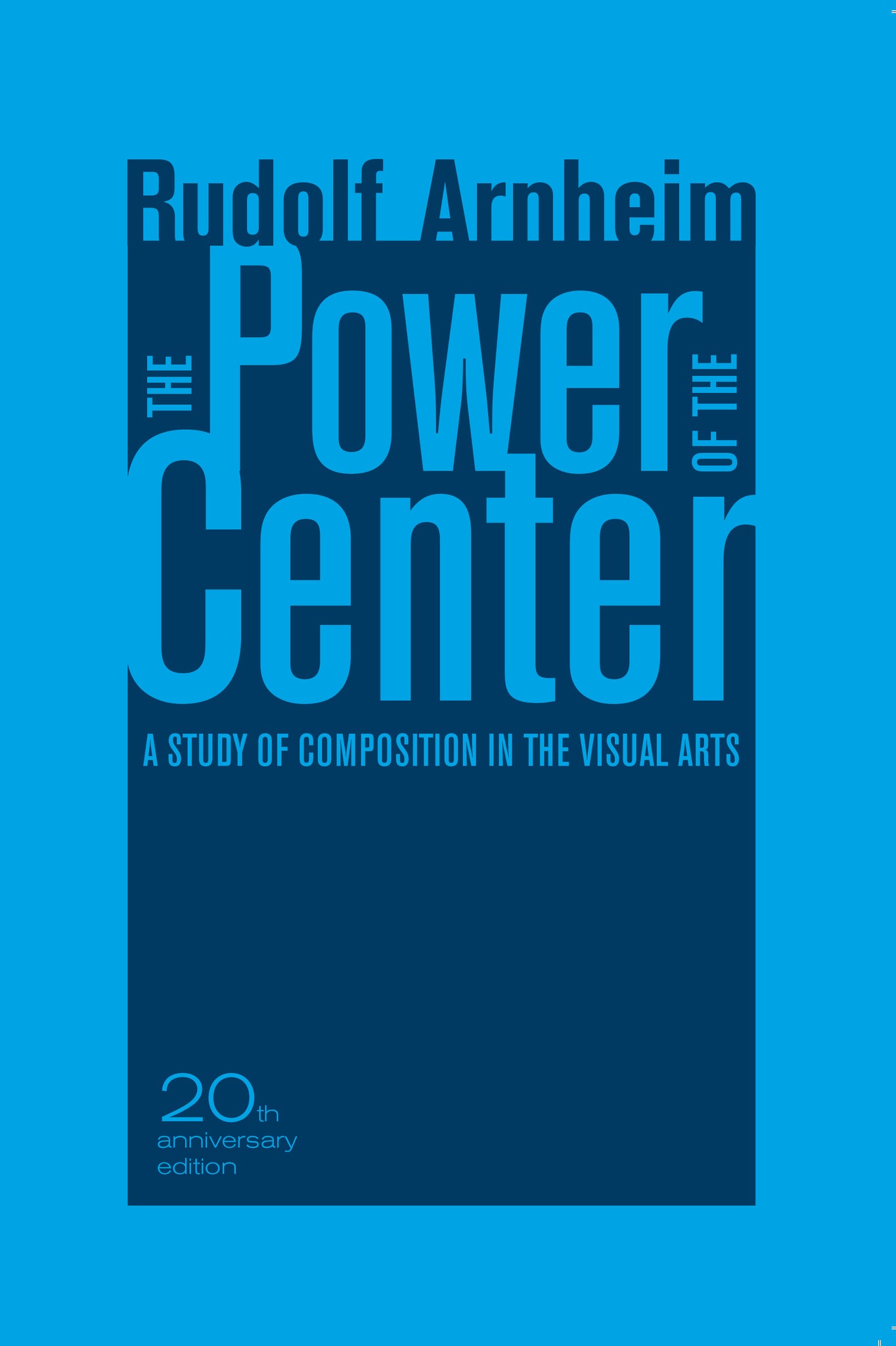
What determines the overall organization of visual form in the works of painting, sculpture, and architecture? Artists have sometimes ventured practical rules of thumb, and mathematicians have looked for formulas that would prescribe ideal spatial relations between shapes. This companion to Rudolf Arnheim's classic, Art and Visual Perception, shows how compositional form makes sense only when it utilizes visual symbols of the life experience that makes art meaningful.

Price: $34.95
Pages: 250
Publisher: University of California Press
Imprint: University of California Press
Publication Date:
19 October 2009
Trim Size: 9.00 X 6.00 in
ISBN: 9780520261266
Format: Paperback
BISACs:
"Arnheim was a distinguished psychologist, philosopher and critic whose work explored the cognitive basis of art—how we interpret it and, by extension, the world."
Rudolf Arnheim (1904—2007) was Professor Emeritus of the Psychology of Art at Harvard University and Emeritus Professor of Psychology at Sarah Lawrence College. He was author of many books, including Art and Visual Perception, Film as Art, and Visual Thinking.
Introduction
I. TWO SPATIAL SYSTEMS
A master key to composition. Centricity and eccentricity. Vectors
and their targets. Interaction of the systems.
II. CENTERS AND THEIR RIVALS
Geometric and dynamic. The pull of gravity. The visual center
underneath. Varieties of weight.
Sculpture and the ground. Matisse under pressure.
III. THE VIEWER AS A CENTER
Self-centered vision. Various positions in space. A slab in suspense.
Seeing the world sideways. The viewer as an influence. Looking into depth.
IV. LIMITS AND FRAMES
Enclosures spread energy. Tampering with the range. The functions of frames.
Framed space not quite closed. Rectangular formats. Challenges to the middle.
Perspective creates a center.
V. TONDO AND SQUARE
Floating shapes. Tondi stress the middle. The role of eccentricity.
Disks inside. The oval. Squares balance the coordinates. Albers's nests of squares.
Mondrian overrides centricity. A square by Munch.
VI. CENTERS AS HUBS
Providing stability. Tension through deviation. Dynamics of the human figure.
Saltimbanques and Guernica.
VII. CENTERS AS DIVIDERS
Bipolar composition. The necessary latch. Diagonals. Noli me tangere.
VIII. VOLUMES AND NODES
Volumes and vectors interacting. Kinds of nodes. Nodes of the body. Faces and hands.
Singing man.
IX. SPACE IN DEPTH
Perceiving the third dimension. Objects behaving in space. Enclosures replacing frames.
The added view of projection. Continuity of space. What perspective contributes. Time in
space. The symbolism of the frontal plane.
X. CENTERS AND GRIDS IN BUILDINGS
Grids prevail. Design in elevation. Design on the ground. Coping with full space.
XI. FURTHERMORE
Composition in time. Are there exceptions? A physical foundation. Composition carries meaning.
Glossary
Bibliography
Acknowledgments
Index
I. TWO SPATIAL SYSTEMS
A master key to composition. Centricity and eccentricity. Vectors
and their targets. Interaction of the systems.
II. CENTERS AND THEIR RIVALS
Geometric and dynamic. The pull of gravity. The visual center
underneath. Varieties of weight.
Sculpture and the ground. Matisse under pressure.
III. THE VIEWER AS A CENTER
Self-centered vision. Various positions in space. A slab in suspense.
Seeing the world sideways. The viewer as an influence. Looking into depth.
IV. LIMITS AND FRAMES
Enclosures spread energy. Tampering with the range. The functions of frames.
Framed space not quite closed. Rectangular formats. Challenges to the middle.
Perspective creates a center.
V. TONDO AND SQUARE
Floating shapes. Tondi stress the middle. The role of eccentricity.
Disks inside. The oval. Squares balance the coordinates. Albers's nests of squares.
Mondrian overrides centricity. A square by Munch.
VI. CENTERS AS HUBS
Providing stability. Tension through deviation. Dynamics of the human figure.
Saltimbanques and Guernica.
VII. CENTERS AS DIVIDERS
Bipolar composition. The necessary latch. Diagonals. Noli me tangere.
VIII. VOLUMES AND NODES
Volumes and vectors interacting. Kinds of nodes. Nodes of the body. Faces and hands.
Singing man.
IX. SPACE IN DEPTH
Perceiving the third dimension. Objects behaving in space. Enclosures replacing frames.
The added view of projection. Continuity of space. What perspective contributes. Time in
space. The symbolism of the frontal plane.
X. CENTERS AND GRIDS IN BUILDINGS
Grids prevail. Design in elevation. Design on the ground. Coping with full space.
XI. FURTHERMORE
Composition in time. Are there exceptions? A physical foundation. Composition carries meaning.
Glossary
Bibliography
Acknowledgments
Index