


Some error occured while loading the Quick View. Please close the Quick View and try reloading the page.
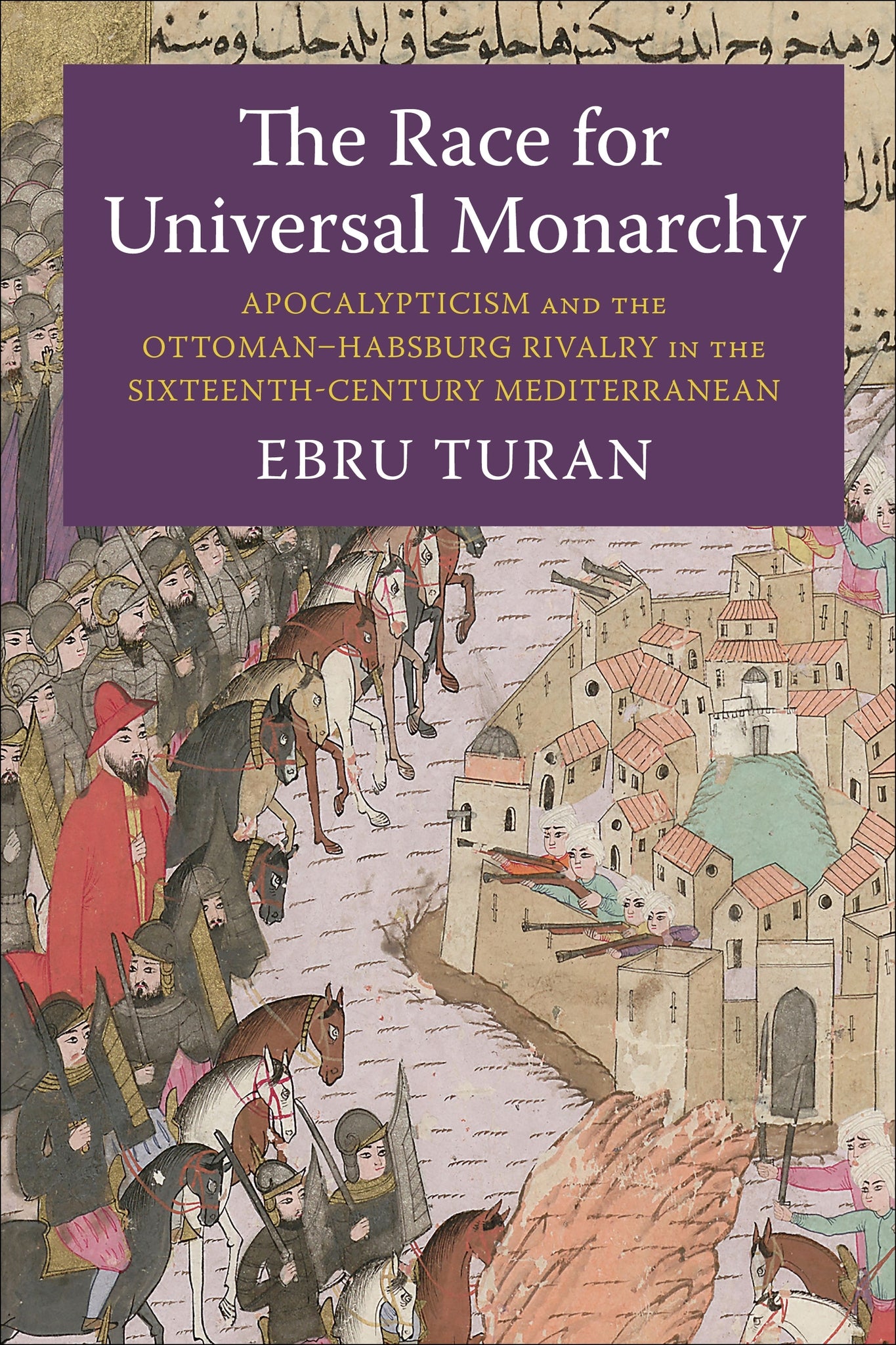
The early sixteenth century saw the rise of two Mediterranean empires—the Christian Habsburgs, based in Spain and Austria, and the Muslim Ottomans, centered in the Balkans and Anatolia—with strikingly similar ambitions. Holy Roman Emperor Charles V (1500–1558) and Sultan Süleyman (1495–1566) each pursued grand universalist visions, seeking to unite Islam and Christendom under a universal monarchy that would resolve wars and conflicts, dissolve religious divisions, and usher in an age of peace, unity, and justice.
Drawing on a wide range of Ottoman and European sources, Ebru Turan explores the emergence of these empires and the early phase of their rivalry within the broader Mediterranean world. She argues that the late medieval crusading movement, which aimed to conquer Islamic lands and convert Muslims to Christianity, was infused with apocalyptic and messianic expectations in both the Latin West and the Ottoman Empire. While Charles V was hailed as a prophesied figure destined to conquer the Islamic East and restore the ancient Roman Empire, Süleyman contested these claims by positioning himself as the rightful heir to the Roman Caesars. Like his rival, he embraced a messianic identity, aspiring to conquer Christendom and unite the world under Islamic rule.
Innovative in its approach and provocative in its conclusions, The Race for Universal Monarchy transcends traditional East and West dichotomies, highlighting both empires’ efforts to build a global community of peace and harmony.

— Giancarlo Casale, professor of early modern history of the Mediterranean, European University Institute
Acknowledgments
Notes on Transliteration, Dates, Terminology, and Pronunciation
Introduction
1. The Habsburgs: Birth of a World Power (1273–1516)
2. The Ottomans and the Quest for Universal Rule, c. 1396–1516
3. The Mamluk Conquest (1516–1517) and Emperor Maximilian’s Crusade Plan
4. The Ascent of Charles V: The Making of a World Emperor (1516–1520)
5. The Accession of Sultan Süleyman and His Early Conquests (1520–1522)
6. The Rise of İbrahim Pasha and Alvise Gritti (1523)
7. The Mohács Campaign (1526)
8. Ottoman Imperial Messianism
Conclusion
Notes
Bibliography
Index