


Some error occured while loading the Quick View. Please close the Quick View and try reloading the page.
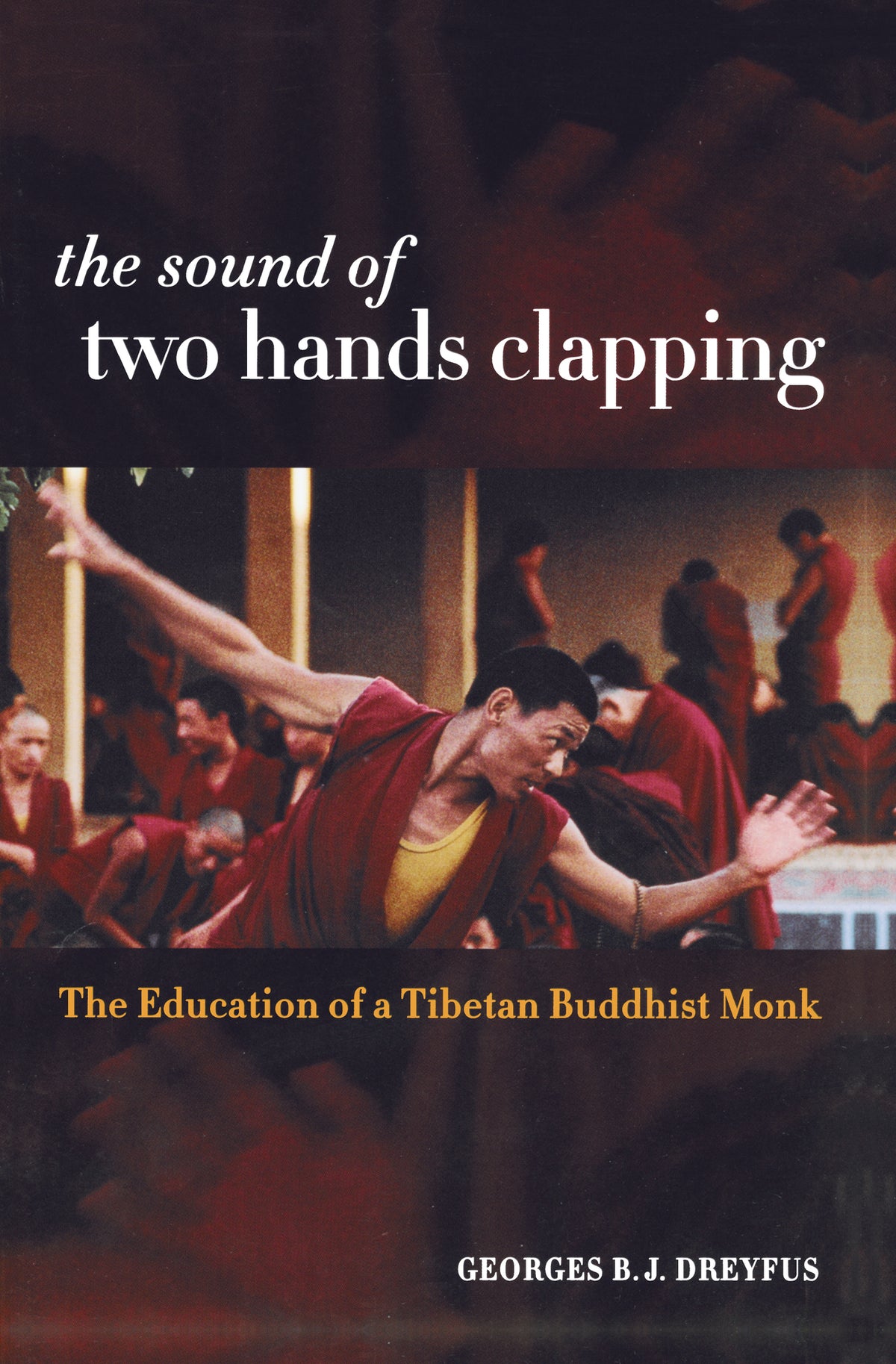
A unique insider's account of day-to-day life inside a Tibetan monastery, The Sound of Two Hands Clapping reveals to Western audiences the fascinating details of monastic education. Georges B. J. Dreyfus, the first Westerner to complete the famous Ge-luk curriculum and achieve the distinguished title of geshe, weaves together eloquent and moving autobiographical reflections with a historical overview of Tibetan Buddhism and insights into its teachings.

Price: $33.95
Pages: 460
Publisher: University of California Press
Imprint: University of California Press
Publication Date:
28 January 2003
Trim Size: 9.00 X 6.00 in
ISBN: 9780520232600
Format: Paperback
BISACs:
Georges B. J. Dreyfus is Professor of Religion at Williams College. He is author of The Svatantrika-Prasangika Distinction: What Difference Does a Difference Make? (coedited with Sara McClintock, 2002), Recognizing Reality: Dharmakirti's Philosophy and Its Tibetan Interpretations (1997), and A Recent Rediscovery: rGyal tshap's Rigs gter rnam bshad (in collaboration with S. Onoda, 1994).
List of Illustrations
Note on Translation and Transliteration
Acknowledgments
Introduction
Part I. The Context
1. Tibetan Buddhism: A Brief Historical Overview
2. Tibetan Monasticism
3. Becoming a Monk: Teacher and Discipline
Part II. Tibetan Scholastic Practices
4. Literacy and Memorization
5. The General Structure of the Tibetan Curriculum
6. Two Curricular Models
7. Scholasticism and Orality: Myth and Reality
8. Commentary and Meditation
9. The Supplement: Hermeneutical or Deconstructive?
10. Debate as Practice
11. Debate in the Curriculum
12. Is Debate a Mode of Inquiry?
Part III. Reflections
13. Rationality and Spirit Cult
14. The Limits of the Inquiry
Conclusion: Past and Future Uncertainties
Notes
Select Bibliography
Index
Note on Translation and Transliteration
Acknowledgments
Introduction
Part I. The Context
1. Tibetan Buddhism: A Brief Historical Overview
2. Tibetan Monasticism
3. Becoming a Monk: Teacher and Discipline
Part II. Tibetan Scholastic Practices
4. Literacy and Memorization
5. The General Structure of the Tibetan Curriculum
6. Two Curricular Models
7. Scholasticism and Orality: Myth and Reality
8. Commentary and Meditation
9. The Supplement: Hermeneutical or Deconstructive?
10. Debate as Practice
11. Debate in the Curriculum
12. Is Debate a Mode of Inquiry?
Part III. Reflections
13. Rationality and Spirit Cult
14. The Limits of the Inquiry
Conclusion: Past and Future Uncertainties
Notes
Select Bibliography
Index