


Some error occured while loading the Quick View. Please close the Quick View and try reloading the page.
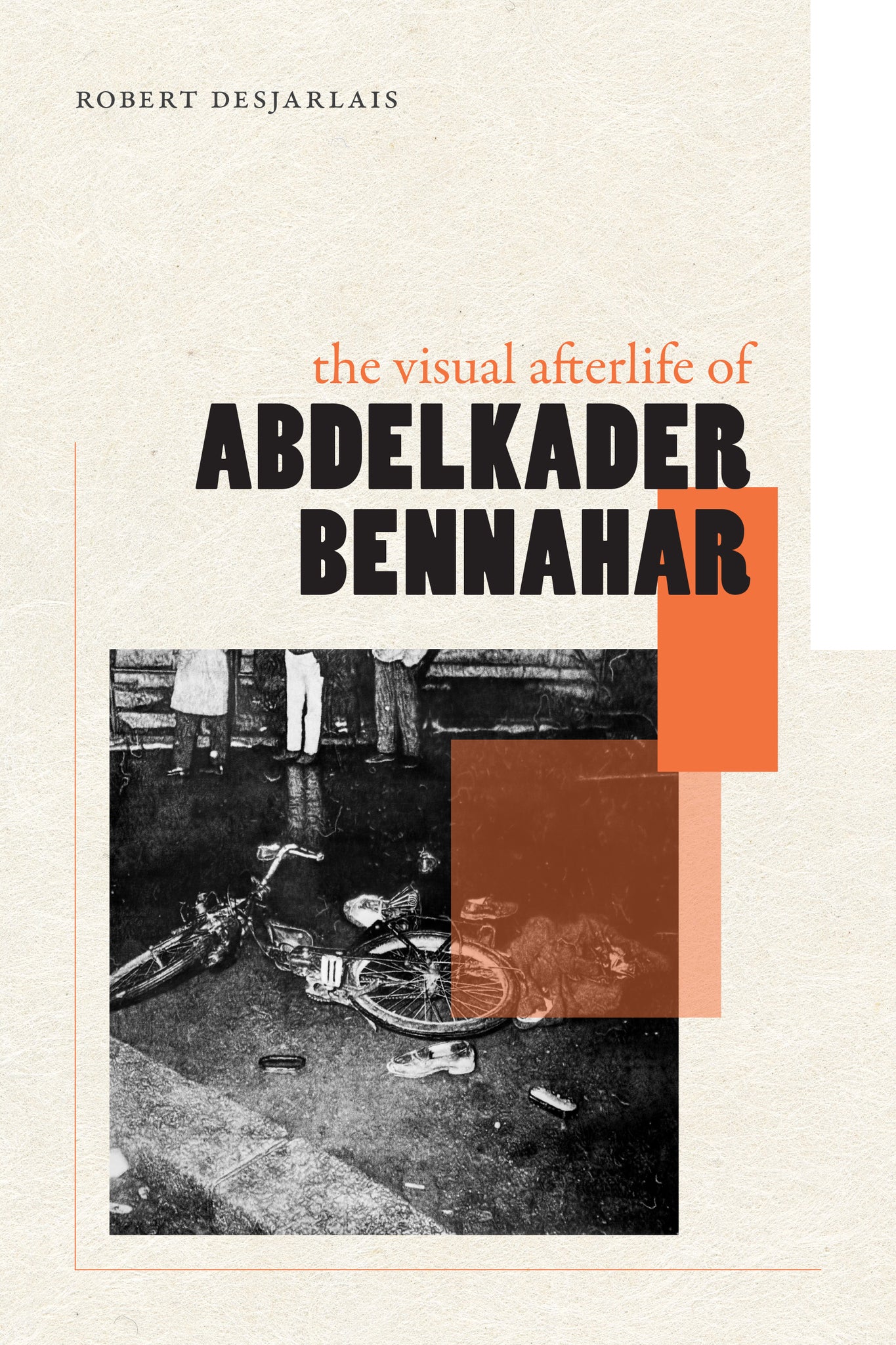
On the night of October 17, 1961, thousands of Algerians peacefully demonstrated in the streets of Paris, protesting an illegal curfew imposed upon them by the French colonial government. The Paris police responded with deadly violence, by some accounts killing over two hundred people and wounding countless others. One of the victims was Abdelkader Bennahar, who was seriously beaten in Nanterre, a commune just west of Paris. Jewish-French photographer Élie Kagan took a number of photographs of Bennahar as he lay bleeding in the street. Bennahar was brought to a Nanterre hospital and reportedly died the next night. In The Visual Afterlife of Abdelkader Bennahar, Robert Desjarlais analyzes Kagan’s photographs and their affective force and political significance from the moment they first circulated through the decades that followed. By drawing on Kagan’s photographs and archival records to consider the trace remnants of Bennahar’s life and the fate of his body in death, Desjarlais offers a compelling account of one person’s “life death” through complicated strands of time and memory.

Price: $29.95
Pages: 336
Publisher: Duke University Press
Imprint: Duke University Press
Series: Theory in Forms
Publication Date:
28 October 2025
Trim Size: 9.00 X 6.00 in
ISBN: 9781478032427
Format: Paperback
BISACs:
“Robert Desjarlais has a rich repertoire of method and thought that he uses to produce truly extraordinary insights about how historical moments linger and propel the character of violence into our present. Reconstructing the events and circumstances leading up to the murder of Abdelkader Bennahar, Desjarlais shows how the highly fragmented, competing, and sometimes altogether absent elements of a story alter the meaning of photographic and written records. I will think about this haunting book for a long time.”—Todd Meyers, author of, Gone Gone
“Robert Desjarlais attempts a bold, ethnographically inflected biothanatography of an Algerian man most likely murdered—along tens of thousands of other peaceful Algerians—by the French police in Paris. Tracking Bennahar’s life and death, Desjarlais weaves a dense fabric of interchanges and blurred boundaries between writing genres, academic disciplines, and geographic territories to speak broadly and poetically about the power of state violence and the spectral hauntings it engenders.”—Hannah Feldman, author of, From a Nation Torn: Decolonizing Art and Representation in France, 1945–1962
“Robert Desjarlais attempts a bold, ethnographically inflected biothanatography of an Algerian man most likely murdered—along tens of thousands of other peaceful Algerians—by the French police in Paris. Tracking Bennahar’s life and death, Desjarlais weaves a dense fabric of interchanges and blurred boundaries between writing genres, academic disciplines, and geographic territories to speak broadly and poetically about the power of state violence and the spectral hauntings it engenders.”—Hannah Feldman, author of, From a Nation Torn: Decolonizing Art and Representation in France, 1945–1962
Robert Desjarlais is Professor of Anthropology at Sarah Lawrence College, author of The Blind Man: A Phantasmography, and coauthor of Traces of Violence: Writings on the Disaster in Paris, France.
Introduction 1
1. Wound Images 23
2. A Sporadic History of Images 77
3. Intersecting Lives 127
4. The Afterlife of a Death 179
5. Tracework 213
6. The Spectrality of Remnants 259
Acknowledgments 275
Notes 279
References 301
Index 315
1. Wound Images 23
2. A Sporadic History of Images 77
3. Intersecting Lives 127
4. The Afterlife of a Death 179
5. Tracework 213
6. The Spectrality of Remnants 259
Acknowledgments 275
Notes 279
References 301
Index 315