


Some error occured while loading the Quick View. Please close the Quick View and try reloading the page.
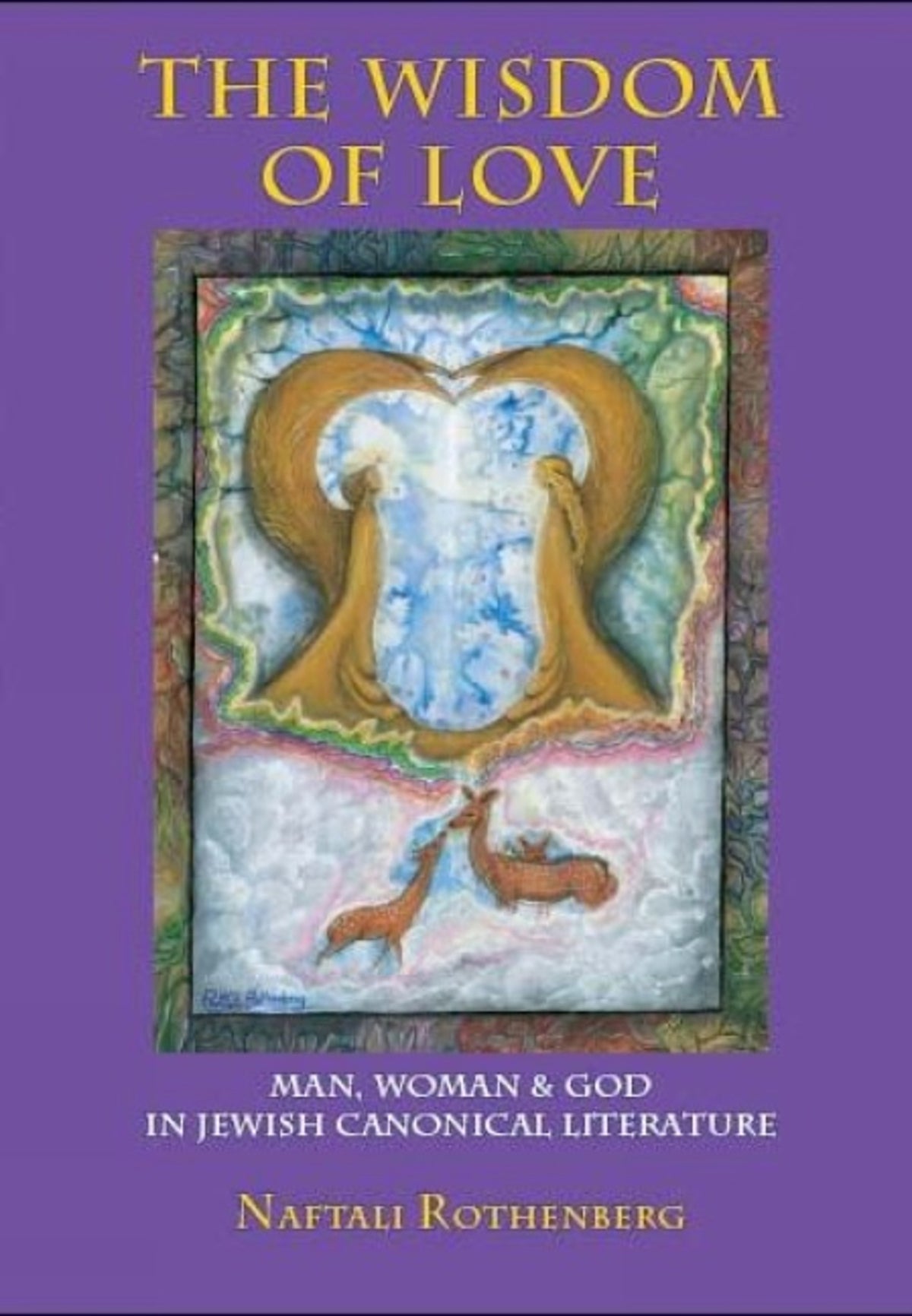
The Wisdom of Love strives to challenge the discrepancy between the way source texts relate to love and the way they are perceived to do so, introducing readers to the extensive, profound, and significant treatment of love in the Jewish canon. This is a book about love, not its repression; it is an opportunity to study the wisdom of love, not those who lack such wisdom and are unlikely to ever acquire it. The Wisdom of Love brings about not only a change in perception—recognizing the existence of the wisdom of love per se—but also the realization that this wisdom is the very foundation of religious wisdom as a whole, rather than a peripheral branch of it. All love derives from a single source: love between man and woman. It is from this source that all other manifestations of love, such as love of God, love of wisdom, and love of one’s fellow, draw their meaning.

Price: $29.00
Pages: 236
Publisher: Academic Studies Press
Imprint: Academic Studies Press
Series: Judaism and Jewish Life
Publication Date:
01 January 2009
Trim Size: 9.21 X 6.14 in
ISBN: 9781934843550
Format: Paperback
"Rabbi Dr. Naftali Rothenberg of the Van Leer Institute of Jerusalem explores another religious approach to these issues in “The Wisdom of Love: Man, Woman and God in Jewish Canonical Literature”. He finds that the Bible, Talmud, Midrash and halacha (Jewish law) devote considerable attention to love and that much of rabbinic tradition treats love’s spiritual and physical aspects without inhibition. His study exposes a cognitive dissonance between what the Jewish canon says and what we expect our holy texts to say. The book celebrates love as a classical rabbinic ideal, and it is as rare as it is refreshing: scholarly, yet eminently readable; spiritual, yet sober."
— Eugene Korn, editor of Meorot: A Forum for Modern Orthodox Discourse and American, director of the Center for Jewish-Christian Understanding and Cooperation in Efrat, Israel.
— Eugene Korn, editor of Meorot: A Forum for Modern Orthodox Discourse and American, director of the Center for Jewish-Christian Understanding and Cooperation in Efrat, Israel.
Naftali Rothenberg is a senior research fellow and Jewish Culture and Identity Chair at the Van Leer Jerusalem Institute. Rothenberg also serves as the town Rabbi of Har Adar, Israel. He has authored and edited ten books.
Preface. Introduction: Love in the Canonical Literature: Dealing with Cognitive Dissonance. Section I: the Androgyne Unity; Separation; Desire and Unity. 1. the Androgyne Myth According to Plato. 2. Male and Female Unity, Primoridal Sin and Rebellion against the Gods. 3. In the Midrash: Androgynous Adam. 4.In the Kabbalah: An Eternal / Divine, Spiritual and Human Androgyne. 5. The Rebirth of the Androgyne: Judah Abravanel Cites Plato and Moses. 6. Summary: The Power of Myths. Section II: A Profile of the Sage of Love. 1. Introduction: The Philosopher as Sage of Love. 2. The Love of Rachel. 3. Th e Sage of Love “Rescues” the Song of Songs. 4. Practice and Theory in the Wisdom of Love. 5. The Sage and Temptation. 6. Love Thy Fellow as the Basis of Human Socialization. 7. Optimism Out of Love. 8. Ultimate Love. 9. The Orchard of Love. 10. Summary: The Universal Sage. Section III: The Sage of Unconsummated Love: Judah Abravanel's Dialoghi d'Amore. 1. Introduction: Philo and Sophia. 2. The Sage's Desire. 3. Love as Universal Phenomenon. 4. The Paradox of Abstract Perception. 5. Love and Beauty. 6. When and Where was Love Born? 7. Unconsummated Love. Section IV: Written For Men by Men: Feminist Revolution and Innovation in the Canonical Sources. 1. Introduction: Identifying revolutionary and Innovative Approaches in cultural Sources. 2. A Monogamous Message to a Polygamous Culture. 3. Onah: The Obligation to have Sex for Pleasure. 4. The Love Relationship as Perfection: the End of Male Exclusivity. 5. Summary: Innovation and the Norm. Section V: Contrast and Harmony in Married Life: On Spirituality and Abstinence. 1. Introduction: the Dualistic Approach. 2. Marriage and Intellectual Growth: Help or Hindrance? 3. Categorical Rejection: Abstinence is Punishable by Death! 4. The Dilemma of Abstinence for Individuals on a High Spiritual Plane. 5. Moses' Abstinence. 6. Abstinence: A Precondition for Love in the Philosophy of Rabbi Bahya Ibn Pakuda.7. Rabbi Judah Halevi’s Rejection of Abstinence. 8. Summary: Maintaining Balance. Bibliography. Index.