


Some error occured while loading the Quick View. Please close the Quick View and try reloading the page.
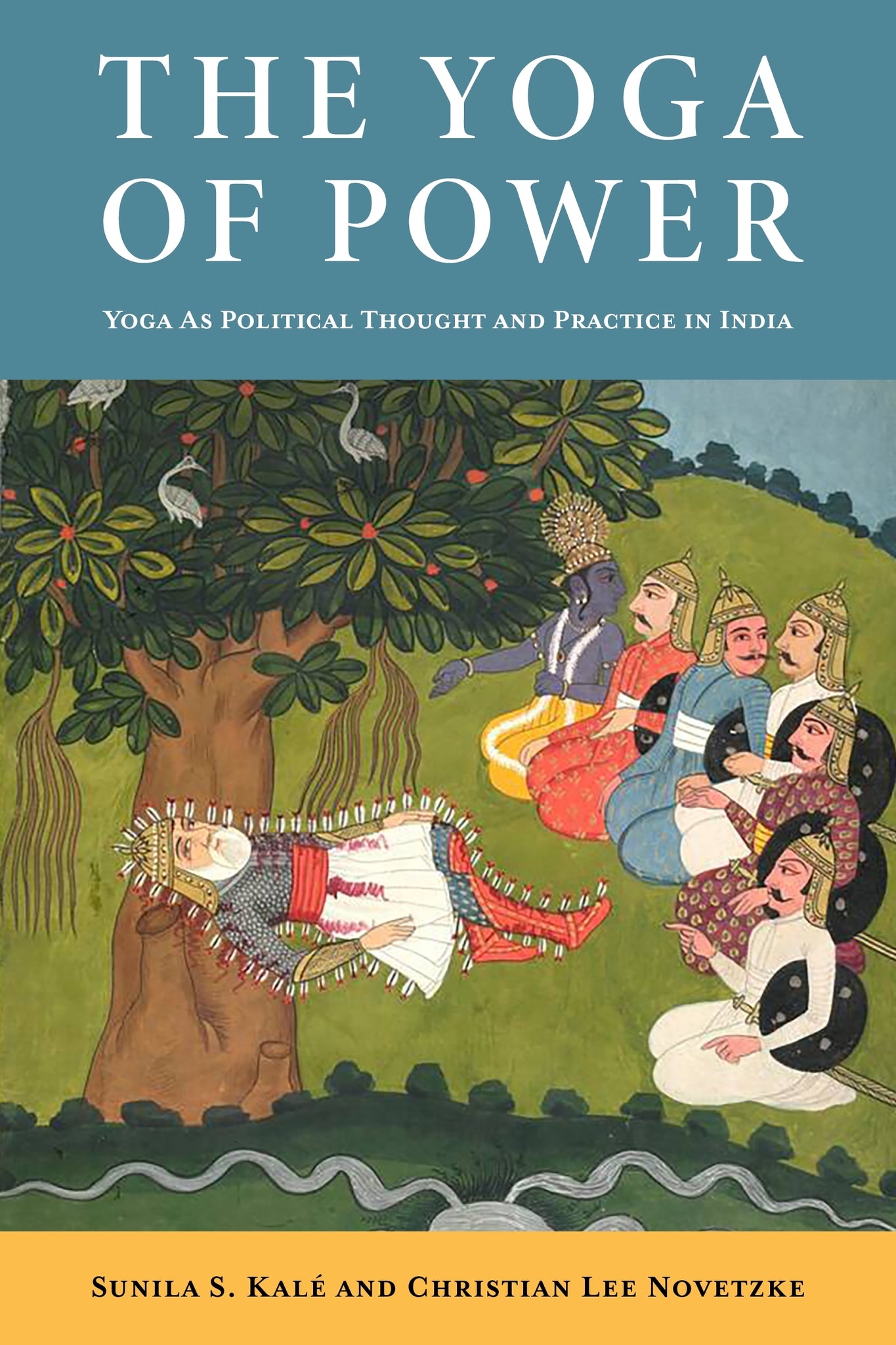
In Indian languages from Sanskrit to Marathi, yoga has an enormous range of meanings, though most often it refers to philosophy or methods to control the mind and body. This book argues for a wider understanding, demonstrating that yoga has long expressed political thought and practice. The political idea of yoga names the tools of kings, poets, warriors, and revolutionaries. It encodes stratagems for going into battle and for the demands of governance. This idea suggests routes to self-rule even when faced with implacable obstacles, and it defines righteous action amid the grime and grief of politics and war.
Sunila S. Kalé and Christian Lee Novetzke chart a new genealogy of yoga, beginning with uses of the term in the Ṛg Veda, the Mahābhārata, the Bhagavad Gītā, and the Arthaśāstra. In the world of these texts, yoga names everything from war and battle strategy to good governance, espionage, taxation, and welfare. Kalé and Novetzke follow this trail into the modern period, examining the writings and speeches of thinkers such as Gandhi, Tilak, Aurobindo, and Ambedkar as well as the extraordinary story of the Princely State of Aundh, whose ruler saw the Surya Namaskar (Sun Salutation) as a tool for sovereignty. Offering a novel interpretation of yoga that embraces its long-standing political conceptualization, this book sheds light on South Asian political thought and history from its earliest texts to the present day.

Sunila S. Kalé is a professor in the Jackson School of International Studies at the University of Washington, Seattle. Her books include Electrifying India: Regional Political Economies of Development (2014).
Christian Lee Novetzke is a professor in the Jackson School of International Studies and the Comparative History of Ideas Department at the University of Washington, Seattle. His books include The Quotidian Revolution: Vernacularization, Religion, and the Premodern Public Sphere in India (Columbia, 2016).
Preface
A Note on Diacritics, Sources, and Citations
Introduction
Part I. Ancient and Classical Periods
1. Yoga as War and Peace in the Ṛg Veda and the Mahābhārata
2. Yoga as Political Strategy in the Arthaśāstra
Interlude
Part II. Modern Period
3. Yoga as Revolution in Anticolonial Nationalism
4. Yoga as Sovereignty in Princely India
Conclusion: Yoga Infrastructure in India’s Bureaucracy
Acknowledgments
Glossary
Notes
Bibliography
Index