


Some error occured while loading the Quick View. Please close the Quick View and try reloading the page.
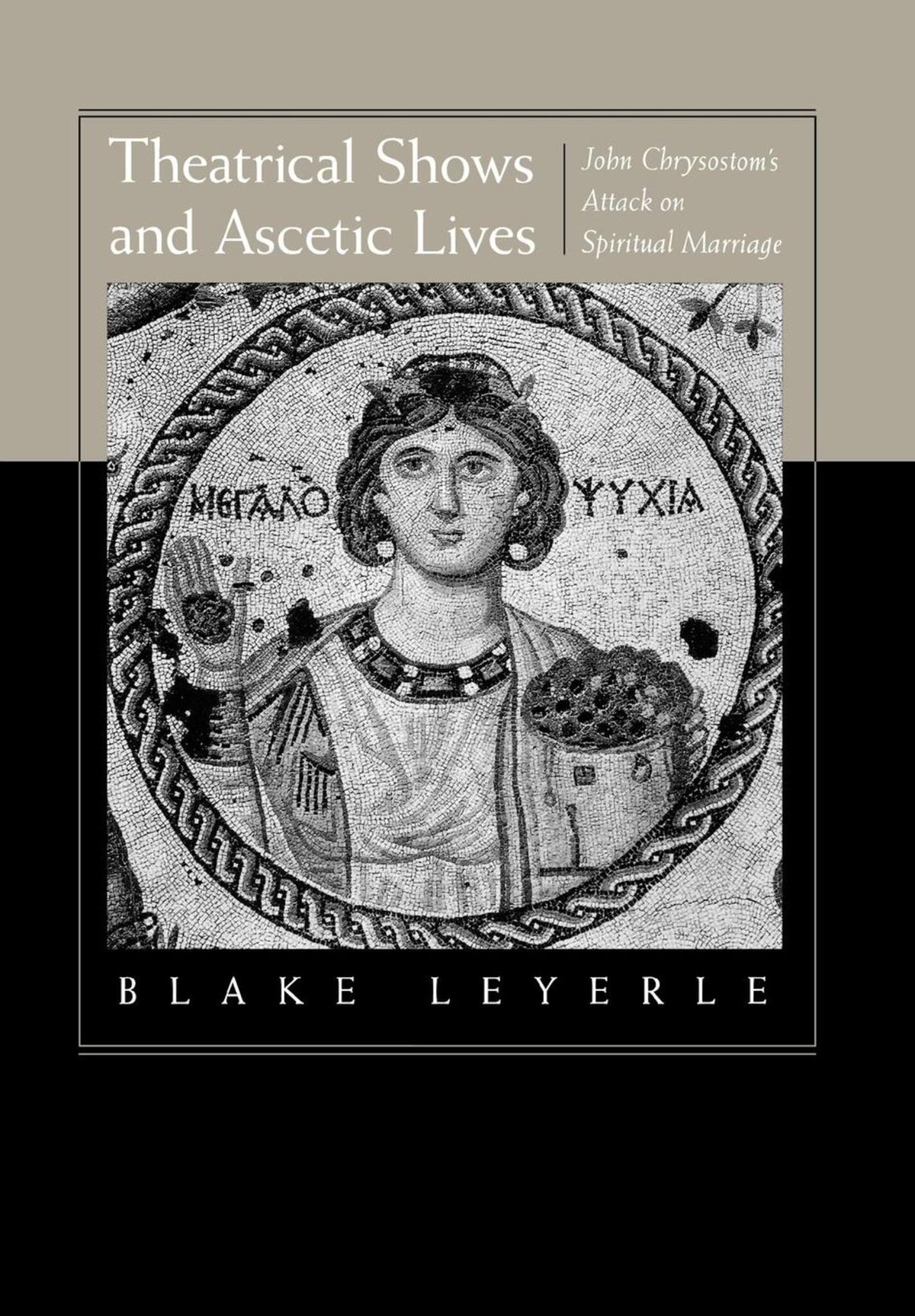
This book provides an original and rewarding context for understanding the prolific fourth-century Christian theologian John Chrysostom and the religious and social world in which he lived. Blake Leyerle analyzes two highly rhetorical treatises by this early church father attacking the phenomenon of "spiritual marriage." Spiritual marriage was an ascetic practice with a long history in which a man and a woman lived together in an intimate relationship without sex. What begins as an analysis of Chrysostom's attack on spiritual marriage becomes a broad investigation into Chrysostom's life and work, the practice of spiritual marriage itself, the role of the theater in late antique city life, and the early history of Christianity. Though thoroughly grounded in the texts themselves and in the cultural history of late antiquity, this study breaks new ground with its focus on issues of rhetoric, sexuality, and power.
Leyerle argues that Chrysostom used images and tropes drawn from the theater to persuade religious men and women that spiritual marriage was wrong. In addition to her analysis of the significance of the rhetorical strategies used by Chrysostom, Leyerle gives a thorough discussion of the role of the theater in late antiquity, particularly in Antioch, one of the gems among late antique cities. She also discusses gender in the context of late antique religion, shedding new light on early Christian attitudes toward sexuality. Throughout Leyerle weaves an ongoing conversation with contemporary theory in film and gender studies that gives her study an important analytic dimension.
Leyerle argues that Chrysostom used images and tropes drawn from the theater to persuade religious men and women that spiritual marriage was wrong. In addition to her analysis of the significance of the rhetorical strategies used by Chrysostom, Leyerle gives a thorough discussion of the role of the theater in late antiquity, particularly in Antioch, one of the gems among late antique cities. She also discusses gender in the context of late antique religion, shedding new light on early Christian attitudes toward sexuality. Throughout Leyerle weaves an ongoing conversation with contemporary theory in film and gender studies that gives her study an important analytic dimension.

Price: $63.00
Pages: 259
Publisher: University of California Press
Imprint: University of California Press
Publication Date:
28 July 2001
Trim Size: 9.00 X 6.00 in
ISBN: 9780520215580
Format: Hardcover
BISACs:
Blake Leyerle is Associate Professor in the Department of Theology at the University of Notre Dame.
Preface
List of Abbreviations
Preface
1. Introduction
A Mosaic in Daphne
The Shape of This Study
2. The Late Antique Theater
Popular
An Education in Mythology
A Forum for Sumptuous Display
A Political Arena
Chapter 3. John Chrysostom's View of the Theater
Display's Illusion
Rhetorical Display
Sexuality on Display
4. Spiritual Marriage
The Origin and Popularity of Spiritual Marriage
The Couples Chrysostom Addressed
5. Ridiculous Men
Comic Structure and Social Purity
The Merry Play of Stereotype
Comic Gender-Bending: Are You a Man or a Woman?
Visions of Utopias
6. Frightful Women
Tragic Figures: the House and the Woman
Language's Opacity: Dissonance and Riddles
Enemy not Friend
Disclosure
7. John Chrysostom's Role
Priestly Correction
Anger
Social Context
8. Conclusion
Appendix Dating the Treatises
Notes
Select Bibliography
Index
List of Abbreviations
Preface
1. Introduction
A Mosaic in Daphne
The Shape of This Study
2. The Late Antique Theater
Popular
An Education in Mythology
A Forum for Sumptuous Display
A Political Arena
Chapter 3. John Chrysostom's View of the Theater
Display's Illusion
Rhetorical Display
Sexuality on Display
4. Spiritual Marriage
The Origin and Popularity of Spiritual Marriage
The Couples Chrysostom Addressed
5. Ridiculous Men
Comic Structure and Social Purity
The Merry Play of Stereotype
Comic Gender-Bending: Are You a Man or a Woman?
Visions of Utopias
6. Frightful Women
Tragic Figures: the House and the Woman
Language's Opacity: Dissonance and Riddles
Enemy not Friend
Disclosure
7. John Chrysostom's Role
Priestly Correction
Anger
Social Context
8. Conclusion
Appendix Dating the Treatises
Notes
Select Bibliography
Index