


Some error occured while loading the Quick View. Please close the Quick View and try reloading the page.
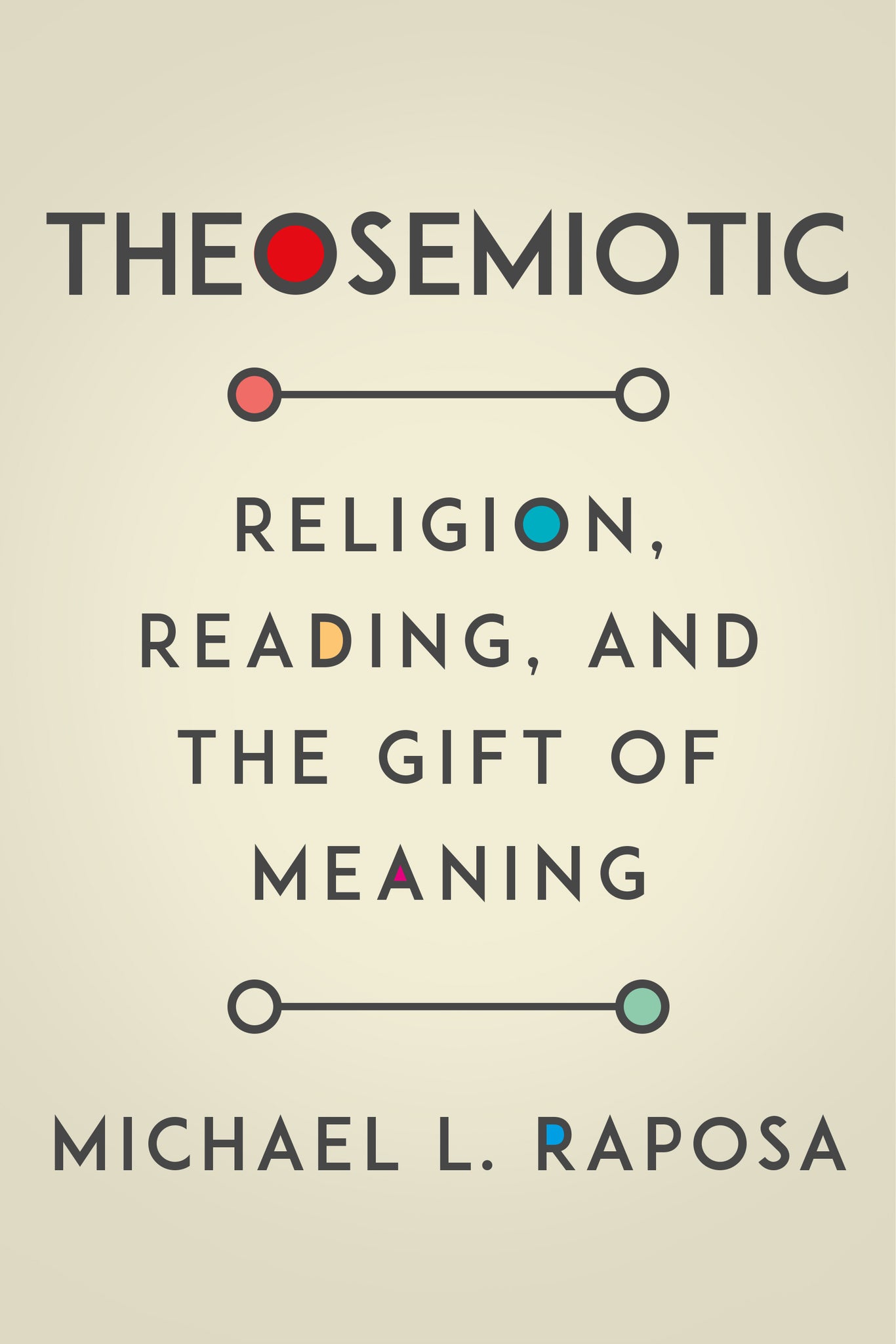
In Theosemiotic, Michael Raposa uses Charles Peirce’s semiotic theory to rethink certain issues in contemporary philosophical theology and the philosophy of religion. He first sketches a history that links Peirce’s thought to that of earlier figures (both within the tradition of American religious thought and beyond), as well as to other classical pragmatists and to later thinkers and developments. Drawing on Peirce’s ideas, Raposa develops a semiotic conception of persons/selves emphasizing the role that acts of attention play in shaping human inferences and perception. His central Peircean presuppositions are that all human experience takes the form of semiosis and that the universe is “perfused” with signs. Religious meaning emerges out of a process of continually reading and re-reading certain signs.
Theology is explored here in its manifestations as inquiry, therapy, and praxis. By drawing on both Peirce’s logic of vagueness and his logic of relations, Raposa makes sense out of how we talk about God as personal, and also how we understand the character of genuine communities. An investigation of what Peirce meant by “musement” illuminates the nature and purpose of prayer. Theosemiotic is portrayed as a form of religious naturalism, broadly conceived. At the same time, the potential links between any philosophical theology conceived as theosemiotic and liberation theology are exposed.

Preface | ix
Parenthetical References | xv
Prolegomena | 1
1 A Brief History of Theosemiotic | 15
2 Signs, Selves, and Semiosis | 43
3 Love in a Universe of Chance | 75
4 Theology as Inquiry, Therapy, Praxis | 107
5 Communities of Interpretation | 155
6 Rules for Discernment | 192
7 On Prayer and the Spirit of Pragmatism | 227
Postlude: The Play of Musement | 259
Acknowledgments | 265
Notes | 269
Index | 301