


Some error occured while loading the Quick View. Please close the Quick View and try reloading the page.
“Simply, plainly wonderful.”—The Boston Globe
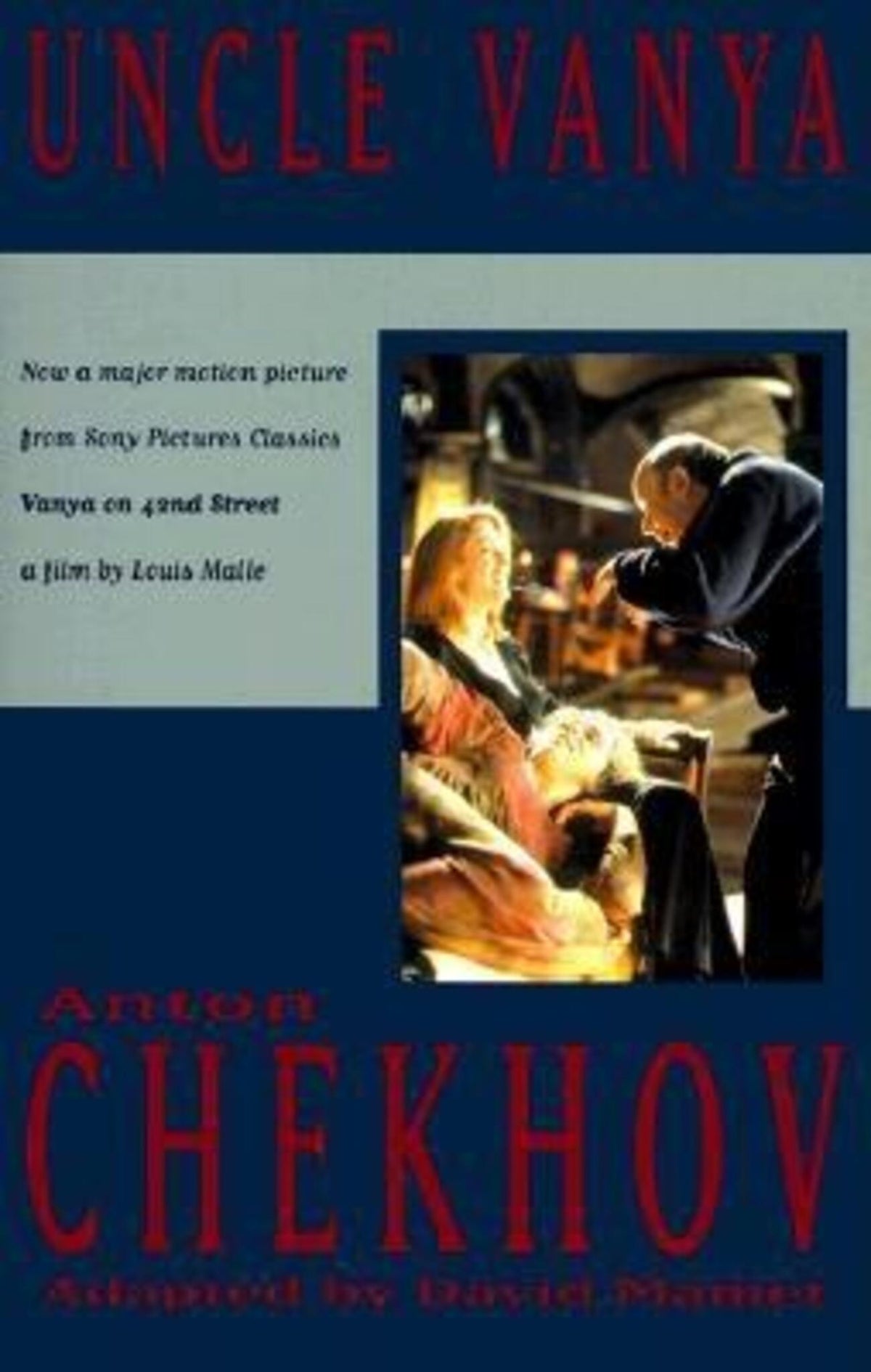
Pulitzer Prize-winning playwright David Mamet’s Uncle Vanya is a sparkling restoration of a masterpiece of the modern stage, marked by Mamet’s finely tuned ear for dialogue and memorable poetic imagery.
In Uncle Vanya, a retired professor and his beautiful young wife return to the country estate left by his deceased first wife to find themselves overwhelmed by the stagnant inevitability of the rituals of their life and class, and mercilessly taxed by the encroachment of age at the expense of youth. All of the play’s characters are plunged into that precarious state where, in Beckett’s words, “the boredom of living is replaced by the suffering of being.”
Working from a literal translation by Vlada Chernomordik, Mamet, who has also adapted Chekhov’s Three Sisters and The Cherry Orchard, opens the way for a contemporary audience to establish immediate contact with a classic, infusing the power of Chekhov’s play with the potent precision of his own modern voice.

Praise for Uncle Vanya
“An act of deconstruction designed to exhume the living energies of Chekhov’s writing from under the heavy weight of ‘masterpiece topsoil.’”—Robert Brustein, American Repertory Theatre
“Simply, plainly wonderful.”—The Boston Globe
Praise for David Mamet
“Mamet is . . . that rarity, a pure writer, and the synthesis he appears to be making, with echoes from voices as diverse as Beckett, Pinter and Hemingway, is unique and exciting.” —Newsweek
“Mamet’s ear is uncanny. Nobody today has a more flawless gift for reproducing overheard colloquial speech. . . . You leave the theater after a Mamet play and realize it’s exploded in your brain.” —Robert Brustein
“Mr. Mamet [has a] talent for burying layers of meaning into simple, precisely distilled idiomatic language—a talent that can only be compared to Harold Pinter’s.” —Frank Rich, The New York Times
“Mamet has a miraculous ear for the heightened music of American dialect—it makes poetry out of common usage.” —Clive Barnes, The New York Times
“Mamet deserves recognition for his careful, gorgeous, loving sense of language. He has the most acute ear for dialogue of any American writer since J. D. Salinger.” —The Village Voice
“Mamet is a true and exciting original . . . a blaze of talent.” —WCBS-TV
“Pinter. Albee. Miller. They’re all looking over Mamet’s shoulders.” —New York
Anton Chekhov (1860–1904) is known both as a playwright and a master of the modern short story. His plays, including The Seagull, Uncle Vanya, The Three Sisters, and The Cherry Orchard, are among the most widely performed in the world. He died of tuberculosis at the age of 44, but didn’t achieve American recognition until twenty years after his death.
David Mamet is the author of the plays Glengarry Glen Ross (1984 Pulitzer Prize and New York Drama Critics Circle Award), Oleanna, American Buffalo, A Life in the Theater, Speed-the-Plow, Edmond, Lakeboat, The Water Engine, The Woods, Sexual Perversity in Chicago, Reunion, The Cryptogram (1995 Obie Award), and The Old Neighborhood.