


Some error occured while loading the Quick View. Please close the Quick View and try reloading the page.
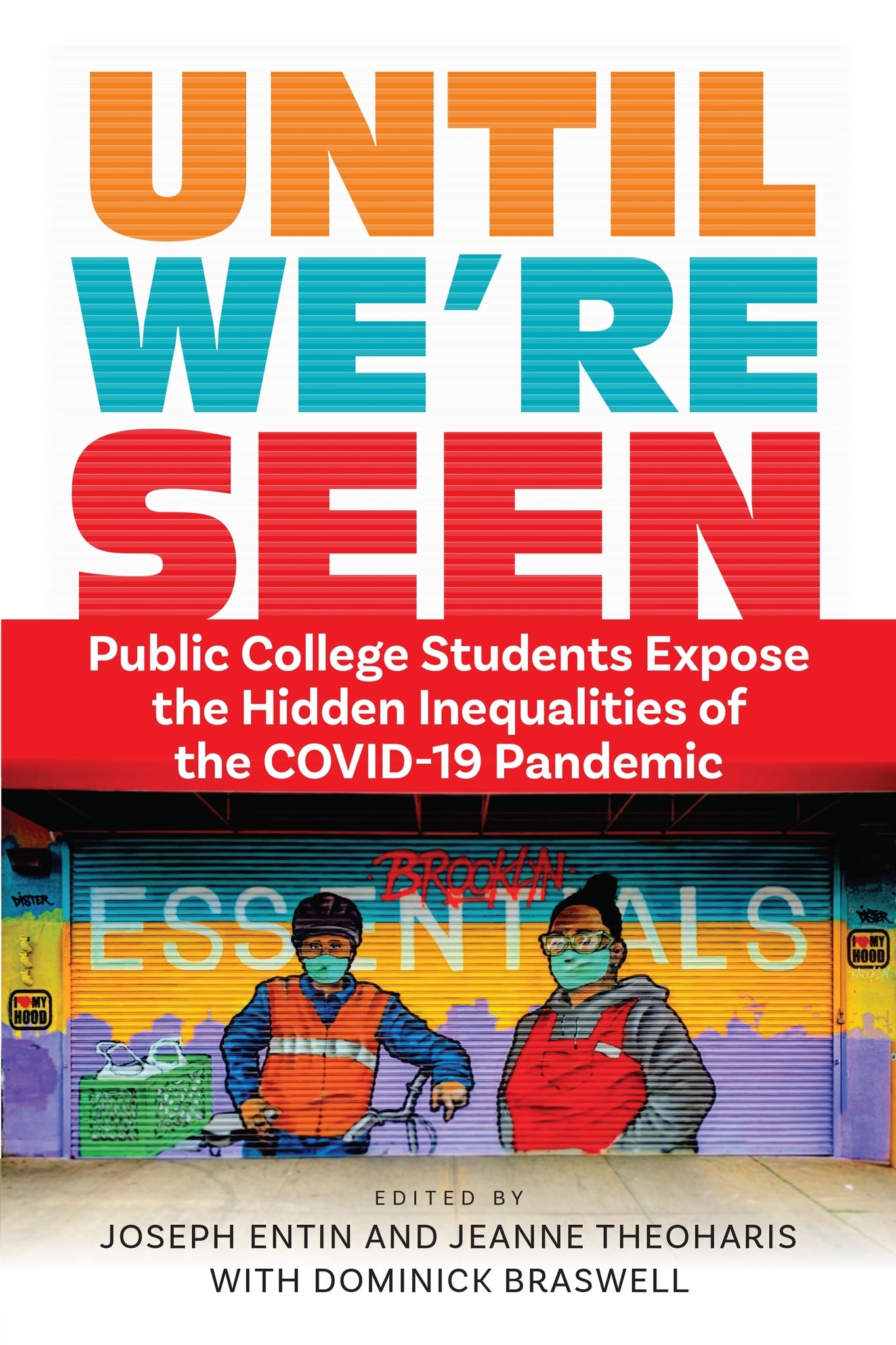
Firsthand accounts of COVID-19’s devastating effects on working-class communities of color
The first months of the COVID-19 pandemic were filled with talk of heroes, the frontline workers who kept the country functioning. “And when they write those history books, the heroes of the battle will be the hardworking families of New York,” Governor Andrew Cuomo trumpeted on Labor Day 2020. But what if those heroes, those essential workers and their families, wrote the book themselves?
In Until We’re Seen, the heroes write their own stories. Through firsthand accounts by college students at Brooklyn College and California State University Los Angeles, Until We’re Seen chronicles COVID-19’s devastating, disproportionate effects on working-class communities of color, even as the United States has declared the pandemic over and looks away from its impacts.
Very few of these students and their families had the luxury of laboring from home; if they were able to keep their jobs, they took subways and buses, and they worked. They drove delivery trucks, worked in private homes, cooked food in restaurants for people to pick up, worked as EMTs, and did construction. They couldn’t escape to second homes; if anything, more people moved in, as families were forced to consolidate to save money. Together, the accounts in this book show that the COVID-19 pandemic did discriminate, following the race and class fissures endemic to US society. But if these are tales of hardship, they are also love stories—of students’ families, biological and chosen—and of the deep resolve, mundane carework, and herculean efforts such love entails.
Recounting 2020–2022 through the experiences of predominantly young, working-class immigrants and people of color living in the first two major US COVID-19 epicenters, Until We’re Seen spotlights previously untold stories of the pandemic in New York, Los Angeles, and the nation as a whole.

Joseph Entin is Professor of English and American Studies at Brooklyn College, City University of New York.
Jeanne Theoharis is Distinguished Professor of Political Science at Brooklyn College, City University of New York.
Dominick Braswell is an activist from Brooklyn, New York. He is a graduate of Brooklyn College and a doctoral student in Afro-American Studies at the University of Massachusetts–Amherst.
Introduction
Joseph Entin and Jeanne Theoharis
Part I. Essential Work, Disposable Workers
Chapter 1. UntilWe’reSeen
Samantha Saint Jour
Chapter 2. Prole-ific
Zayd Brewer
Chapter 3. Double Jeopardy
Tania Darbouze
Chapter 4. Beloved, but Forced to Live and Die in the Shadows
Yamilka Portorreal
Chapter 5. When Essential Student Workers Strike Back
Alan Aja
Part II. Race and Family
Chapter 6. Me, My Mom, and Her Mental Illness
Billie-Rae Johnson
Chapter 7. From Ahuehuetitla to Brooklyn: Immigrant Life Under COVID-19
Raúl Vaquero
Chapter 8. COVID-19 Deportations
Anthony Salazar Vazquez
Chapter 9. Chinatown Through a Pandemic: A Phoenix Rising
Kayla Gutierrez
Chapter 10. Black Lives Matter: COVID, Race, and Organized Abandonment
Rhea Rahman
Part III. Crises of Health and Housing
Chapter 11. America’s Health Care System Needs 911
Anthony Almojera
Chapter 12. What It Means to Be an Anxious Pakistani During a Global Pandemic
Areeba Zanub
Chapter 13. Livin’ in the Projects: COVID-19 and Community Resilience
Dominick Braswell
Chapter 14.COVID-19: Mortality by Zip Code
Marsha Decatus
Chapter 15. We See from Where We Stand: COVID-19 and the Shape of Us
Donna-Lee Granville
Part IV. Community Organizing, Mutual Aid, and Struggle
Chapter 16. (Need)les and Many Threads: Sewing Community from Pandemic Puerto Rico and Beyond
Daniel J. VázquezSanabria
Chapter 17. Everybody’s Gotta Eat (It’s Something My Dad Says)
Genesis Orea
Chapter 18. Black Lives Matter, COVID-19, and a Cyclical History
Adia Atherley
Chapter 19. Pandemic Deepens Food Inequality in Brooklyn: Live from Bed-Stuy
Khadhazha Welch
Chapter 20. On Invisibility
Lawrence Johnson
Part V. Gender, Sexuality, and Inequality in Los Angeles
Chapter 21. “Dónde está tu Ita?”
Wendy Casillas
Chapter 22. “In Our Eyes, He Was Everything”: Immigrant Fathers, Workplace Regulations, and COVID 19
Maria Cerezo
Chapter 23. “Zoom School” and the Digital Divide in Immigrant Communities During
COVID-19
Elizabeth Leon Lopez
Chapter 24.Safer at Home? Negotiating Religion, UndocuLife, and Queerness during the COVID-19 Pandemic
Manuel (Manny) Ibarra
Chapter 25. Autoethnographies from the “Sacrifice Zone” of Latinx Los Angeles
Alejandra Marchevsky
Conclusion. This Book Is Not the Conclusion to the Pandemic
Joseph Entin, Jeanne Theoharis, and Student Contributors
Notes
List of Contributors
Index
Acknowledgments