


Some error occured while loading the Quick View. Please close the Quick View and try reloading the page.
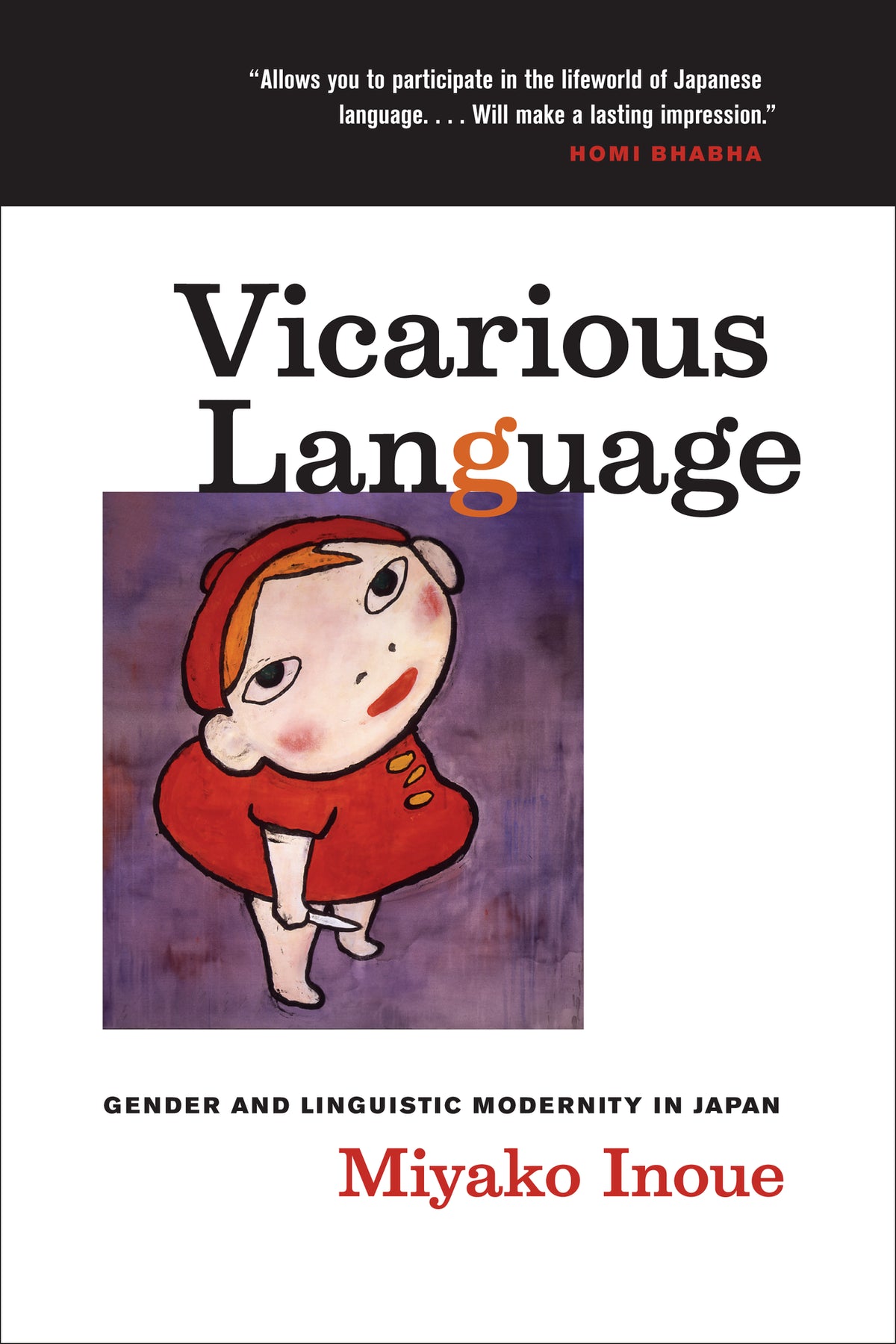
This highly original study provides an entirely new critical perspective on the central importance of ideas about language in the reproduction of gender, class, and race divisions in modern Japan. Focusing on a phenomenon commonly called "women's language," in modern Japanese society, Miyako Inoue considers the history and social effects of this language form. Drawing on ethnographic fieldwork in a contemporary Tokyo corporation to study the everyday linguistic experience of white-collar females office workers and on historical research from the late nineteenth century to 1930, she calls into question the claim that "women's language" is a Japanese cultural tradition of ancient origin and offers a critical geneaology showing the extent to which this language form is, in fact, a cultural construct linked with Japan's national and capitalist modernity. Her theoretically sophisticated, empirically grounded, interdisciplinary work brilliantly illuminates the relationship between culture and language, the nature of power and subject formation in modernity, and how the complex nexus of gender, language, and political economy are experienced in everyday life.

Price: $34.95
Pages: 340
Publisher: University of California Press
Imprint: University of California Press
Series: Asia: Local Studies / Global Themes
Publication Date:
05 April 2006
Trim Size: 9.00 X 6.00 in
ISBN: 9780520245853
Format: Paperback
BISACs:
Miyako Inoue is Assistant Professor in the Department of Cultural and Social Anthropology at Stanford University.
List of Illustrations and Tables
Acknowledgments
Note on Japanese Names and the Romanization of Japanese Language
Introduction: Women’s Language and Capitalist Modernity in Japan
part one: language, gender, and national
modernity: the genealogy of japanese women’s language, 1880s–1930s
1. An Echo of National Modernity: Overhearing “Schoolgirl Speech”
2. Linguistic Modernity and the Emergence of Women’s Language
3. From Schoolgirl Speech to Women’s Language: Consuming Indexicality in Women’s Magazines, 1890–1930
part two: the nation’s temporality and the death of women’s language
4. Capitalist Modernity, the Responsibilized Speaking Body, and the Public Mourning of the Death of Women’s Language
part three: re-citing women’s language in late modern japan
Introduction
5. “Just Stay in the Middle”: The Story of a Woman Manager
6. Defamiliarizing Japanese Women’s Language: Strategies and Tactics of Female Office Workers
Afterword: This Vicarious “Japanese Women’s Language”
Bibliography
Index
Acknowledgments
Note on Japanese Names and the Romanization of Japanese Language
Introduction: Women’s Language and Capitalist Modernity in Japan
part one: language, gender, and national
modernity: the genealogy of japanese women’s language, 1880s–1930s
1. An Echo of National Modernity: Overhearing “Schoolgirl Speech”
2. Linguistic Modernity and the Emergence of Women’s Language
3. From Schoolgirl Speech to Women’s Language: Consuming Indexicality in Women’s Magazines, 1890–1930
part two: the nation’s temporality and the death of women’s language
4. Capitalist Modernity, the Responsibilized Speaking Body, and the Public Mourning of the Death of Women’s Language
part three: re-citing women’s language in late modern japan
Introduction
5. “Just Stay in the Middle”: The Story of a Woman Manager
6. Defamiliarizing Japanese Women’s Language: Strategies and Tactics of Female Office Workers
Afterword: This Vicarious “Japanese Women’s Language”
Bibliography
Index