


Some error occured while loading the Quick View. Please close the Quick View and try reloading the page.
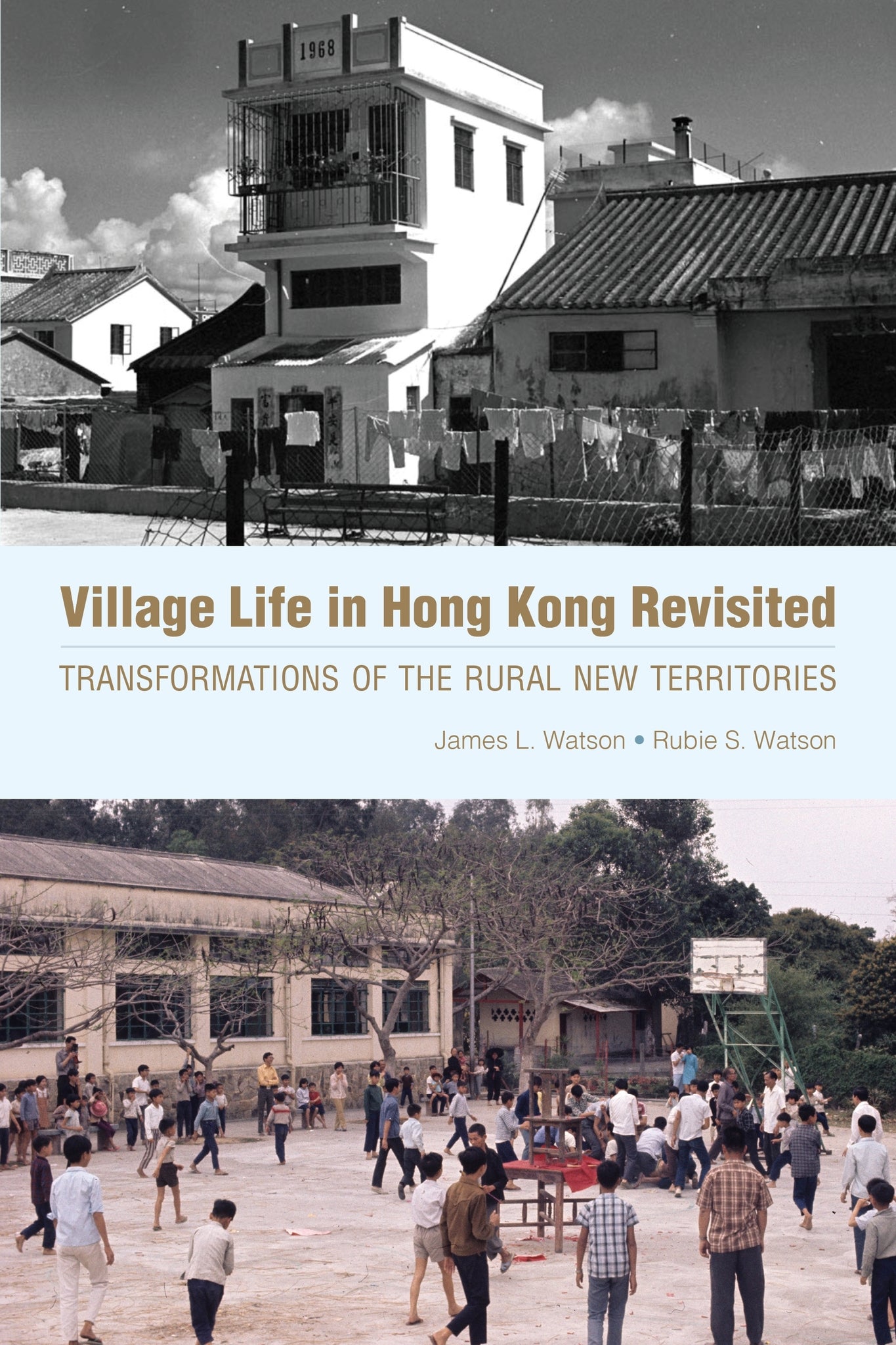
During fieldwork in the 1960s and 1970s, James and Rubie Watson lived as a couple in San Tin and Ha Tsuen—two existing, everchanging villages in the New Territories of Hong Kong—and interacted with neighbors. Since the previous volume of Village Life in Hong Kong published in 2004, the Watsons have continued to research and write about “their” two villages. Many of the village people have become highly accomplished professors, government officials, and business leaders, while certain lineages have evolved into a very successful international diaspora.
As the villagers faced social transformation, their physical landscape was being transformed by unplanned, sometimes chaotic “development.” The structure of village life explored in this book is a fading memory for the village residents. New tensions and preoccupations dominate life in the New Territories, much like contemporary suburbs surrounding American cities.
The Watsons extend their discussions to include the decidedly gendered aspect of village life that conditioned their research in Ha Tsuen and San Tin—on women’s lives and subculture, events and rituals unseen to male, and on young men who survived anti-Japanese battles back in the 1940s, becoming vanguard-emigrants to Britain.

Rubie S. Watson is Former Director at Peabody Museum of Archaeology and Ethnology, Harvard University.
The Watsons have conducted ethnographic research in South China (Hong Kong, Guangdong, and Jiangxi) since the late 1960s.
1. Introduction: The Transformation of Village Life in the New Territories
2. Saltwater Margin: A Common-Fields System in South China
3. Guarding the Shoreline: Oyster Farming, Salt Production, and Fishing along the South China Coast (1667–1978)
4. Property, Protection, and Security: Village Guard Organizations in South China (1898–1978)
5. Corporate Property and Local Leadership in the Pearl River Delta (1898–1941)
6. Virtual Kinship, Real Estate, and Diaspora Formation: The Man Lineage Revisited
7. Temple Cults and the Rites of Territorial Control: The Jiao (Rite of Renewal)
8. Sanctioned Violence and Annual Temple Festivals: Flower-Cannon Societies
9. Cantonese Ancestor Tablets: Corporate and Domestic
10. Cantonese Girls’ Houses and Working Women: Expressive Culture in the Pearl River Delta (1898–1941)
11. Ghost Food: The Old Women’s Feast
12. Feasting and the Pursuit of National Identity: Cantonese Common-Pot Dining
13. Meat: A Cultural Biography in South China
14. Pigs from the Ancestors: Cantonese Ancestral Rites, Long-Term Change, and the Family Revolution
15. Geomancy, Politics, and Colonial Encounters in Rural Hong Kong
16. Ephemera: Village Documents in Paper, Stone, Bronze, Wood, Clay, Cloth, and Plastic