


Some error occured while loading the Quick View. Please close the Quick View and try reloading the page.
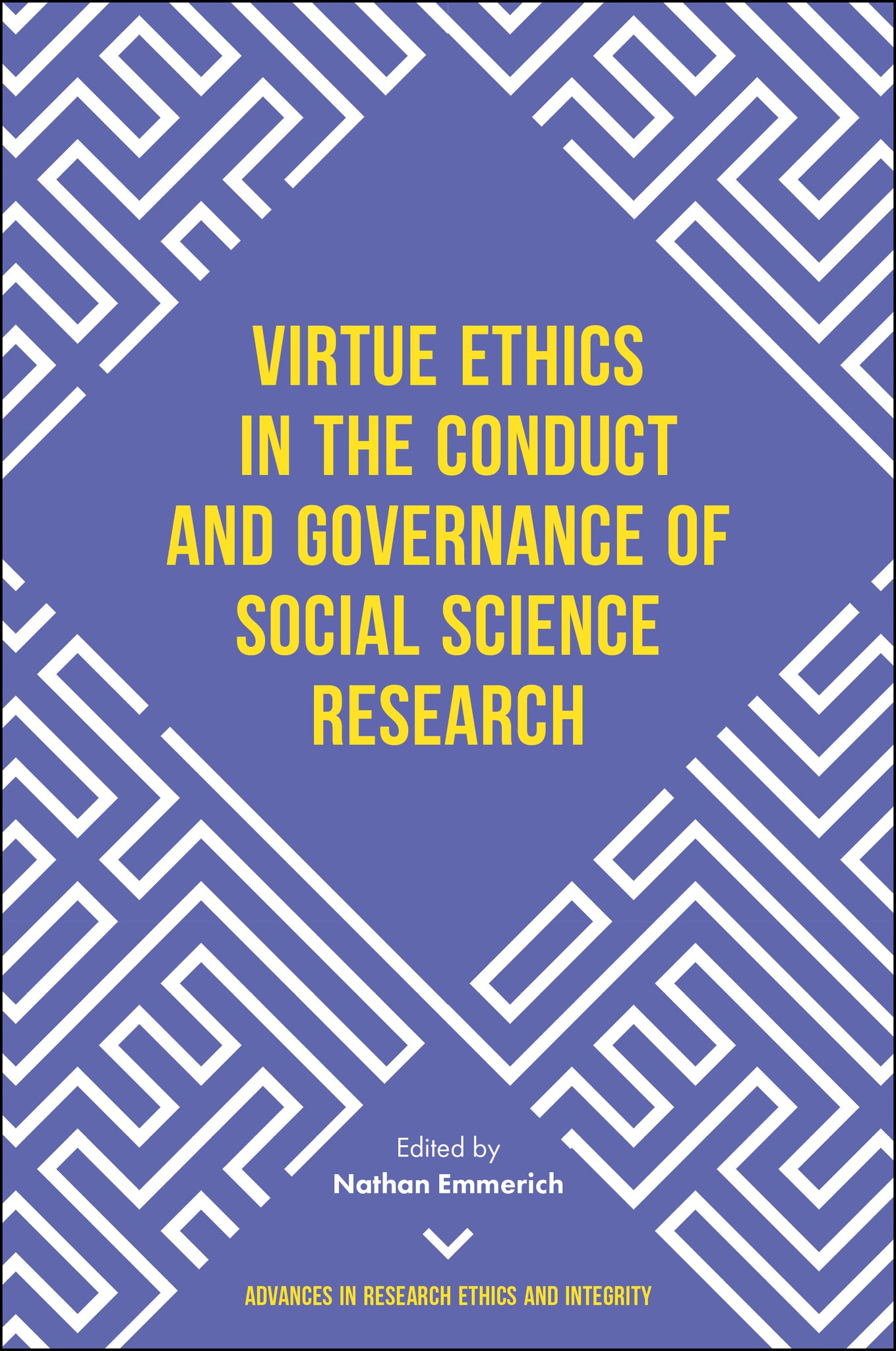
This collection
focuses on virtue theory and the ethics of social science research. A moral
philosophy that has been relatively neglected in the domain of research ethics,
virtue ethics has much to offer those who wish to go beyond the difficulties
generated by the biomedical model of research ethics and positively engage with
the ethics of social scientific research. As the chapters contained in this
volume show, the perspective provided by virtue ethics also exhibits a certain
affinity with the emerging discourse regarding research integrity. Contributors
develop various facets of virtue ethics in order to illuminate a range of
issues in the practice and governance of social science, including integrity,
the ethics of ethical review, ethics education, and the notion of phrónēsis
(wisdom).

Price: $134.99
Pages: 248
Publisher: Emerald Publishing Limited
Imprint: Emerald Publishing Limited
Series: Advances in Research Ethics and Integrity
Publication Date:
06 April 2018
ISBN: 9781787146082
Format: Hardcover
Social scientists explore issues around ethics in social science research, pivoting on the virtue ethics that the West has inherited from ancient Greece in general and Aristotle in particular. They cover virtue and integrity, virtue and the review/governance of research, and phrónesis in its practice/conduct and review/governance. The topics include cultivating researcher integrity: virtue-based approaches to research ethics, whether virtue ethics can help the professional integrity of social science researchers, virtue ethics in the practice and review of social science research: the virtuous ethics committee, and the ethical regulation of social research versus the cultivation of phrónesis.
Nathan Emmerich is a Research Fellow in the Institute of Ethics, Dublin City University and a Visiting Research Fellow in the School of History, Anthropology, Politics and Philosophy at Queen’s University Belfast.
Introduction: Virtue and the Ethics of Social Research; Nathan Emmerich
Section 1: Virtue and Integrity in Social Science Research
1. From Research Integrity to Researcher Integrity: Issues of Conduct, Competence and Commitment; Sarah Banks
2. Questioning the Virtue of Virtue Ethics: Slowing the Rush to Virtue in Research Ethics; Richard Kwiatkowski
3. Research Ethics Training: Using a Virtue Ethics Approach to Training to Support Development of Researcher Integrity; Nicole Palmer and Rachel Forrester-Jones
4. The Professional Integrity of Social Researchers - Can Virtue Ethics Help?; Kath Melia
Section 2: Virtue and the Review/Governance of Social Science Research
5. Virtue Ethics in the Practice and Review of Social Science Research:
The Virtuous Ethics Committee; David Carpenter
6. Relating to Carpenter’s Virtuous Research Ethics committee; Helen Brown Coverdale
7. A Response to David Carpenter’s ‘Virtue Ethics in the Practice and Review of Social Science Research; John Elliott
8. Commentary On: Virtue Ethics in the Practice and Review of Social Science Research: The Virtuous Ethics Committee; David Carpenter, Jason Z. Morris and Marilyn C. Morris
Section 3: Phrónēsis in the Practice/Conduct and Review/ Governance of Social Scientific Research
9. Ethical Regulation of Social Research Versus The Cultivation of Phrónēsis; Anna Traianou
10. Is Phrónēsis Necessarily Virtuous?; Martyn Hammersley
11. From Phrónēsis to Habitus: Synderesis and the Practice(s) of Ethics and Social Research; Nathan Emmerich