


Some error occured while loading the Quick View. Please close the Quick View and try reloading the page.
This volume contains two Open Access chapters.
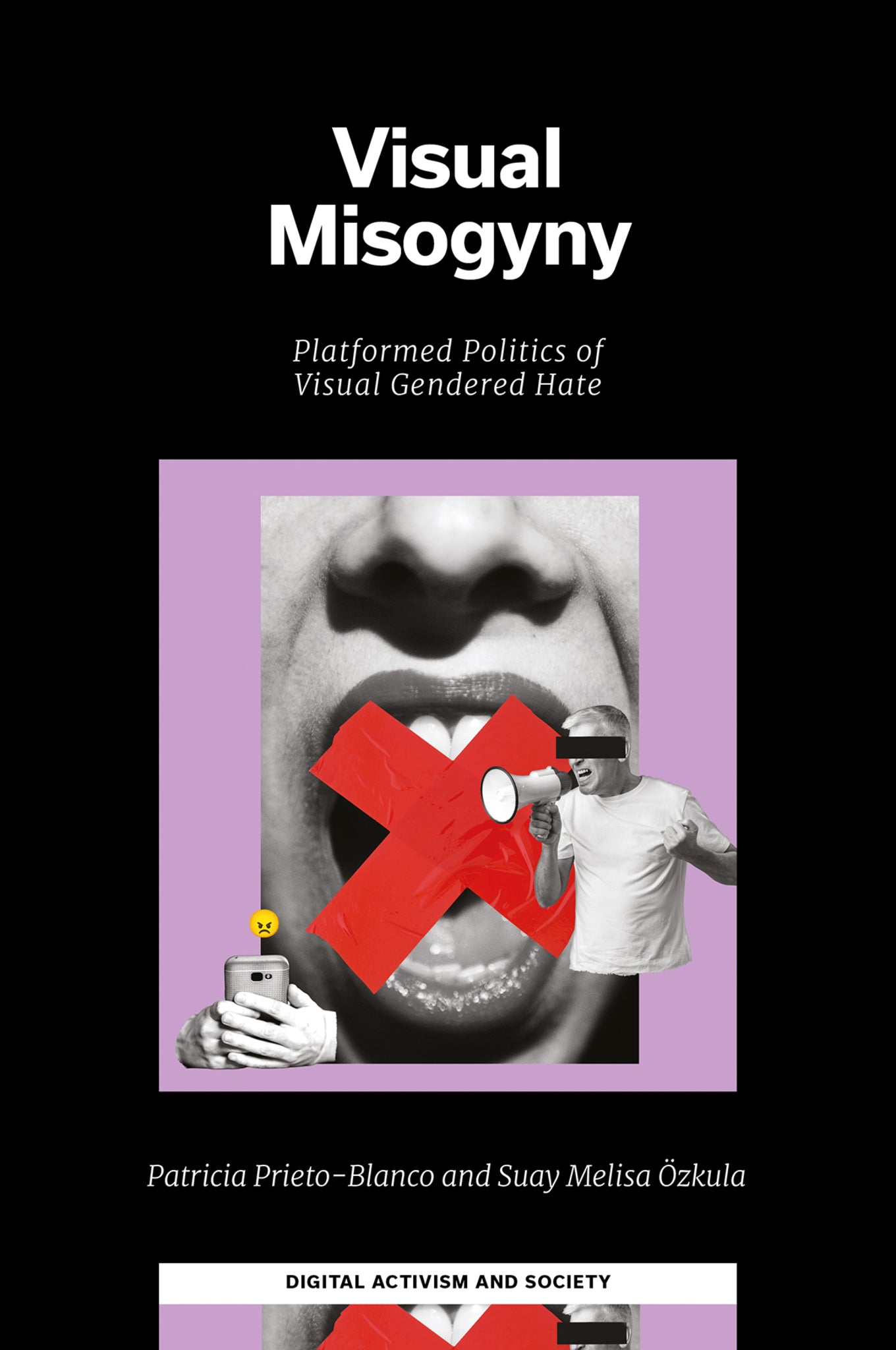
Visual Misogyny is an important contribution to media and cultural and gender studies that investigates the disturbing prevalence of visual gendered hate (images that contribute to and propagate hatred of women) in digital spaces and explores the dehumanising force of the circulation of such images on social media platforms.
While misogyny itself is not a new social phenomenon, the forms of visual hate that Prieto-Blanco and Özkula consider are new and remain under-researched. Bringing together three areas that have never before been explored in one comprehensive volume - misogyny, regimes of visualities, and platform studies - chapters focus on the widespread phenomenon of visual gendered hate and expose how this is bound to the anti-gender politics that has taken hold across Europe as a result of the rise of the right.
Presenting a transnational perspective through the inclusion of cases from Spain, Zimbabwe, and the UK, Visual Misogyny maps out the technological, social, and political dimensions of visual misogyny and will be of interest to a wide range of scholars interested in contemporary politics, activism, feminist visual studies and the relationship between state repression and right-wing ideology.

Over 30 years since Neil Postman provocatively asked what technology does to a culture, scholars continue to work to address the question. Here, some of the shocking statistics around active visual online misogyny signal an acute need to attentively outline and analyze its digital manifestations. The careful nuancing of the concept, as organized and/or ambient forms of misogyny is demonstrated using case studies provides a fresh explanatory springboard for unpacking the “patriarchal bargain”, (recalling Lisa Wade’s famous 2011 blog post in Sociological Images). Developing such language gives us more powerful and sophisticated access to understanding how “patriarchy has no gender” (hooks 2014) and is an issue that impacts us all.
— Professor Maria-Carolina Cambre, Concordia University, Montreal QC
Patricia Prieto-Blanco is a Lecturer in Digital Media Practice in the Department of Sociology at Lancaster University, UK.
Suay Melisa Özkula is Post-Doctoral Researcher at the University of Salzburg, Austria.
Part I. Platformed Politics of Visual Gendered Hate
Chapter 1. Gendered Power and Regimes of Visibility; Patricia Prieto-Blanco and Suay Melisa Özkula OPEN ACCESS
Chapter 2. Affordances and Platformed Visual Misogyny; Patricia Prieto-Blanco and Suay Melisa Özkula OPEN ACCESS
Part II. Case Studies of Visual Misogyny
Chapter 3. “No Heart, Just Games”: Online Visual Misogyny in Zimbabwe; Norita Mdege
Chapter 4. Gendered Hate in Social Media: A Grey Area; Carla Barrio and Patricia Prieto-Blanco
Chapter 5. Creepshots of a Maruxaina: From Slow Violence to Nude Economy; Elisa García-Mingo and Jacinto G. Lorca
Chapter 6. Platforms Versus Patrick: Is it Activism, Harassment, or Doxxing?; Suay Melisa Özkula
Chapter 7. Outlook: Reflections from the 2025 CAIS Working Group on Critical Interventions into Platformed Visual Misogyny; Suay Melisa Özkula, Patricia Prieto Blanco, Héctor Puente Bienvenido, Brianna L. Wiens, Shana MacDonald, Norita Mdege, and Elisa García-Mingo
Conclusion: Gendered Politics and Techno-Patriarchy