


Some error occured while loading the Quick View. Please close the Quick View and try reloading the page.
Winner of the 2014 D.J. Veegens prize, awarded by the Royal Holland Society of Sciences and Humanities.
Shortlisted for the 2015 World Economic History Congress dissertation prize (early modern period).
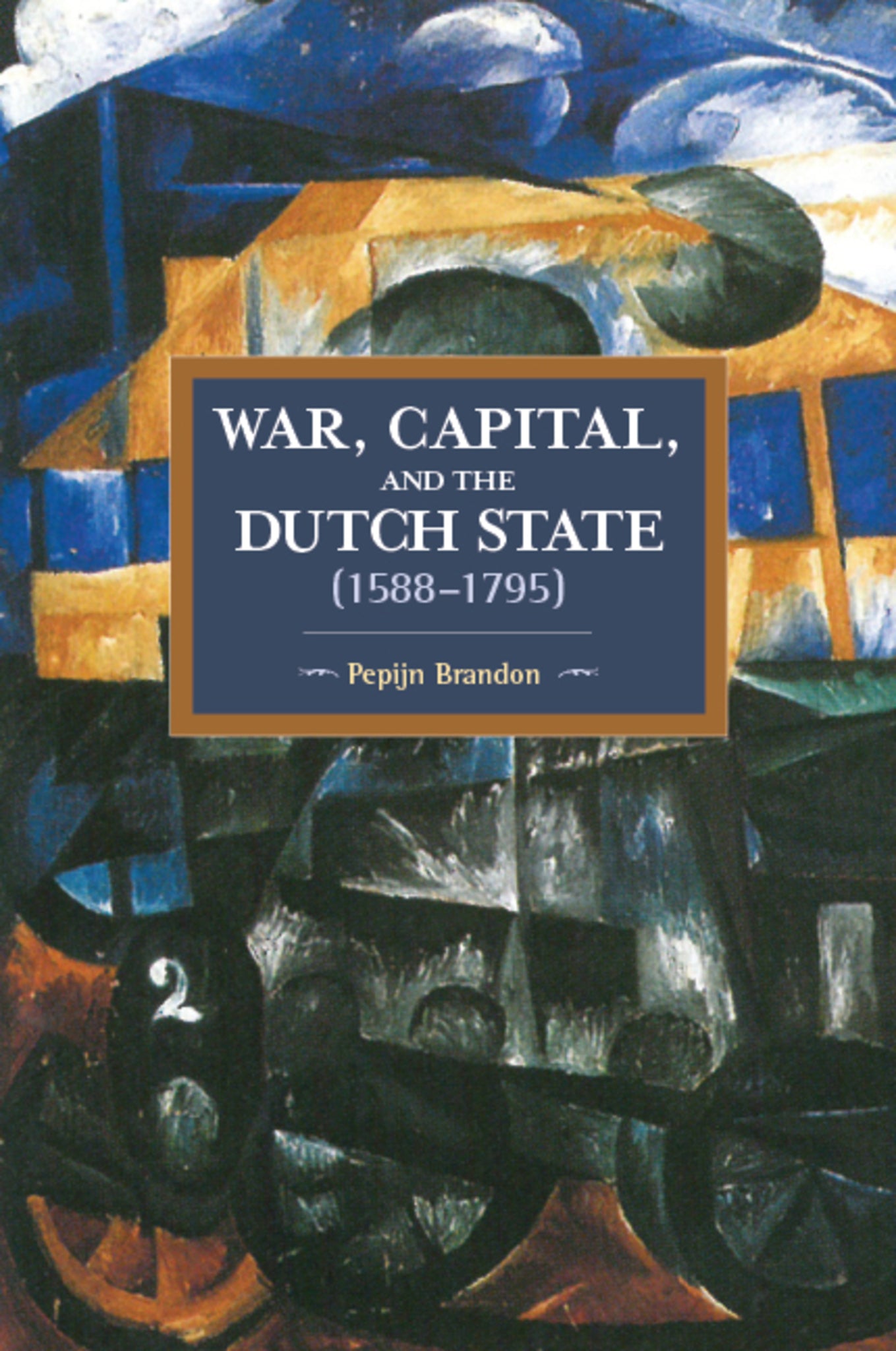
In War, Capital, and the Dutch State (1588-1795), Pepijn Brandon traces the interaction between state and capital in the organization of warfare in the Dutch Republic from the Dutch Revolt of the sixteenth century to the Batavian Revolution of 1795. Combining deep theoretical insight with a thorough examination of original source material on topics as diverse as the role of the Dutch East- and West-India Companies, the inner workings of the Amsterdam naval shipyard, state policy, and the role of private intermediaries in military finance, Brandon provides a sweeping new interpretation of the rise and fall of the Dutch Republic as a hegemonic power within the early modern capitalist world-system.
Shortlisted for the 2015 World Economic History Congress dissertation prize (early modern period).
In War, Capital, and the Dutch State (1588-1795), Pepijn Brandon traces the interaction between state and capital in the organization of warfare in the Dutch Republic from the Dutch Revolt of the sixteenth century to the Batavian Revolution of 1795. Combining deep theoretical insight with a thorough examination of original source material on topics as diverse as the role of the Dutch East- and West-India Companies, the inner workings of the Amsterdam naval shipyard, state policy, and the role of private intermediaries in military finance, Brandon provides a sweeping new interpretation of the rise and fall of the Dutch Republic as a hegemonic power within the early modern capitalist world-system.

Price: $40.00
Pages: 447
Publisher: Haymarket Books
Imprint: Haymarket Books
Series: Historical Materialism
Publication Date:
14 February 2017
Trim Size: 11.00 X 9.00 in
ISBN: 9781608466917
Format: Paperback
"This groundbreaking book provides a fascinating and knowledgeable case-study of the actual interplay of three of the main driving forces in the history of the early modern era: capitalism, state-formation and war and has major implications for many general claims that have been made with regard to their history and the history of the Dutch Republic."
—Prof. dr. Peer Vries, University of Vienna
—Prof. dr. Peer Vries, University of Vienna
"The publisher should be commended for making this study available to a large English-speaking audience, which it certainly deserves. Brandon's contribution is a type of economic history that has unfortunately fallen out of favor in recent decades, replaced by reams of cultural history, so one can only hope that this notable study will inspire similar social science research into the complex symbiosis of states and capital accumulation elsewhere. Every university's history department should acquire a copy for its own library collections."
—Eric Mielants, Science & Society, Vol. 48:4 (2018): 592-594
"Brandon’s study is not only well researched, it is highly convincing and will undoubtedly lead to a reconsideration of the forces at play in the development of the early modern state."
—Donald J. Harreld, Renaissance Quarterly, Vol. LXX:3 (2017): 1122-1123
"War, Capital, and the Dutch State (1588-1795) is a highly innovative piece of scholarship which successfully binds together the main debates relevant to understand the role of capital and war in state formation. Its value therefore reaches out far beyond the Netherlands."
—Louis Sicking, Forum Navale, Vol. 73:4 (2017): 131-133
"This research clearly makes an important contribution to our thinking about warfare and state formation."
—Christiaan van Bochove, Continuity and Change, Vol. 32:2 (2017): 289-291
Pepijn Brandon, Ph.D. (2013), University of Amsterdam, is a prize-winning historian of the Dutch Republic. He holds positions at the Vrije Universiteit Amsterdam and the International Institute of Social History.
List of Charts and Tables
Translations of Frequently Used Dutch Terms
Note on Currency
Introduction
Dutch War-Making and State-Making: Three Solutions to a Riddle
Typologies of the Early Modern State Form
The Dutch Cycle of Accumulation
The Federal-Brokerage State and its ‘Historic Bloc’
Content and Structure of the Book .
Chapter 1 The Making of the Federal-Brokerage State
1.1 The Dutch Revolt and the Establishment of the State
1.2 Types of Brokerage 1: Merchant Warriors
1.3 Types of Brokerage 2: Merchants as Administrators
1.4 Types of Brokerage 3: Financial Intermediaries in Troop Payments
1.5 Political and Ideological Foundations of the Federal-Brokerage State
Conclusions
Chapter 2 Merchant Companies, Naval Power, and Trade Protection
2.1 The Naval Revolution and the Challenge to Dutch Trade
2.2 A Unified State Company for Colonial Trade?
2.3 The VOC and the Navy from Symbiosis to Division of Labour
2.4 The WIC between Private Trade and State Protection
2.5 European Commercial Directorates as Protection Lobbies
2.6 Protection Costs and Merchant Interests
Conclusions
Chapter 3 Production, Supply, and Labour Relations at the Naval Shipyards
3.1 Capitalist Rationality, Accounting, and the Naval Revolution
3.2 Personal Networks and Market Practices
3.3 Different Products, Different Systems of Supply
3.4 Naval Shipyards as Centres of Production
3.5 Shipyards and their Workforce
3.6 Admiralty Boards and the Labour Market
3.7 Combination, Coordination, and Control
3.8 Of Time, Theft, and Chips
3.9 Neptune’s Trident and Athena’s Gifts
Conclusions
Chapter 4 Troop Payments, Military Soliciting, and the World of Finance
4.1 From Disorder to Regulation
4.2 A Golden Age of Military Soliciting
4.3 Two Careers in Military Finance
4.4 The Daily Affairs of a Financial Middleman
4.5 Networks of Credit and Influence
4.6 Military Soliciting in the Age of Financialisation
Conclusions
Chapter 5 The Structural Crisis of the Federal-Brokerage State
5.1 The Rise and Limits of Reform Agendas
5.2 Warring Companies and the Debate over Free Trade
5.3 Admiralty Boards at the Centre of the Storm
5.4 From Citizens’ Militias to the Batavian Legion
5.5 The Afterlife of the Federal-Brokerage State
Conclusions
Conclusion
Annex 1 Holland Members of the Amsterdam Admiralty Board
Annex 2 Zeeland Members of the Zeeland Admiralty Board
Annex 3 Income and Expenditure of the Amsterdam Admiralty: Steps from Figures in ‘Borderel’ to Reconstruction
Sources and Bibliography
Index
Translations of Frequently Used Dutch Terms
Note on Currency
Introduction
Dutch War-Making and State-Making: Three Solutions to a Riddle
Typologies of the Early Modern State Form
The Dutch Cycle of Accumulation
The Federal-Brokerage State and its ‘Historic Bloc’
Content and Structure of the Book .
Chapter 1 The Making of the Federal-Brokerage State
1.1 The Dutch Revolt and the Establishment of the State
1.2 Types of Brokerage 1: Merchant Warriors
1.3 Types of Brokerage 2: Merchants as Administrators
1.4 Types of Brokerage 3: Financial Intermediaries in Troop Payments
1.5 Political and Ideological Foundations of the Federal-Brokerage State
Conclusions
Chapter 2 Merchant Companies, Naval Power, and Trade Protection
2.1 The Naval Revolution and the Challenge to Dutch Trade
2.2 A Unified State Company for Colonial Trade?
2.3 The VOC and the Navy from Symbiosis to Division of Labour
2.4 The WIC between Private Trade and State Protection
2.5 European Commercial Directorates as Protection Lobbies
2.6 Protection Costs and Merchant Interests
Conclusions
Chapter 3 Production, Supply, and Labour Relations at the Naval Shipyards
3.1 Capitalist Rationality, Accounting, and the Naval Revolution
3.2 Personal Networks and Market Practices
3.3 Different Products, Different Systems of Supply
3.4 Naval Shipyards as Centres of Production
3.5 Shipyards and their Workforce
3.6 Admiralty Boards and the Labour Market
3.7 Combination, Coordination, and Control
3.8 Of Time, Theft, and Chips
3.9 Neptune’s Trident and Athena’s Gifts
Conclusions
Chapter 4 Troop Payments, Military Soliciting, and the World of Finance
4.1 From Disorder to Regulation
4.2 A Golden Age of Military Soliciting
4.3 Two Careers in Military Finance
4.4 The Daily Affairs of a Financial Middleman
4.5 Networks of Credit and Influence
4.6 Military Soliciting in the Age of Financialisation
Conclusions
Chapter 5 The Structural Crisis of the Federal-Brokerage State
5.1 The Rise and Limits of Reform Agendas
5.2 Warring Companies and the Debate over Free Trade
5.3 Admiralty Boards at the Centre of the Storm
5.4 From Citizens’ Militias to the Batavian Legion
5.5 The Afterlife of the Federal-Brokerage State
Conclusions
Conclusion
Annex 1 Holland Members of the Amsterdam Admiralty Board
Annex 2 Zeeland Members of the Zeeland Admiralty Board
Annex 3 Income and Expenditure of the Amsterdam Admiralty: Steps from Figures in ‘Borderel’ to Reconstruction
Sources and Bibliography
Index
- Choosing a selection results in a full page refresh.
- Opens in a new window.