


Some error occured while loading the Quick View. Please close the Quick View and try reloading the page.
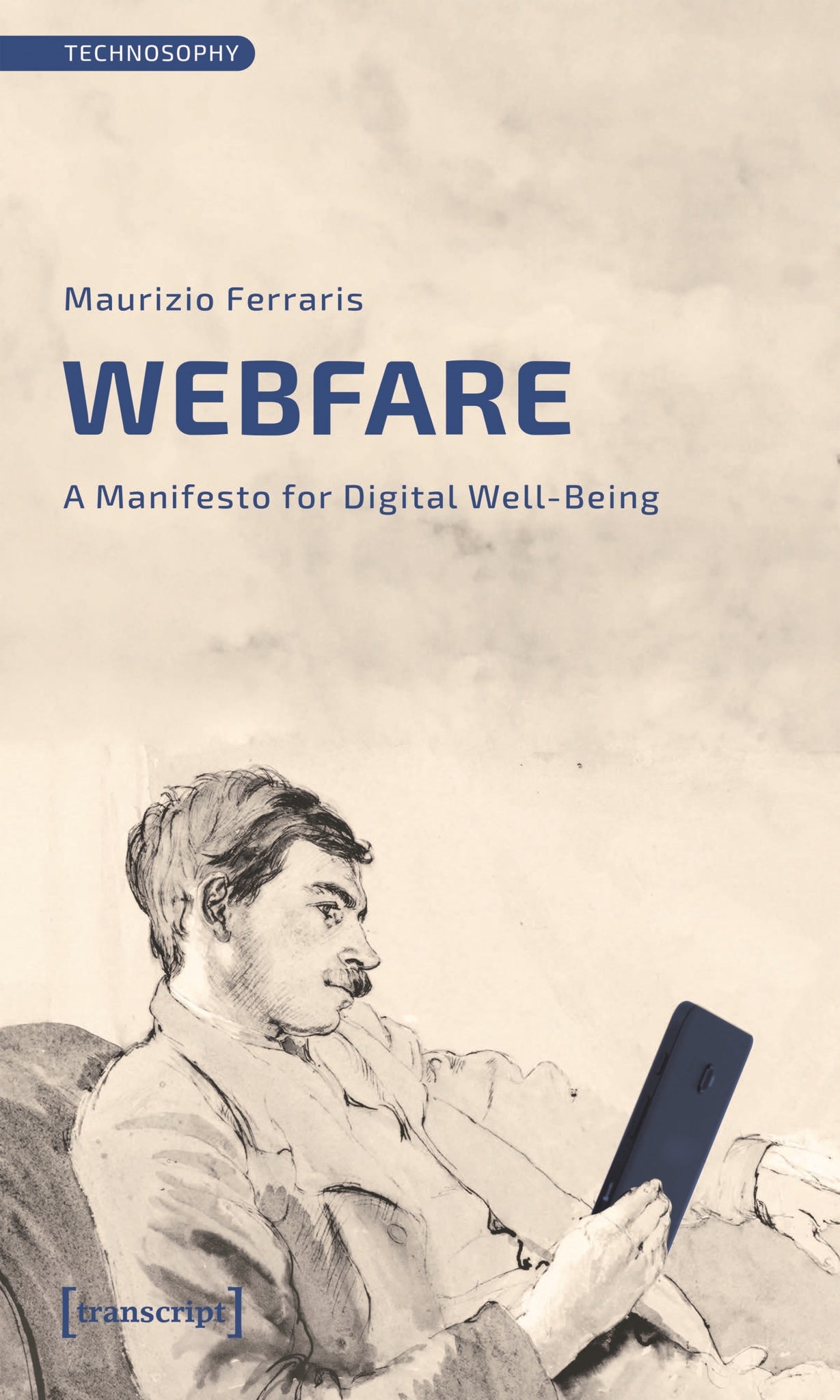
From time immemorial, humans have been making deals, consuming goods, cultivating interests, thereby manifesting specific forms of life. Now, these forms of life solidify automatically by transforming into data. Webfare, a form of digital welfare, seeks to initiate a Copernican revolution that places need instead of merit at the center of society. In 21st-century welfare, consumption and production will be considered as the two faces of the same reality. The possibility to create new value is precisely what sets Webfare apart from traditional welfare: it recognizes the new value created by the Web, and aims to use it for everyone's well-being.

Price: $25.00
Pages: 112
Publisher: transcript publishing
Imprint: transcript publishing
Series: Technosophy
Publication Date:
03 September 2024
Trim Size: 8.86 X 5.31 in
ISBN: 9783837671766
Format: Paperback
BISACs:
Maurizio Ferraris is a full professor of theoretical philosophy at the University of Turin. He is the president of Labont (Center for Ontology) and also the president of »Scienza Nuova«, an institute of advanced studies aimed at planning a sustainable future. Visiting professor at Harvard, Oxford, Munich, and Paris, newspaper columnist, author of successful television programmes and over seventy books, he has determined a new course of thought and studies in at least six areas: history of hermeneutics, aesthetics as theory of perception, social ontology, metaphysics, technological anthropology, and philosophy of economics.
Frontmatter 1
Contents 5
Growth or Degrowth? Maurizio Ferraris's Economy of Digital Waste Recycling 7
Prologue: Why Webfare? 15
Acknowledgments 19
1. From The Tyranny of Merit to The Democracy of Need 21
2. From Analog to Digital 35
3. From Artificial Intelligence to Natural Intelligence 57
4. From Human Capital to Human Heritage 67
5. From Homo Faber to Homo Sapiens 81
6. From Welfare to Webfare 93
Epilogue: From Being to Being-Together 105
Bibliography 107