


Some error occured while loading the Quick View. Please close the Quick View and try reloading the page.
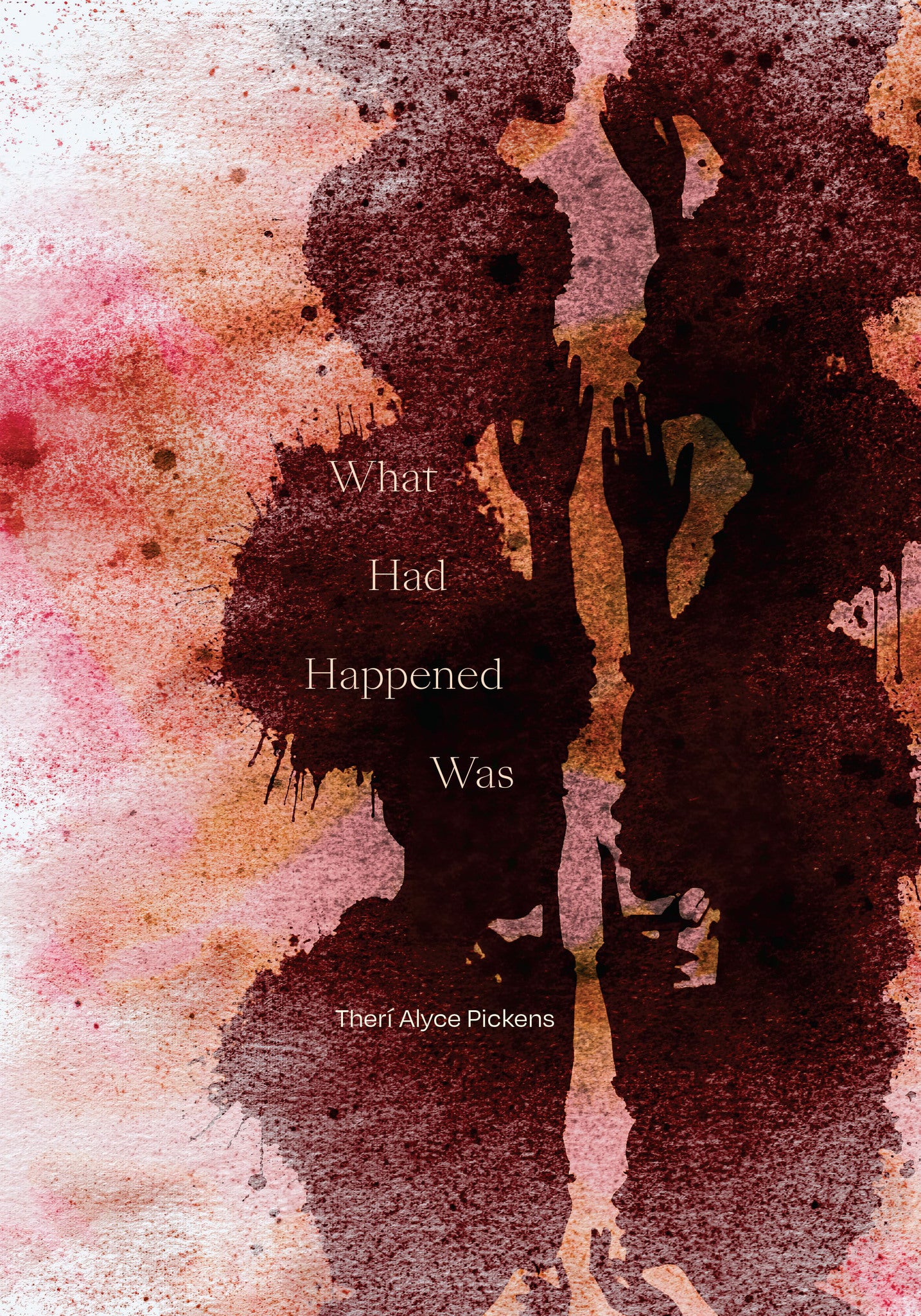
In her debut poetry collection, What Had Happened Was, Therí Alyce Pickens investigates the complex structures of Black storytelling. Addressing topics ranging from Black life, popular culture, and history to individual encounters with emotion, love, and chronic disability, Pickens crafts and questions the stories we tell ourselves about who we are and who we want to be. Throughout, Pickens mines the formal structures and the play of Black English within the lives and afterlives of Harriet Tubman, Mary J. Blige, Lil' Kim, Breonna Taylor, and figments of our collective imagination. Her singular poetic voice effortlessly flows between what she knows and what she’s heard and between everyday Black conversation and her work in cultural criticism and disability studies. Traveling at the speed of thought, Pickens explores a praxis of storytelling governed by the places where truths and fables kiss.

Price: $23.95
Pages: 96
Publisher: Duke University Press
Imprint: Duke University Press
Publication Date:
25 March 2025
Trim Size: 10.00 X 7.00 in
ISBN: 9781478031499
Format: Paperback
BISACs:
“In this engaging new collection of poetry, Therí Alyce Pickens demonstrates that she is a poet of depth, range, and often incisive humor. Her poems are a revelation.”—John Keene, author of, Punks: New and Selected Poems
“What Had Happened Was is a daring poet’s debut. First and foremost, I want to praise Therí Alyce Pickens’s collection for its unflinching attention to the nuances of—and everyday sorts of elaborate formal play embedded in—African American vernacular. It’s truly refreshing, and energizing, to see the dynamism of Black linguistic expression live a full life in contemporary American poetry this way. It’s all here. Love and loss, theory and autobiography, the ordinary and the transcendent.”—Joshua Bennett, author of, Spoken Word: A Cultural History
“Few debut poetry books are long awaited. Without a doubt, What Had Happened Was is. When you work tirelessly and patiently to master your art—with skill, wisdom, and an abundance of imagination—it reads like this.”—Hayan Charara, author of, These Trees, Those Leaves, This Flower, That Fruit: Poems
“Therí Alyce Pickens writes a poetics of the body that considers history, politics, race, gender, and the everyday mundane ways that they are experienced in bones, in the brain, and on the skin. While reading through What Had Happened Was, you may find that this Black poetics is crip poetics, is what people call the confessional voice. What Pickens confesses of the body is how the world makes the body a question. If you understand in depth the expression, the answer is in how one would begin: “What had happened was . . .”—Bettina Judd, author of, Feelin: Creative Practice, Pleasure, and Black Feminist Thought
“In her constantly surprising and deftly built poems, Therí Alyce Pickens enacts a poetics that refuses binaries, attends to and extends the power of Black art, and centers a body navigating illness. Pickens seamlessly moves through and braids memory, history, pop culture. The language is precise and remarkable; it will engage and entangle you in marvelous ways---as will the formally inventive poems and the structure itself. Pickens has written an electric first book. The poems are still sparking in my mind.”—Eduardo C. Corral, author of, Guillotine: Poems
"This collection demands attention and introspection by offering a raw yet eloquent portrayal of the intersections of history, identity, and systemic oppression. It’s an essential read for people seeking to honor the complexity of the experiences of Black Americans."—Jessica Calaway, Library Journal
"Pickens . . . seamlessly explores personal narrative, Black American life, systemic injustices, pop culture, history and chronic disability. . . . Pickens boldly grounds readers in time and place with poems like 'On This Day' and 'Corona Poem,' while poems such as 'The Amateur Gardener Considers a Time of Death' illustrate the realities of living with chronic disabilities."—Okunyi Bëhree, Seattle Times
“What Had Happened Was is a daring poet’s debut. First and foremost, I want to praise Therí Alyce Pickens’s collection for its unflinching attention to the nuances of—and everyday sorts of elaborate formal play embedded in—African American vernacular. It’s truly refreshing, and energizing, to see the dynamism of Black linguistic expression live a full life in contemporary American poetry this way. It’s all here. Love and loss, theory and autobiography, the ordinary and the transcendent.”—Joshua Bennett, author of, Spoken Word: A Cultural History
“Few debut poetry books are long awaited. Without a doubt, What Had Happened Was is. When you work tirelessly and patiently to master your art—with skill, wisdom, and an abundance of imagination—it reads like this.”—Hayan Charara, author of, These Trees, Those Leaves, This Flower, That Fruit: Poems
“Therí Alyce Pickens writes a poetics of the body that considers history, politics, race, gender, and the everyday mundane ways that they are experienced in bones, in the brain, and on the skin. While reading through What Had Happened Was, you may find that this Black poetics is crip poetics, is what people call the confessional voice. What Pickens confesses of the body is how the world makes the body a question. If you understand in depth the expression, the answer is in how one would begin: “What had happened was . . .”—Bettina Judd, author of, Feelin: Creative Practice, Pleasure, and Black Feminist Thought
“In her constantly surprising and deftly built poems, Therí Alyce Pickens enacts a poetics that refuses binaries, attends to and extends the power of Black art, and centers a body navigating illness. Pickens seamlessly moves through and braids memory, history, pop culture. The language is precise and remarkable; it will engage and entangle you in marvelous ways---as will the formally inventive poems and the structure itself. Pickens has written an electric first book. The poems are still sparking in my mind.”—Eduardo C. Corral, author of, Guillotine: Poems
"This collection demands attention and introspection by offering a raw yet eloquent portrayal of the intersections of history, identity, and systemic oppression. It’s an essential read for people seeking to honor the complexity of the experiences of Black Americans."—Jessica Calaway, Library Journal
"Pickens . . . seamlessly explores personal narrative, Black American life, systemic injustices, pop culture, history and chronic disability. . . . Pickens boldly grounds readers in time and place with poems like 'On This Day' and 'Corona Poem,' while poems such as 'The Amateur Gardener Considers a Time of Death' illustrate the realities of living with chronic disabilities."—Okunyi Bëhree, Seattle Times
Therí Alyce Pickens is Charles A. Dana Professor of English and Africana at Bates College and author of Black Madness :: Mad Blackness, also published by Duke University Press, and New Body Politics: Narrating Arab and Black Identity in the Contemporary United States.
This
On This Day 2
The Amateur Gardener Considers a Time of Death 3
On March 12, 2020, Breonna Taylor 5
On Losing; A Hypothesis 6
Customary Calculus for Chronicity 7
Getting Dressed 9
Depression, Jacob Lawrence, 1950 10
If Lyndon B. Johnson hadn’t had his heart attack 11
Remember the episode of Bones when 12
Ode to Checking My Shit 13
Anatomy of Soap 15
my lover says (my mind) 17
I found out I have something 18
Ursa Corregidora and Mary J. Blige Contemplate Life without Children 19
That
Dispatches from the Pediatric Floor 22
Collar Is What Hangs around the Neck 23
I am watching a documentary about food, again 25
Corona Poem 26
T 27
On sex 28
Palimpsestina 29
The Amateur Gardener Contemplates Trauma 31
Apostrophe to Inspiration 32
Chronically Ill 34
On recompense 35
I tell her some of her ancestors must have snitched on Harriet Tubman 36
What You Don’t See When Ben Vereen Guest Stars as Will’s Father on The Fresh Prince, May 1994 37
Mind You
What Had Happened Was 40
& The Third
Variation on a Theme 56
Potential Ode or Elegy Out My Window 57
Neighborhood Watch 58
Coming Home 59
Ranunculus 61
It was just before Thanksgiving 62
June, 1018 63
Ursa Corregidora Goes to Junior High in the 1990s 64
Some Suicide Are Slow 65
I got into a Twitter beef with Lolo Jones over a blind white girl 67
What Cliff Should Have Told Theo on the Pilot of The Cosby Show, September 1984 68
Antony and Cleopatra, dir. Simon Godwin, National Theatre, 2019 70
my lover says (he doesn’t remember) 72
I meet a man with a stutter 73
Let Me Holla at You Right Quick; or Notes 75
I Ain’t Forgot about Y’all; or Acknowledgments 81
On This Day 2
The Amateur Gardener Considers a Time of Death 3
On March 12, 2020, Breonna Taylor 5
On Losing; A Hypothesis 6
Customary Calculus for Chronicity 7
Getting Dressed 9
Depression, Jacob Lawrence, 1950 10
If Lyndon B. Johnson hadn’t had his heart attack 11
Remember the episode of Bones when 12
Ode to Checking My Shit 13
Anatomy of Soap 15
my lover says (my mind) 17
I found out I have something 18
Ursa Corregidora and Mary J. Blige Contemplate Life without Children 19
That
Dispatches from the Pediatric Floor 22
Collar Is What Hangs around the Neck 23
I am watching a documentary about food, again 25
Corona Poem 26
T 27
On sex 28
Palimpsestina 29
The Amateur Gardener Contemplates Trauma 31
Apostrophe to Inspiration 32
Chronically Ill 34
On recompense 35
I tell her some of her ancestors must have snitched on Harriet Tubman 36
What You Don’t See When Ben Vereen Guest Stars as Will’s Father on The Fresh Prince, May 1994 37
Mind You
What Had Happened Was 40
& The Third
Variation on a Theme 56
Potential Ode or Elegy Out My Window 57
Neighborhood Watch 58
Coming Home 59
Ranunculus 61
It was just before Thanksgiving 62
June, 1018 63
Ursa Corregidora Goes to Junior High in the 1990s 64
Some Suicide Are Slow 65
I got into a Twitter beef with Lolo Jones over a blind white girl 67
What Cliff Should Have Told Theo on the Pilot of The Cosby Show, September 1984 68
Antony and Cleopatra, dir. Simon Godwin, National Theatre, 2019 70
my lover says (he doesn’t remember) 72
I meet a man with a stutter 73
Let Me Holla at You Right Quick; or Notes 75
I Ain’t Forgot about Y’all; or Acknowledgments 81