


Some error occured while loading the Quick View. Please close the Quick View and try reloading the page.
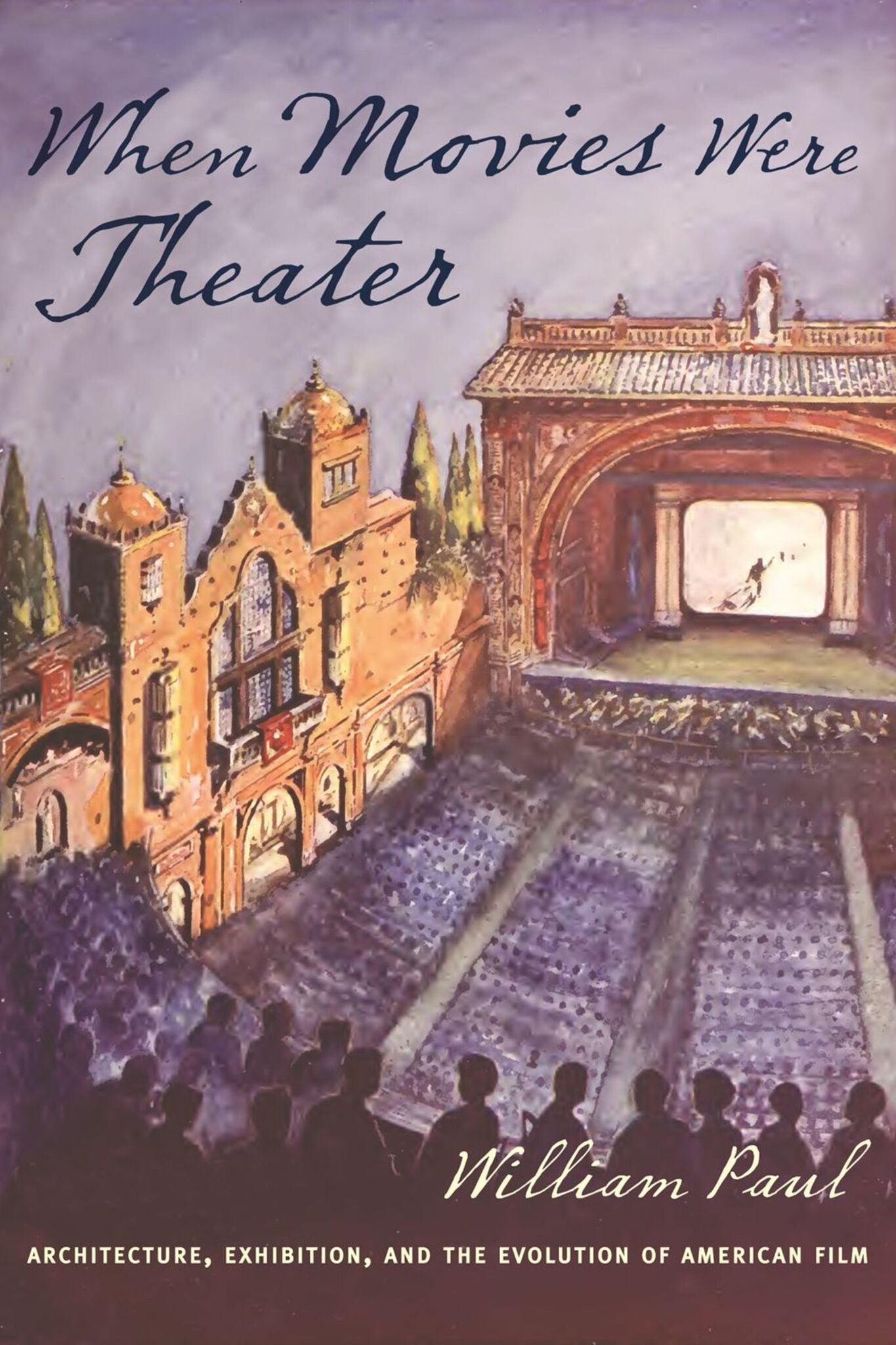
There was a time when seeing a movie meant more than seeing a film. The theater itself shaped the very perception of events on screen. This multilayered history tells the story of American film through the evolution of theater architecture and the surprisingly varied ways movies were shown, ranging from Edison's 1896 projections to the 1968 Cinerama premiere of Stanley Kubrick's 2001. William Paul matches distinct architectural forms to movie styles, showing how cinema's roots in theater influenced business practices, exhibition strategies, and film technologies.

Price: $42.00
Pages: 432
Publisher: Columbia University Press
Imprint: Columbia University Press
Series: Film and Culture Series
Publication Date:
24 May 2016
Trim Size: 9.00 X 6.00 in
ISBN: 9780231176576
Format: Paperback
Just as the very concept of 'going to the movies' in a theatrical space seems under threat and antiquated, William Paul's informed and rigorous look back at what going to the moves once meant—culturally, aesthetically, and architecturally—seems particularly urgent and apt. When Movies Were Theater offers digital -age moviegoers—screen watchers?—a fascinating and provocative study of the spaces in which we see movies.
William Paul is professor of film and media studies at Washington University in St. Louis. He is also the author of Ernst Lubitsch's American Comedy (1983) and Laughing Screaming: Modern Hollywood Horror and Comedy (1994).
List of Illustrations
Acknowledgments
Introduction: An Art of the Theater
1. Making Movies Fit
2. Store Theaters: A Radical Break
3. Palatial Architecture, Democratized Audience
4. Elite Taste in a Mass Medium
5. Uncanny Theater
6. The Architectural Screen
Conclusion: Ontological Fade-Out
Appendix 1: Stage Shows and Double Features in Select Markets Outside New York City
Appendix 2: Feature Films Based on Theatrical Sources
Appenidx 3: Filmography
Appendix 4: List of Theaters
Abbreviations Used for Citations in Notes
Notes
Selected Bibliography
Index