


Some error occured while loading the Quick View. Please close the Quick View and try reloading the page.
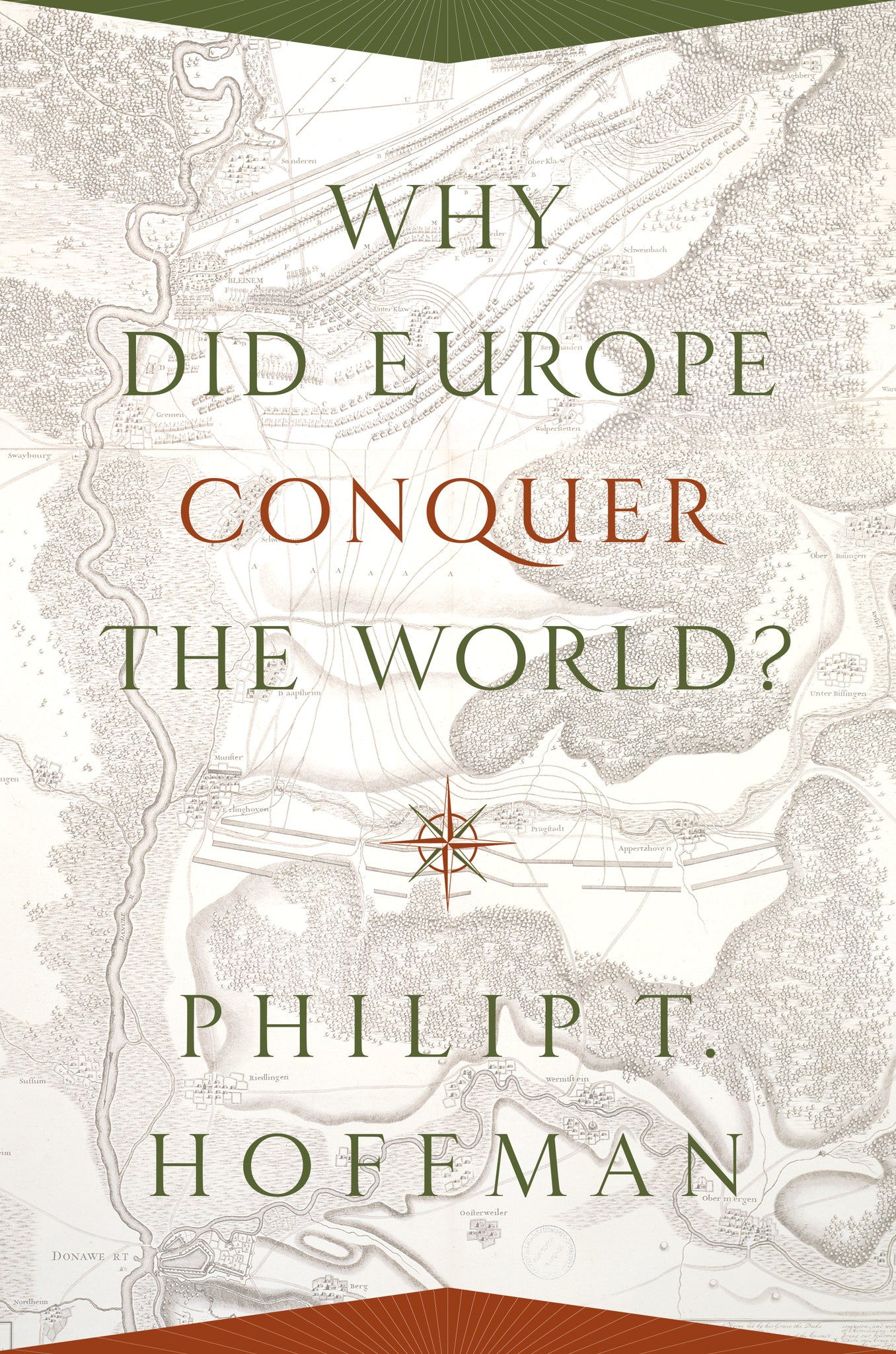
The startling economic and political answers behind Europe's historical dominance
Between 1492 and 1914, Europeans conquered 84 percent of the globe. But why did Europe establish global dominance, when for centuries the Chinese, Japanese, Ottomans, and South Asians were far more advanced? In Why Did Europe Conquer the World?, Philip Hoffman demonstrates that conventional explanations—such as geography, epidemic disease, and the Industrial Revolution—fail to provide answers. Arguing instead for the pivotal role of economic and political history, Hoffman shows that if certain variables had been different, Europe would have been eclipsed, and another power could have become master of the world. Hoffman sheds light on the two millennia of economic, political, and historical changes that set European states on a distinctive path of development, military rivalry, and war. This resulted in astonishingly rapid growth in Europe's military sector, and produced an insurmountable lead in gunpowder technology. The consequences determined which states established colonial empires or ran the slave trade, and even which economies were the first to industrialize. Debunking traditional arguments, Why Did Europe Conquer the World? reveals the startling reasons behind Europe's historic global supremacy.
