


Some error occured while loading the Quick View. Please close the Quick View and try reloading the page.
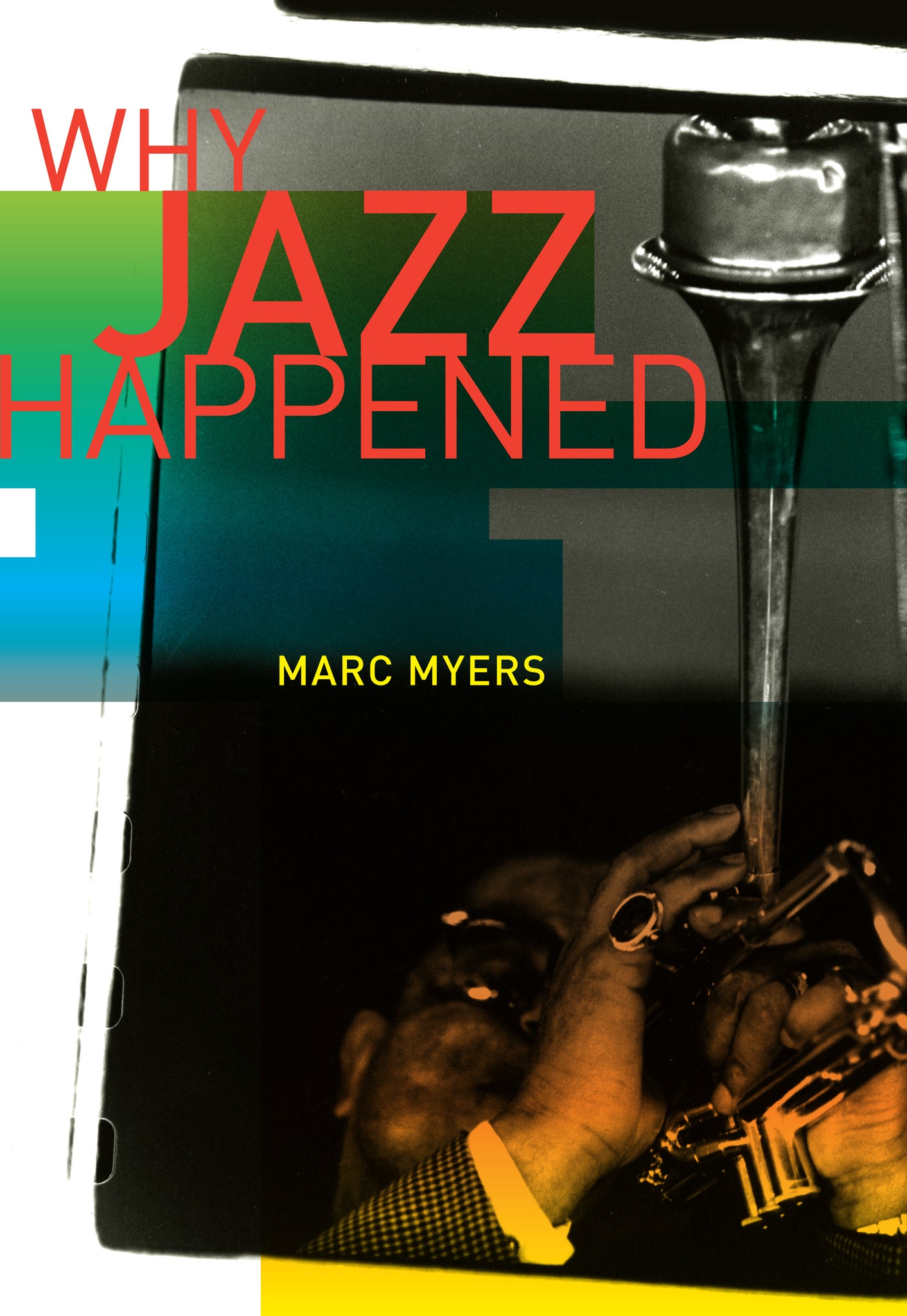
Why Jazz Happened is the first comprehensive social history of jazz. It provides an intimate and compelling look at the many forces that shaped this most American of art forms and the many influences that gave rise to jazz’s post-war styles. Rich with the voices of musicians, producers, promoters, and others on the scene during the decades following World War II, this book views jazz’s evolution through the prism of technological advances, social transformations, changes in the law, economic trends, and much more.
In an absorbing narrative enlivened by the commentary of key personalities, Marc Myers describes the myriad of events and trends that affected the music's evolution, among them, the American Federation of Musicians strike in the early 1940s, changes in radio and concert-promotion, the introduction of the long-playing record, the suburbanization of Los Angeles, the Civil Rights movement, the “British invasion” and the rise of electronic instruments. This groundbreaking book deepens our appreciation of this music by identifying many of the developments outside of jazz itself that contributed most to its texture, complexity, and growth.
In an absorbing narrative enlivened by the commentary of key personalities, Marc Myers describes the myriad of events and trends that affected the music's evolution, among them, the American Federation of Musicians strike in the early 1940s, changes in radio and concert-promotion, the introduction of the long-playing record, the suburbanization of Los Angeles, the Civil Rights movement, the “British invasion” and the rise of electronic instruments. This groundbreaking book deepens our appreciation of this music by identifying many of the developments outside of jazz itself that contributed most to its texture, complexity, and growth.

Price: $29.95
Pages: 280
Publisher: University of California Press
Imprint: University of California Press
Publication Date:
26 February 2019
Trim Size: 9.00 X 6.00 in
ISBN: 9780520305519
Format: Paperback
BISACs:
“A highly engaging, thoroughly researched book.”
Marc Myers is a frequent contributor to the Wall Street Journal, where he writes about jazz, rock, soul, and rhythm & blues as well as art and architecture. He blogs daily at www.JazzWax.com, winner of the Jazz Journalists Association's Blog of the Year Award.
Acknowledgments
Introduction
1. Record Giants Blink
2. DJs, Promoters, and Bebop
3. G.I. Bill and Cool
4. Speed War, Tape, and Solos
5. Suburbia and West Coast Jazz
6. BMI, R&B, and Hard Bop
7. Bias, Africa, and Spiritual Jazz
8. Invasion and Jazz-Pop
9. Alienation and the Avant-Garde
1. Lights, Volume, and Fusion
11. Jazz Hangs On
Notes
Index
Introduction
1. Record Giants Blink
2. DJs, Promoters, and Bebop
3. G.I. Bill and Cool
4. Speed War, Tape, and Solos
5. Suburbia and West Coast Jazz
6. BMI, R&B, and Hard Bop
7. Bias, Africa, and Spiritual Jazz
8. Invasion and Jazz-Pop
9. Alienation and the Avant-Garde
1. Lights, Volume, and Fusion
11. Jazz Hangs On
Notes
Index