


Some error occured while loading the Quick View. Please close the Quick View and try reloading the page.
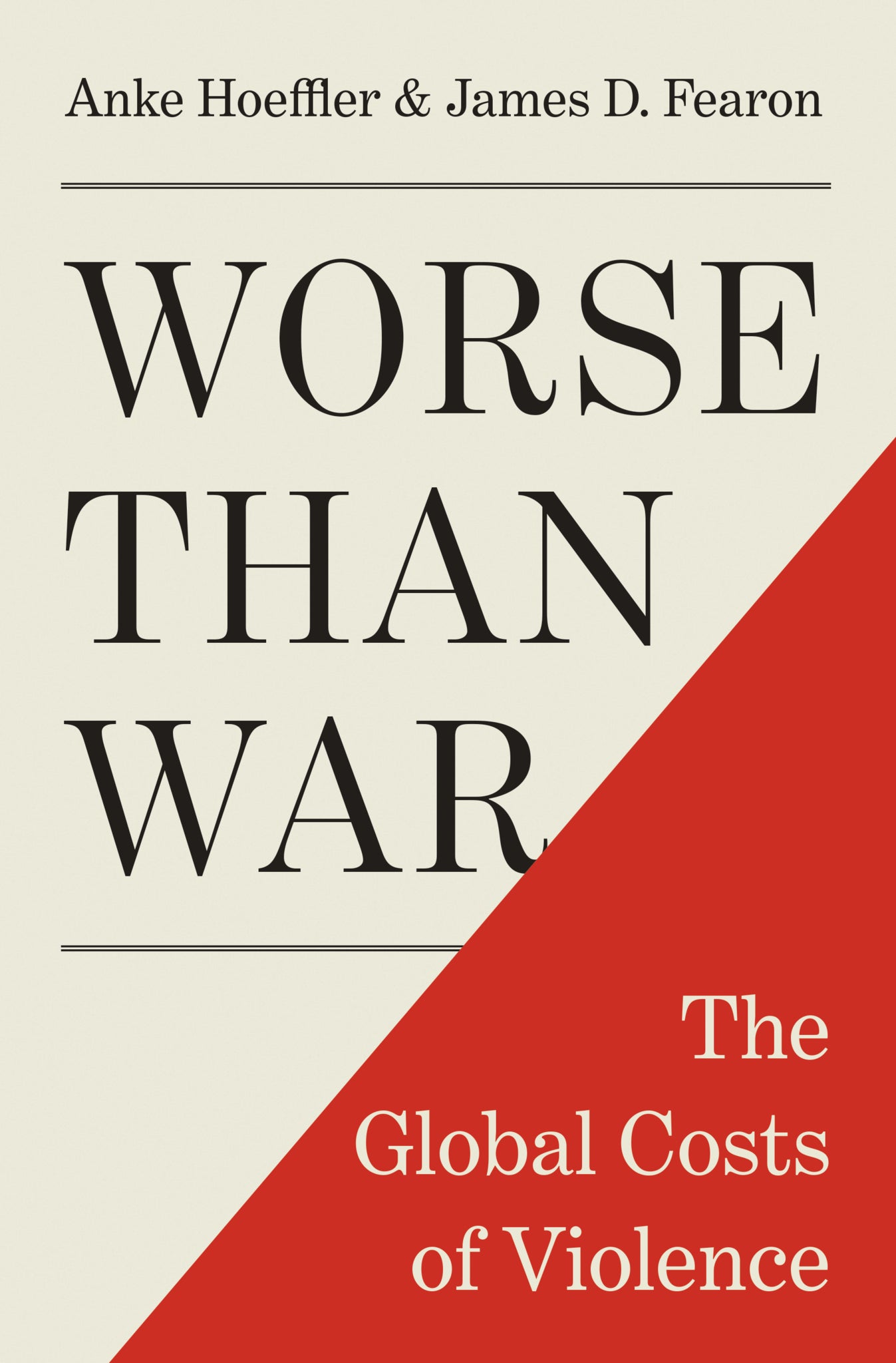
An empirically powerful account of why interpersonal violence across the globe exacts a far greater cumulative cost on society than war and terrorism combined
Civil wars, interstate wars, and terrorism receive a great deal of media and policy attention, for good reasons. By contrast, the major forms of interpersonal violence—homicide, intimate partner violence, and severe physical punishment of children—generally have a much lower profile.
In Worse than War, Anke Hoeffler and James Fearon assemble and analyze the data on the global prevalence and costs of collective and interpersonal violence. They show that interpersonal violence is vastly more widespread and imposes far greater societal costs than collective violence. Wars tend to be concentrated in a small number of countries, and often relatively small areas within them. By contrast, almost all countries have rates of homicide and nonfatal assault, particularly of women and children, that far exceed the global average rates of death and injury in wars and terrorism.
Hoeffler and Fearon argue that high rates of interpersonal violence are not simply fixed by culture or other structural factors. Evidence from a host of program evaluations, natural experiments, and longer-term social movements make it clear that rates of homicide, intimate partner violence, and severe physical punishment of children can be reduced if they are effectively targeted. Interventions that promote peace in civil war–torn countries are also possible, but the opportunities are few and increasingly far between. Drawing on ideas and methods from many fields—economics, political science, public health, psychology, sociology, and others—the authors show that money and policy efforts directed toward reducing interpersonal violence thus merit higher priority both within countries and by international donors.
