


Some error occured while loading the Quick View. Please close the Quick View and try reloading the page.
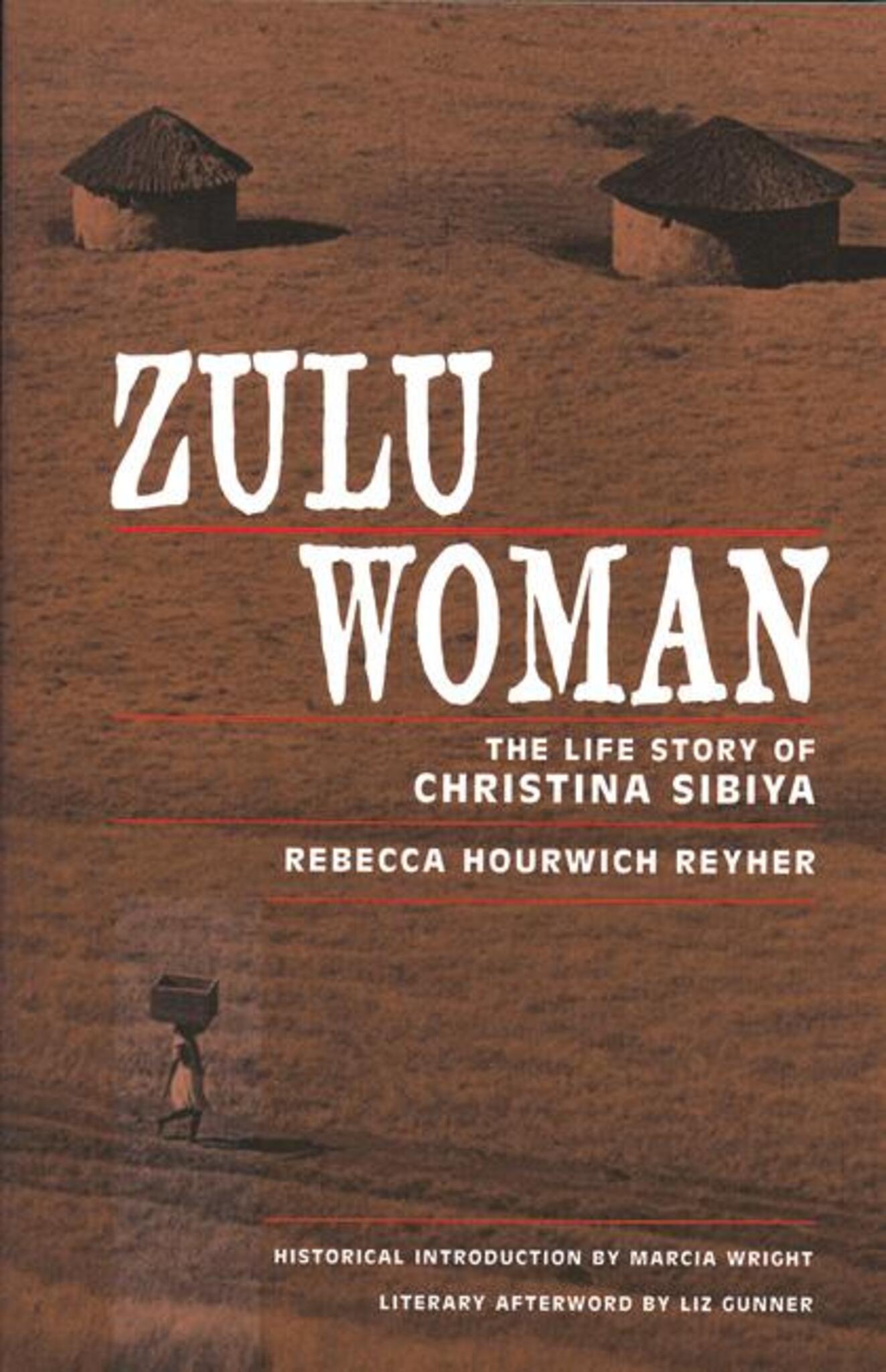
In 1934, American writer Rebecca Hourwich Reyher recorded the remarkable life story of Christina Sibiya, the first of sixty-five wives of the uncrowned king of the Zulus. What Reyher faithfully recorded—and then crafted into a moving narrative—is the riveting story of a South African woman who entered life among the Zulu royal family and then, after enduring psychological and physical abuse, found the courage to leave.
In 1915, fifteen-year-old Christina Sibiya left teaching at a mission school to become the first wife of Solomon ka Dinuzulu. While at the royal household, Sibiya successfully adjusted to the expectations of her new position, finding her place among the other wives, and negotiating Zulu and Christian tradition. The royal headquarters, however, became increasingly plagued by divisiveness, dissolution, and ill health. After a series of hardships, climaxing in a beating by Solomon, Sibiya, at the age of twenty-eight, escaped to Durban. Although pursued by Solomon's representative, Sibiya successfully resisted Solomon's authority by testifying first in a European magistrate's court, and then at the royal headquarters, that her marriage was invalid.
First published in 1948, Zulu Woman is placed in new context by an introduction and afterword which consider the book's relationship to other African literature and oral history, attend to questions of power and authorship, and draw upon newly available archival materials.
In 1915, fifteen-year-old Christina Sibiya left teaching at a mission school to become the first wife of Solomon ka Dinuzulu. While at the royal household, Sibiya successfully adjusted to the expectations of her new position, finding her place among the other wives, and negotiating Zulu and Christian tradition. The royal headquarters, however, became increasingly plagued by divisiveness, dissolution, and ill health. After a series of hardships, climaxing in a beating by Solomon, Sibiya, at the age of twenty-eight, escaped to Durban. Although pursued by Solomon's representative, Sibiya successfully resisted Solomon's authority by testifying first in a European magistrate's court, and then at the royal headquarters, that her marriage was invalid.
First published in 1948, Zulu Woman is placed in new context by an introduction and afterword which consider the book's relationship to other African literature and oral history, attend to questions of power and authorship, and draw upon newly available archival materials.

Price: $15.95
Pages: 256
Publisher: The Feminist Press at CUNY
Imprint: The Feminist Press at CUNY
Series: Women Writing Africa
Publication Date:
01 December 1998
Trim Size: 9.00 X 6.00 in
ISBN: 9781558612037
Format: Paperback
BISACs:
"[An] absorbing biographical narrative. . . . As recorded so ably by Reyher, Christina's life history is an illuminating document of personal relations." —The New York Times
"Christina Sibiya . . . is a character well worth knowing." —New York Herald Tribune
"At a time when the conflicting demands of women's rights and customary law are high on the political agenda in South Africa, Sibiya's story is as powerful, fresh, and relevant as it was when first published in 1948. The addition of Reyher's original interview notes greatly enriches the book, while the finely nuanced historical introduction and sensitive literary afterword enhance our understanding of this multi-layered text." —Shula Marks, author of Not Either an Experimental Doll
"A tour de force. By following Christina's life story—told at a time when most women were invisible in South Africa—we see revealed the private lives of Zulu women and their struggles for identity and respect. This story is a window into the past of a country that continues . . . the struggle for gender rights. Christina Sibiya is the heroine of all Zulu women, and of all women who have struggled against tyranny at the personal as well as the institutional level." —Yolanda T. Moses, author of How Real Is Race
"Christina Sibiya . . . is a character well worth knowing." —New York Herald Tribune
"At a time when the conflicting demands of women's rights and customary law are high on the political agenda in South Africa, Sibiya's story is as powerful, fresh, and relevant as it was when first published in 1948. The addition of Reyher's original interview notes greatly enriches the book, while the finely nuanced historical introduction and sensitive literary afterword enhance our understanding of this multi-layered text." —Shula Marks, author of Not Either an Experimental Doll
"A tour de force. By following Christina's life story—told at a time when most women were invisible in South Africa—we see revealed the private lives of Zulu women and their struggles for identity and respect. This story is a window into the past of a country that continues . . . the struggle for gender rights. Christina Sibiya is the heroine of all Zulu women, and of all women who have struggled against tyranny at the personal as well as the institutional level." —Yolanda T. Moses, author of How Real Is Race
Rebecca Hourwich Reyher (1897-1987), an active member of the National Women's Party, began a career as a writer in the 1920s, focusing her work on women in South Africa.