


Some error occured while loading the Quick View. Please close the Quick View and try reloading the page.
A guide to writing with the reader in mind
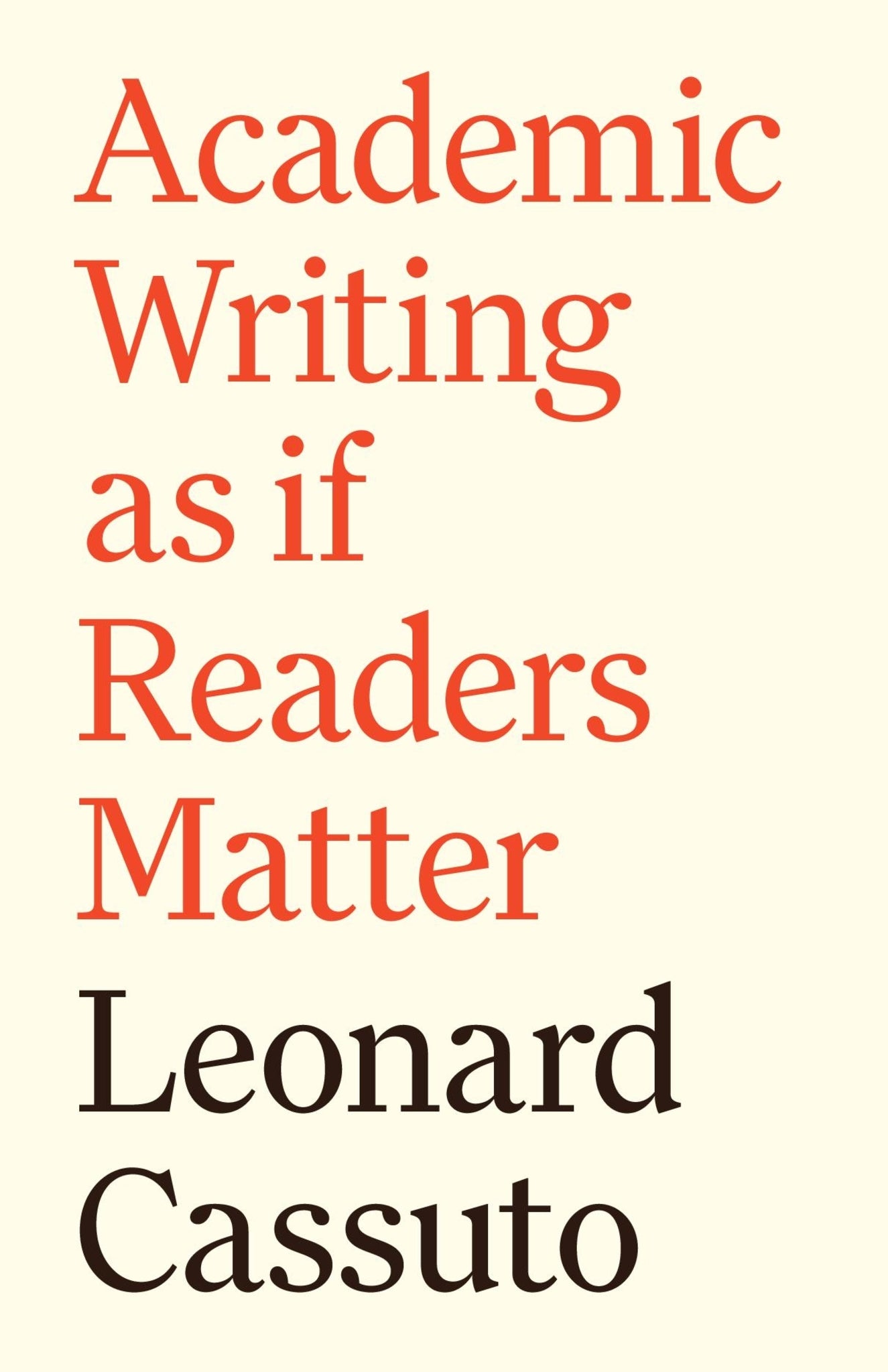
If you want people to read your writing, it has to be readable. In Academic Writing as if Readers Matter, Leonard Cassuto offers academic writers a direct, practical prescription for writing that will be read and understood: Take care of your reader. With a wealth of examples from the arts and sciences, this short, witty book provides invaluable advice to writers at all levels, in all fields, on how to write better for both specialized and broad audiences.
Good academic writing depends on connecting with readers, earning their time and attention. Cassuto offers tips and advice on how to sharpen arguments and make complex ideas compelling. He addresses the workings of introductions and conclusions, transitions, signposts, paragraphs, and sentences—all the building blocks of academic writing. He also shows how storytelling and metaphor can make your prose more engaging than you thought possible. And he explains the proper use of that most dangerous of tools: jargon.
This book can make any academic writer—including you—into a better writer. That means becoming a better communicator of the ideas and discoveries you want the world to grasp. For the sake of readers inside the academy and beyond it, Academic Writing as if Readers Matter shows how and why you have to make your writing connect with the people you’re writing for.

- Introduction
- The Primal Scene of Academic Writing
- On Rules (and Rule-Breaking)
- What about AI?
- How to Read This Book
- 1 The Care and Feeding of the Academic Reader
- Relationship Advice: The Clasp of the Hand
- On Extended Metaphors
- Writing as a Journey for Two
- Why the Academic Reader Is a Different Animal Than the General Reader
- Reading for Use
- The Feeding of the Academic Reader
- Writing for Use
- Signposting, Quoting, and Other Important Do’s and Don’ts
- Obstacles
- 2 Everything Is a Story
- The Argument Is a Story
- Don’t Write It from Beginning to End
- Let’s Start with the Title …
- The Architecture of Arguments
- Address Counterargument
- How to Structure a Comparison
- The Geometry of Argument
- Taking Care of the Reader in Mid-Argument
- Talk About What You’re Not Talking About
- The Literature Review
- Create Conclusions, Not Concussions
- Paragraphs
- A Paragraph Is a Story
- Beware of Upside-Down Paragraphs
- Don’t Bury Your Topic Sentences
- Don’t End a Paragraph with a Block Quotation
- The Geometry of Paragraphs
- In Praise of Short Paragraphs
- Transitions between Paragraphs
- Sentences
- Don’t Be Afraid to Write Simple Sentences
- Vary Your Sentence Structure
- On Recursion
- Get Rhythm
- Citations
- When and How to Cite
- What Should You Cite?
- Footnotes or Endnotes?
- The Basics of Visual Storytelling
- Don’t Do Anything Too Cute
- Present the Full Picture First
- Be Honest
- Be Careful of the Details
- How to Test whether You’re Doing Everything Right
- 3 Jargon and Judgment
- Most Difficulty Is Not Useful
- Writing, Teaching
- Jargon and Incivility
- In Search of Good and Civil Jargon (Yes, It Is Out There)
- The Unpleasures of the “Text”
- The Abstract and the Concrete
- New Pictures Tell Stories. Old Ones Don’t.
- Judgment Calls
- Some Common Mistakes and What They Show Us
- 4 Why We Must: Because We’re All in This Together
- Useful Difficulty Revisited
- Fearful Writing and the Search for the Goldilocks Solution
- The Incredible Shrinking Audience
- Politics and Academic Language
- The General Public? How about the Field Next Door?
- A Story to Close
- Appendix: How to Use Artificial Intelligence
- Acknowledgments
- Notes
- Index