


Some error occured while loading the Quick View. Please close the Quick View and try reloading the page.
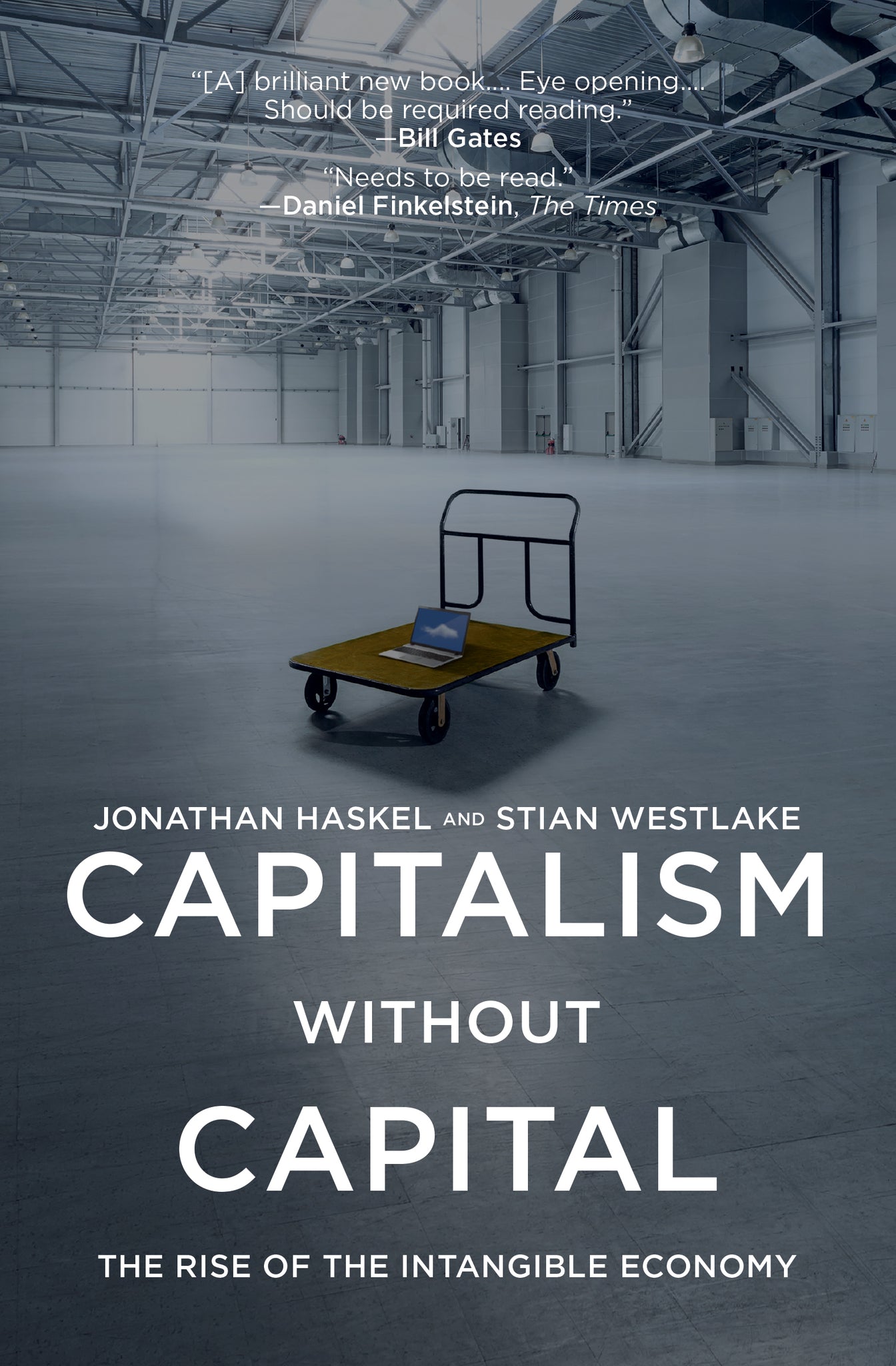
Early in the twenty-first century, a quiet revolution occurred. For the first time, the major developed economies began to invest more in intangible assets, like design, branding, and software, than in tangible assets, like machinery, buildings, and computers. For all sorts of businesses, the ability to deploy assets that one can neither see nor touch is increasingly the main source of long-term success. But this is not just a familiar story of the so-called new economy. Capitalism without Capital shows that the growing importance of intangible assets has also played a role in some of the larger economic changes of the past decade, including the growth in economic inequality and the stagnation of productivity. Jonathan Haskel and Stian Westlake explore the unusual economic characteristics of intangible investment and discuss how an economy rich in intangibles is fundamentally different from one based on tangibles. Capitalism without Capital concludes by outlining how managers, investors, and policymakers can exploit the characteristics of an intangible age to grow their businesses, portfolios, and economies.

Price: $18.95
Pages: 296
Publisher: Princeton University Press
Imprint: Princeton University Press
Publication Date:
16 October 2018
ISBN: 9780691183299
Format: Paperback
BISACs:
BUSINESS & ECONOMICS / Economics / General
,
Economics
,
BUSINESS & ECONOMICS / Free Enterprise & Capitalism
,
BUSINESS & ECONOMICS / Organizational Behavior
,
BUSINESS & ECONOMICS / Development / Business Development
,
BUSINESS & ECONOMICS / Economic History
,
Organizational theory and behaviour
,
Research and development management
,
Economic history
"One of the Economist.com “Wise Words 2017 Books of the Year” in Economics and Business"
Jonathan Haskel is professor of economics at Imperial College Business School. Stian Westlake is advisor to the UK Minister of Science and Innovation. Haskel and Westlake were cowinners of the 2017 Indigo Prize.