


Some error occured while loading the Quick View. Please close the Quick View and try reloading the page.
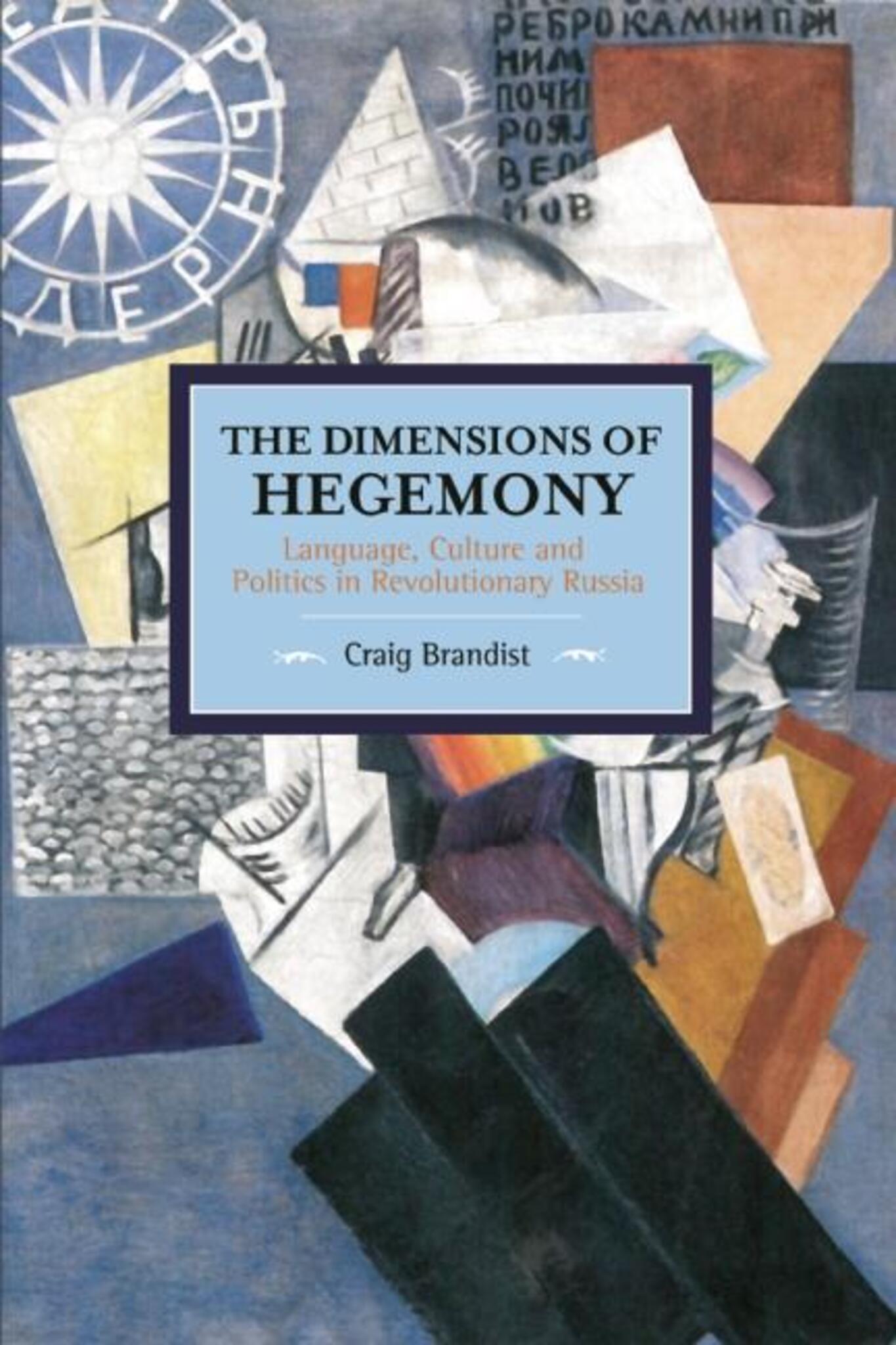
Though generally associated with Antonio Gramsci, the idea of hegemony played an essential role in revolutionary Russia where it was used to conceptualize the dynamics of political and cultural leadership. Drawing on extensive archival research, this study considers the cultural dimensions of hegemony through an examination of early soviet language policies and the debates that surrounded them. This unearthed history shows that considerations of relations between the proletariat and peasantry, the cities to the countryside, and the metropolitan center to the colonies of the Russian Empire demanded an intense dialogue between practical politics and theoretical reflections. It was this dialogue that led early Soviet thinkers to critical perspectives now assumed to be the achievement of sociolinguistics and post-colonial studies.

Price: $30.00
Pages: 280
Publisher: Haymarket Books
Imprint: Haymarket Books
Series: Historical Materialism
Publication Date:
14 June 2016
Trim Size: 9.00 X 6.00 in
ISBN: 9781608465576
Format: Paperback
BISACs:
POLITICAL SCIENCE / Political Ideologies / Communism
,
Post-Communism & Socialism
,
Political ideologies and movements
,
POLITICAL SCIENCE / Colonialism & Post-Colonialism
,
EDUCATION / Philosophy
,
Theory & Social Aspects
,
HISTORY / Russia / General
,
Colonialism and imperialism
,
Politics and government
,
Philosophy and theory of education
,
European history
Craig Brandist is Professor of Cultural Theory and Intellectual History at the University of Sheffield, UK. His work has greatly extended Anglophone understandings of Soviet sociolinguistics, and includes major works on Bahktin, Vygotskii, and the Soviet critique of Eurocentrism
Preface
Acknowledgements
Introduction: the Multiple Dimensions of Hegemony
1. Hegemony in Russian Social Democracy Before 1917
2. Hegemony without Social Science: Traditional Intellectuals in Late-Imperial Russia.
3. Verbal Art and Revolution: the Living Word
4. Metamorphoses of Hegemony in the Period of the NEP
5. The New Paradigm in Linguistic Science
6. The Revolution in the West and East: Hegemony and the National Question
7. Hegemony: the Decline and Fall of a Paradigm
8. Ideology Critique, Positivism and Marxism: the Paradoxical Legacy of Nikolai Marr
9. Conclusion
Glossary of Names
References
Acknowledgements
Introduction: the Multiple Dimensions of Hegemony
1. Hegemony in Russian Social Democracy Before 1917
2. Hegemony without Social Science: Traditional Intellectuals in Late-Imperial Russia.
3. Verbal Art and Revolution: the Living Word
4. Metamorphoses of Hegemony in the Period of the NEP
5. The New Paradigm in Linguistic Science
6. The Revolution in the West and East: Hegemony and the National Question
7. Hegemony: the Decline and Fall of a Paradigm
8. Ideology Critique, Positivism and Marxism: the Paradoxical Legacy of Nikolai Marr
9. Conclusion
Glossary of Names
References