


Some error occured while loading the Quick View. Please close the Quick View and try reloading the page.
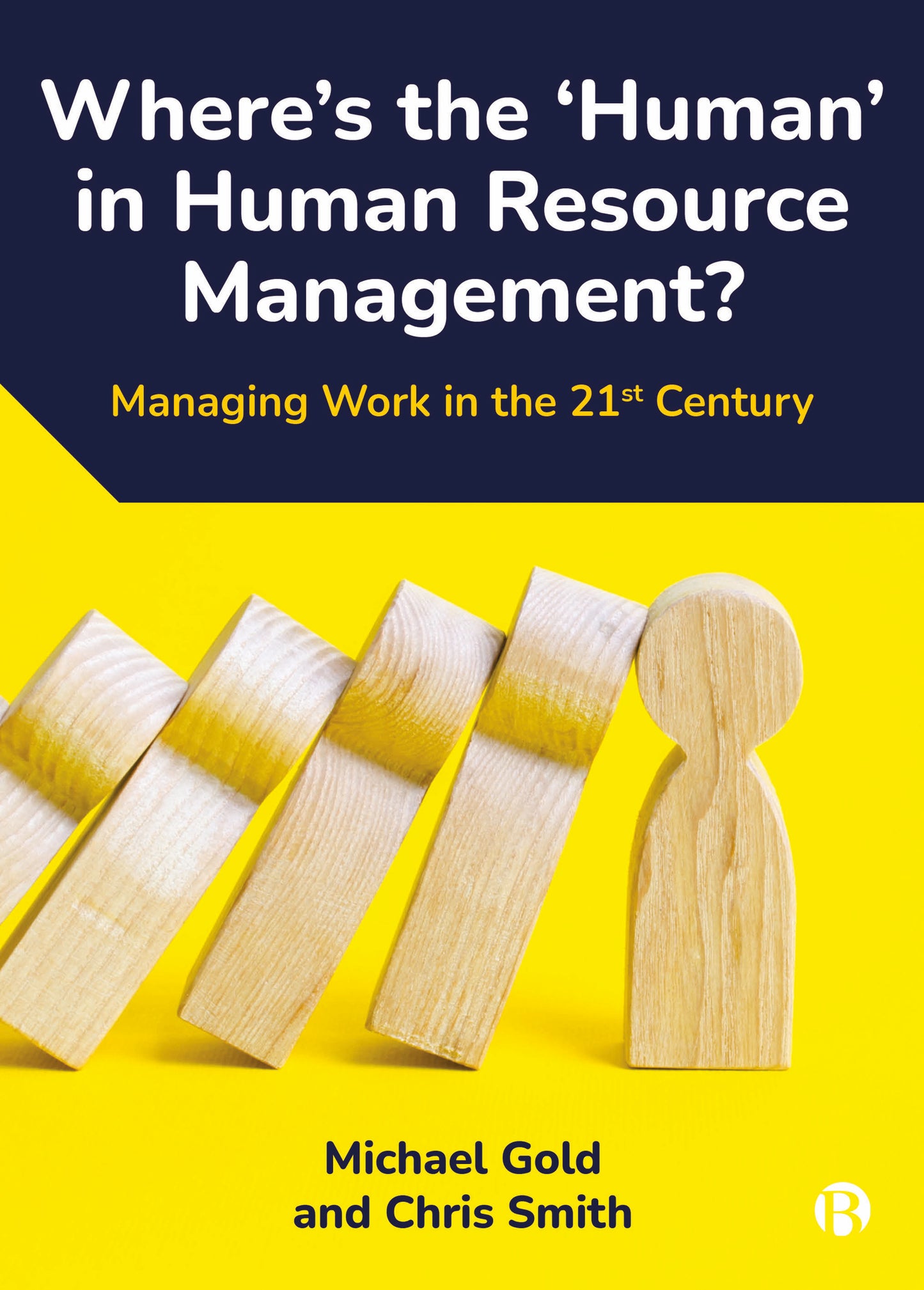
We all have to work to pay the bills – but what influence do we really have over our pay and working conditions? The emergence of the global economy, digital technologies, mass migration, gig work and zero hours contracts have thrust this question to the forefront of HRM. So how can we keep the ‘human’ in human resource management faced by these pressures?
This book adopts a critical approach to today’s major workplace challenges. It turns traditional HRM on its head by placing workers’ perspectives towards the workplace alongside those of managers to create an HRM textbook for the 21st century. Written by two experienced and research-active authors, the book:
• locates control of labour costs and productivity at the heart of HRM policy and practice;
• covers key issues that are overlooked in many textbooks, including conflict and resistance, the ‘new’ unitarism, migration and the challenges of Artificial Intelligence;
• adopts a critical approach that will appeal more to students who don’t wish to become traditional managers;
• includes current examples and case studies from the international world of work and business that will bring the subject to life.
This is a comprehensive one-stop resource for students and lecturers alike.

"This innovative and refreshing new HRM textbook takes the point of view of workers who experience HRM rather than that of managers who are trying to implement it." Adrian Wilkinson, Griffith University
"At last, an open-eyed and honest account of human resource management in contemporary society! This book dismantles the false binary between HRM and employment relations, which prevails in so many business schools, and shows why a sociological analysis of control and conflict in the employment relationship is essential. Gold and Smith provide a stylish and authoritative account, arguing that HRM is fundamentally shaped by labour cost and productivity pressures. The book threads through all the big contemporary issues of global labour market trends, digital technologies and inequalities, and also explores changing attitudes towards worker engagement, home working and fulfilling work. The stimulating company examples of HR practice provide further urgent and compelling reasons for students and practitioners to try to put the human back into HRM before it is too late!" Damian Grimshaw, King's College London
"This is a highly stimulating book that provides structured knowledge about HRM, but at the same time makes academics and practitioners think outside of the box. The analyses and practical examples cover the core topics of HR strategy, as well as issues that are too seldom dealt with in textbooks, such as workplace conflicts or the potential and dangers of new technologies like artificial intelligence and HR analytics." Martin Krzywdzinski, WZB Berlin Social Science Center
Michael Gold is Emeritus Professor of Comparative Employment Relations at Royal Holloway University of London. His work focuses on employee participation, industrial relations theory and self-employment, as well as on employment policies across the member states of the EU.
Chris Smith is Emeritus Professor of Organization Studies and Comparative Management at Royal Holloway University of London. His interests are in labour process theory, knowledge transfer through the transnational firm, comparative analysis of work and employment, and professional labour.
Detailed Contents
List of Boxes, Figures and Tables
List of Abbreviations and Acronyms
Notes on the Authors
Acknowledgements
Introduction: Where’s the ‘Human’ in Human Resource Management?
Part 1: Where We’ve Been…
1. What’s HRM Really About?
2. What’s So Special About HR Strategy?
3. The Employment Relationship
4. Conflict and Resistance at Work
5. Societal Contexts and Global Trends
6. Trade Unions
7. Management Styles
Part 2: Where We’re Heading…
8. The ‘New’ Unitarism
9. Flexible Working
10. Services and Aesthetic and Emotional Labour
11. Migrant Workers
12. Corporate Social Responsibility
Part 3: What All This Means for HRM
13. Recruitment and Social Networks
14. Discrimination and Diversity
15. Pay and Rewards
16. Employee Participation and Involvement
17. Training and Development
18. Work–Life Balance
19. Artificial Intelligence and HR Analytics With Yu Zheng
Summary and Conclusions
Case Studies
List of Films About Human Resource Management
Glossary of Key Concepts
References
Names Index
Subject Index