


Some error occured while loading the Quick View. Please close the Quick View and try reloading the page.
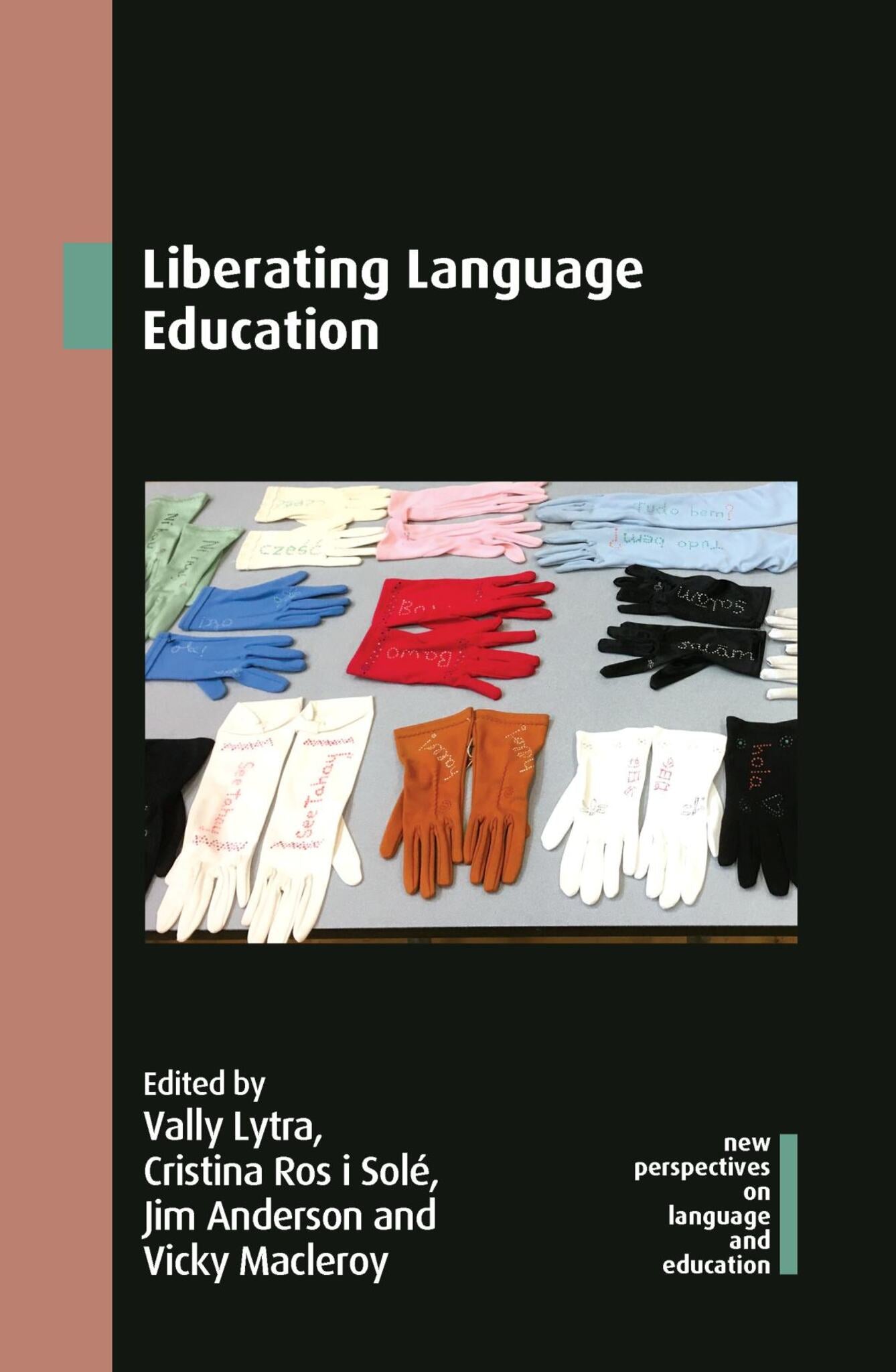
This book responds to a growing body of work in sociolinguistics and applied linguistics that places an emphasis on situated descriptions of language education practices and illuminates how these descriptions are enmeshed with local, institutional and wider social forces. It engages with new ways of understanding language that expand its meaning by including other semiotic resources and meaning-making practices and bring to the fore its messiness and unpredictability. The chapters illustrate how a translingual and transcultural orientation to language and language pedagogy can provide a point of entry to reimagining what language education might look like under conditions of heightened linguistic and cultural diversity and increased linguistic and social inequalities. The book unites an international group of contributors, presenting state-of-the-art empirical studies drawing on a wide range of local contexts and spaces, from linguistically and culturally heterogeneous mainstream and HE classrooms to complementary (community) school and informal language learning contexts.

Vally Lytra is Reader in Languages in Education and Head of the MPhil/PhD Programme in Education at Goldsmiths, University of London, UK. Her research interests include multilingualism, community and minority languages education and inclusive language pedagogies.
Cristina Ros i Solé is Lecturer in Language, Culture and Learning at Goldsmiths, University of London, UK. Her current research focus is situated at the interface between language, identity and material culture where she investigates the relationship between multilingual speakers’ ordinary collections and their identities.
Jim Anderson is Visiting Research Fellow in the Department of Educational Studies at Goldsmiths, University of London, UK. His work focuses on theories and methods of second language learning and bilingualism, multilingualism and new literacies, and language policy.
Vicky Macleroy is Reader in Education and Head of the Centre for Language, Culture and Learning at Goldsmiths, University of London, UK. Her research interests focus on language development and multilingualism, multiliteracies and digital storytelling, and transformative pedagogy.
Contributors
Vally Lytra, Cristina Ros i Solé, Jim Anderson and Vicky Macleroy: Introduction: Why Liberating Language Education?
Part 1: Policies, Discourses and Ideologies
Chapter 1.Thomas Quehl: 'I don’t think we encourage the use of their home language…': Exploring ‘Multilingualism Light’ in a London Primary School
Chapter 2. Ambarin Mooznah Auleear Owodally: Recognising the Creole Community: Discursive Constructions of Enslavement and the Enslaved in Kreol Textbooks in Mauritius
Chapter 3. Cátia Verguete: Appropriating Portuguese Language Policies in England
Chapter 4. Vally Lytra: Making Sense of the Internal Diversities of Greek Schools Abroad: Exploring the Purposeful Use of Translation as Communicative Resource for Language Learning and Identity Construction
Ana Souza: Commentary for Part 1
Part 2: Language-Living: Materialities, Affectivities and Becomings
Chapter 5. Nuria Polo-Pérez and Prue Holmes: Languaging in Language Cafés: Emotion Work, Creating Alternative Worlds and Metalanguaging
Chapter 6. Eszter Tarsoly and Jelena Ćalić: Language Studies as Transcultural Becoming and Participation: Undoing Language Boundaries across the Danube Region
Chapter 7. Cristina Ros i Solé: The Textures of Language: An Autoethnography of a Gloves Collection
Simon Coffey: Commentary for Part 2
Part 3: Transcultural Journeying and Aesthetics
Chapter 8. Jim Anderson: Visual Art in Arabic Foreign and Heritage Language-and-Culture Learning: Expanding the Scope for Meaning-Making
Chapter 9. Maria Charalambous: Creating Pedagogical Spaces for Translingual and Transcultural Meaning-Making and Student Agency in a London Greek Complementary School
Chapter 10. Koula Charitonos: Opening Spaces of Learning: A Sociomaterial Investigation of Object-Based Approaches with Migrant Youth in and beyond the Heritage Language Classroom
Chapter 11. Dobrochna Futro: Translanguaging Art: Exploring the Transformative Potential of Contemporary Art for Language Teaching in the Multilingual Context.
Alison Phipps: Commentary for Part 3
Part 4: Voices, Identities and Citizenship
Chapter 12. Yu-chiao Chung and Vicky Macleroy: How Weird is Weird? Young People, Activist Citizenship and Multivoiced Digital Stories
Chapter 13. Gabriele Budach, Gohar Sharoyan and Daniela Loghin: ‘Animating Objects’: Co-Creation in Digital Story Making between Planning and Play
Chapter 14. Jessica Bradley, Zhu Hua and Louise Atkinson: Visual Representations of Multilingualism: Exploring Aesthetic Approaches to Communication in a Fine Art Context
Kate Pahl: Commentary for Part 4
Vally Lytra, Cristina Ros i Solé, Jim Anderson and Vicky Macleroy: Conclusion: Language Education Collages
Index