


Some error occured while loading the Quick View. Please close the Quick View and try reloading the page.
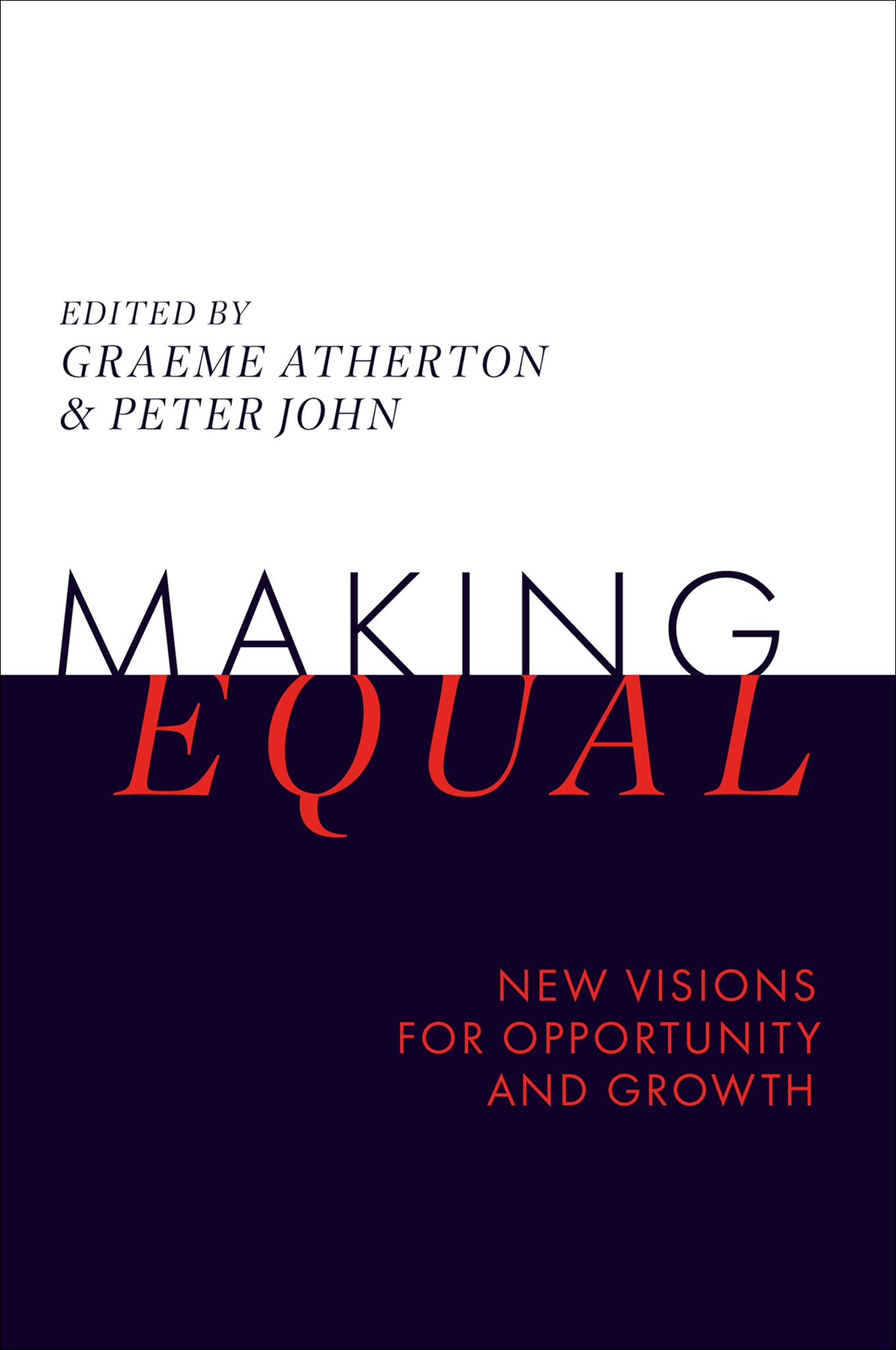
Presenting new, challenging solutions to the severe problem of inequality in the UK, Making Equal brings together a wide range of senior respective figures across the fields of politics, academia and the voluntary sector to outline their visions of how a less unequal Britain could be created and why doing so now is an economic and moral imperative for the nation.
Ideas outlining how welfare, the criminal justice system, education and skills, the regional distribution of power and how the economy itself needs to be rewired, are presented by ex-Ministers, academics, university leaders and heads of charities. The chapter authors analyse the extent of social and economic inequality in the UK, critique present approaches to addressing inequality and identify key principles, a future research agenda and an over-arching policy approach to addressing inequality and its consequences. The chapters are drawn in the main from contributions to the Ruskin College, Oxford Seminar Series and Making Equal celebrates the 125th anniversary of the formation of the college.
Transcending disciplines and bringing together a range of diverse experts, Making Equal is a valuable resource for anyone interested in understanding and addressing inequality in the UK.

Levelling Up is widely recognized failed as policy in the UK. ‘Making Equal: New Visions for Opportunity and Growth’ considers what lessons can be learnt and what might be done differently with cogent views from across the political spectrum. A century ago something similar happening in the UK, the 1920s were time of failure, but by the 1930s the idea that Special Areas needed an Act of Parliament to help them was accepted. In these pages we may be seeing history and consensus repeat.
Graeme Atherton is Associate Pro-Vice-Chancellor for Regional Engagement of the University of West London and Vice-Principal of Ruskin College, Oxford.
Peter John is Vice-Chancellor of the University of West London and Principal of Ruskin College, Oxford. He was awarded a CBE in 2020 for his outstanding services to higher education.
Foreword; Peter John
Chapter 1. Introduction: Inequality and breaking with the norm; Graeme Atherton
Section 1 – Creating opportunity from birth
Chapter 2. The birth of injustice; Philip Collins
Chapter 3. ‘It’s human capital, stupid’; David Blunkett
Chapter 4. The coordination conundrum: Three core policy principles for post-16 education and training; James Robson
Chapter 5. Inequality and lifelong learning; Jonathan Michie
Chapter 6. “Social mobility and the Ministry of Poverty”; John Bird
Section 2 – Higher education – the driver of growth and opportunity
Chapter 7. Higher education expansion as a growth strategy; Steve Coulter
Chapter 8. Shaping higher education: Driving economic prosperity and sustainability through engineering and technology; Hilary Leevers
Chapter 9. Equal opportunities, equal outcomes and higher education: Choice or circumstance?; Peter John
Chapter 10. Leading in place: The value of a holistic approach to driving social mobility and regional development; Kathryn Mitchell, Larissa Allwork, and Gaynor Davis
Section 3 – Making places matter
Chapter 11. A question of scale: Refocusing policy towards tackling neighbourhood level inequality; Matt Leach
Chapter 12. Pulling together, a cross-sector collaboration approach to tackling inequality; Ian Taylor
Chapter 13. Investing in regional equality: How are international success factors playing out in the UK?; Abigail Taylor
Section 4 – Growth, the economy and the role of business
Chapter 14. Why a failure to address inequality fails us all; Nigel Wilcock
Chapter 15. The role of co-operative growth in reducing inequality in Britain; Daniel Monaghan
Chapter 16. Social mobility and business regulation; Andy Boucher
Chapter 17. Tech for good: From disparity to opportunity; Nimmi Patel
Chapter 18. Britain’s 21st Century Challenge: Employers Must Drive Social Mobility Too; Justine Greening
Section 5 – Labour and inequality – past, present and future
Chapter 19. Labour’s long march for equality: A continuing incompleteness, a continuing struggle; Hilary Armstrong
Chapter 20. Inequality Street? Realism and Riots in the 2024 UK General Election and After; Rupa Huq
Chapter 21. Labour: Past, present, future and the 2024 general election; Jon Cruddas
Chapter 22. Conclusion; Graeme Atherton