


Some error occured while loading the Quick View. Please close the Quick View and try reloading the page.
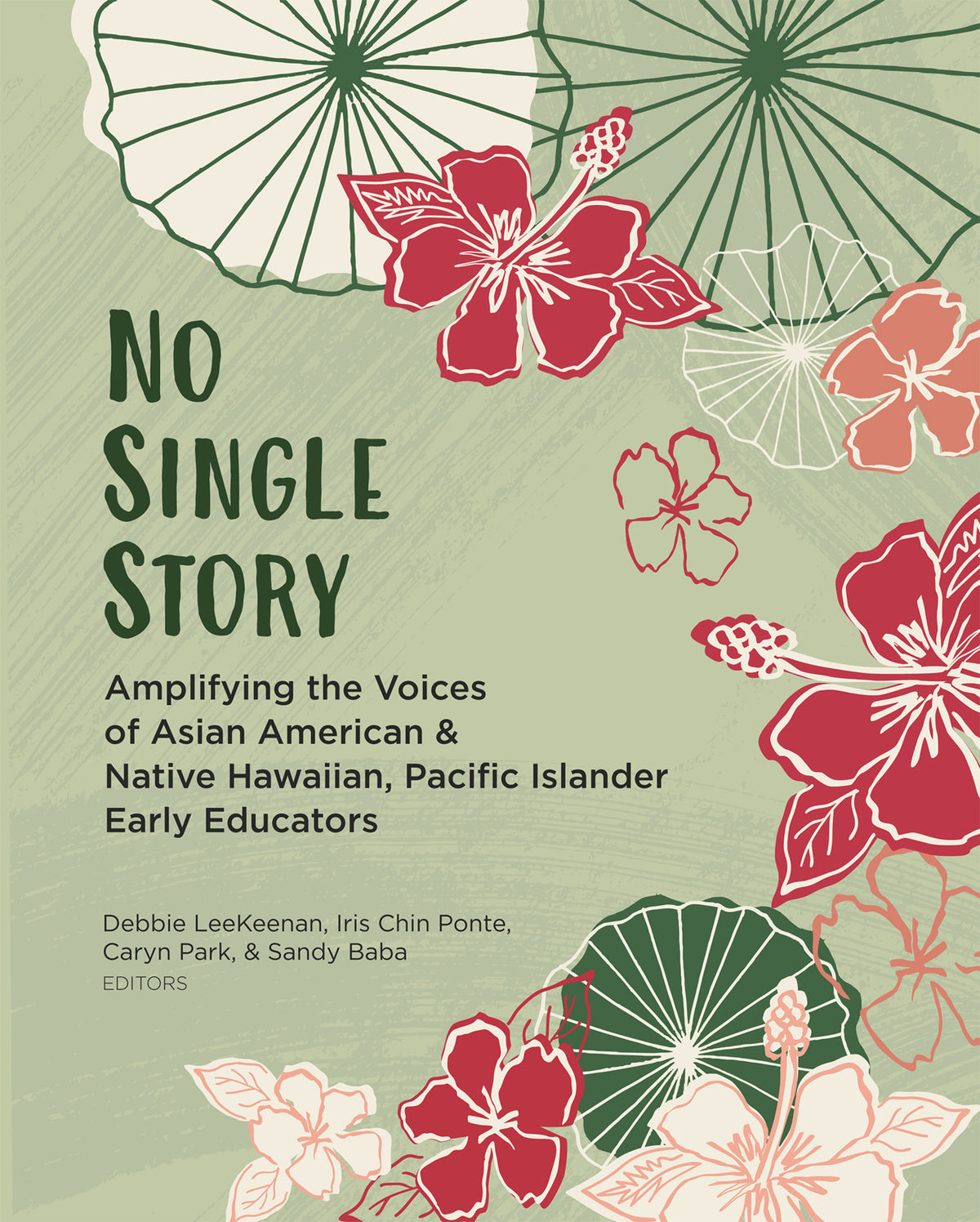
We all have a story—every educator and every child . . .
Early childhood education professionals belong to a rich and vibrant community. In No Single Story, a diverse group of Asian American and Native Hawaiian, Pacific Islander (AANHPI) early childhood educators share their stories and how their experiences have shaped them as professionals.Through their words, be inspired to tap into your own story, culture, and identities to better understand how they influence your practice and, ultimately, the lives of each and every child you teach.
Highlights include
- A foreword by Michelle Kang, chief executive officer of NAEYC
- Individual stories and insights into early childhood education from over 30 members of the AANHPI early childhood education community, including teachers and administrators
- Discussions on
- Teaching practice within the framework of anti-bias education
- The importance of language, history, family, and culture
- How advocacy can make a difference
Look for professional development resources online at NAEYC.org/no-single-story.

No Single Story refuses the flattening of Asian American, and Native Hawaiian, Pacific Islander educators into a single narrative. Through vivid accounts of migration, language reclamation, disability, intergenerational care, racialization, and leadership, this extraordinary collection reveals educators as knowledge holders, culture bearers, and architects of just futures. Fierce, tender, and urgently needed, it expands what counts as expertise—and challenges us to prepare, support, and stand beside the educators who shape children's earliest understandings of who they are, whose stories matter, and where they belong.
—Mariana Souto-Manning, PhD, President and Irving and Neison Harris President’s Chair, Graduate School in Child Development, Erikson Institute
No Single Story is a much-needed deep dive into the complexities of ethnic and cultural identity development. It is a powerful and moving read. The authors' stories and reflections explore the intertwining dynamics of their lived experiences as individuals, part of a family, and part of a community, as well as the impact of the historic and current social-political contexts in which those lived experiences took place.Furthermore, the authors share how their work as early childhood educators affected their understanding of themselves and how this new understanding influenced their teaching. I wholeheartedly recommend it to people who want to explore their own identity journeys more fully.
—Louise Derman-Sparks, Anti-Bias Education Author, Teacher, and Consultant
No Single Story is a primer on belonging, authentically claiming that one's own cultural ways of being are deeply rooted in past generations and projected forward as guidance to future generations living in constantly changing environments. Each author offers an intimate perspective on the effort required for healthy reclamation of one’s own space and how to use that centeredness for the greater good.
—Jerlean Daniel, Former Executive Director of NAEYC, and Co-Chair, NAEYC Black Caucus Interest Forum
No Single Story embodies the developmental principle of universality without uniformity. These educators' stories invite us to listen without reducing them to labels and help us appreciate the distinctive ways each person brings who they are to the care and education of young children.
—Junlei Li, Saul Zaentz Senior Lecturer in Early Childhood Education, Harvard Graduate School of Education
Debbie LeeKeenan is codirector of Anti-Bias Leaders ECE (www.antibiasleadersece.com),a lecturer, and author. She has been in the field for over 50 years, a former preschool, special education, and public school teacher. She was director of the Eliot-Pearson Children's School at Tufts University and a member of the early childhood faculty at Tufts University, Lesley University, and the University of Massachusetts in Amherst. Debbie is the producer of two award-winning anti-bias education films. Her work has been published in numerous journals and books, including Young Children, Exchange, and Theory Into Practice, From Survive to Thrive: A Director's Guide for Leading an Early Childhood Program, and Leading Anti-Bias Early Childhood Programs: A Guide to Change, for Change. Debbie is Chinese American, the child of immigrant working-class parents, and part of a mixed-race family.
Iris Chin Ponte, PhD, is the director and a classroom teacher at the Henry Frost Children's Program in Belmont, Massachusetts. She is an adjunct faculty member in the Graduate School of Education at Lesley University. Recognized as an Exchange Emerging Leader in 2015, Iris is a former Fulbright Scholar with expertise in cross-cultural issues in education in the United States, United Kingdom, Taiwan, China, Japan, and Newfoundland. She has published in the topics of children and technology, behavior management, children's play, outdoor environmental design, early education program leadership and birth parent reunions, and heritage trips for adoptees in China. Dr. Ponte has received professional recognition from the Children's Defense Fund, CBS, and the American Educational Research Association. Dr. Ponte was also awarded the Thomas J. Watson IBM Fellowship.
Caryn Park, PhD, is nearing her 30th year as an educator and has taught in early childhood and higher education classrooms, mentored and coached preservice and in-service educators, and served as an anti-bias/anti-racist education consultant and workshop facilitator for schools and parents. Her primary areas of interest include qualitative research and teacher inquiry, supporting immigrant and multilingual learners, teacher identity and pedagogical development, and social emotional learning for students and educators. Her interest in social emotional learning and mental health in particular hasmost recently led her to pursue licensure in marriage and family therapy. Caryn is an immigrant from South Korea, a mom of two young adult children, and lives in the beautiful Pacific Northwest.
Sandy Baba, PhD, is a researcher and practitioner specializing in early care education and family service development. Her work includes leadership of statewide and national quality rating and improvement initiatives and the development of a culturally responsive family engagement framework for low-income Asian American immigrant families, recognized by the US Department of Education. Dr. Baba's current work is artificial intelligence (AI) focused, examining the responsible application of artificial intelligence in human services and workforce development. Her scholarly and applied pursuits emphasize human-centered coaching and mentoring approaches that support social service practitioners, with particular attention to mental health support, reflective practice, and professional resilience. In 2008, she founded the NAEYC AANHPI Interest Forum with colleagues to advance the global early childhood workforce. She currently serves as vice president of the board of directors for the Council for Professional Recognition.
Acknowledgments
About the Authors and Contributors
Foreword|Michelle Kang, NAEYC CEO
About This Book
Part 1: Where to Start
Chapter 1: Marginalized and Privileged, Labels and Identity: Our Book Journey
Chapter 2: It's Complicated: A Conversation with our Native Hawaiian and Pacific Islander Authors|Kamalei Brandon, Donna Elizabeth Kaleiokalani Reid-Hayes, Nicol Russell, Sala Sataraka, Alethea Kuulei Serna, Charis-Ann F. Sole, and Jordan A. Taitingfong
Part 2: Knowing Who You Are
Chapter 3: Learning from Our Relations: Blood, Bone and Built, Centering Disability| Jordan Taitingfong
Chapter 4: Learning Myself through the Eyes of Others| Caryn Park
Chapter 5: Searching for Who You Are: Three Generations of Educators | Kira LeeKeenan and Debbie LeeKeenan
Chapter 6: Weaving a Lei of Kuleana, Empathy, and Commitment|Donna Elizabeth Kaleiokalani Reid-Hayes
Chapter 7: My Journey: Koko Samoa and Community|Sala Sataraka
Chapter 8: Envisioning Just Futures Through My Phoenix Eyes| Jamie Cho
Chapter 9: Koʻu ʻInoa, ʻO Wau Kēia: My Name,This is Who I am, The Shaping of My Kanaka Ōiwi Identity|Alethea Ku'ulei Serna
Chapter 10: Immigrating to America: A Filipina's Story| Rosemarie Rideout
Chapter 11: Access to Education: A Refugee Immigrant's Journey| Bick Hang
Chapter 12: Being Asian in America: Connecting Stories through Generation and Time| Lisa Luke Lee
Part 3: Connection to Our Practice
Chapter 13: Journey of Belonging: Resilience and Perseverance Among Asian Educators| Jerry Yang, Sang eun Choi, Sarah Fong, Bandi Lim Park, Josephine Pulido, Edna Vargas, and Yanling Zhao
Chapter 14: Indigenous Home Visiting: A Sustainable Approach to Culture and Language Reclamation for NHPI Families Away from Our ‘Āina | Kamalei Brandon
Chapter 15: Tūtū and Their Moʻopuna Reimagining Early Childhood Education Through Intergenerational Relationships, Culturally Grounded Pedagogy, and Power Sharing| Charis- Ann Sole
Chapter 16: Dual Language Learners in Early Childhood| Xyzlora Brownell
Chapter 17: Grief, Growth, and a New Life in Education| Manju Kumari
Chapter 18: Fitting in and Standing Out: Why We are Pairing Our Stories Together|Misa Okayama and Yuji Uchida
Chapter 19: Beyond the Single Story Writing Curriculum as a Freedom Practice|Sarah Elahi
Chapter 20: Filipino Storytime: Reclaiming My Identity by Building Community| Clare Juico
Chapter 21: Suda [수다] on Korean American Teacher Educators’ Lived Experiences| Sohyun Meacham, Jinhee Kim, Su Jeong Wee and Sophia Han
Part 4: Advocacy and Leading for Change
Chapter 22: Bringing My Whole Self to the Classroom: A Native Hawaiian Perspective on Identity in Early Childhood Education| Nicol Russell
Chapter 23: Empowering Early Childhood Educators: My Journey as a Korean Migrant Teacher-Educator in the Pacific| Shin Ae Han
Chapter 24: Diversity will Sustain the Educational Profession: Reflections of a Bi-ethnic Preschool Teacher| Iris Chin Ponte
Chapter 25: Homeless Shelters to Congress: My Unexpected Journey in Early Childhood Advocacy| Sandy Baba
Chapter 26: The Roller Coaster of Identity: Belonging, Loss, Reclamation| Ninderjit Gill
Chapter 27: A Journey to Be Seen and Heard: A Story of Identity, Resilience, and Reclaiming Belonging|Sim Loh
Chapter 28: My Ancestors’ Wildest Dreams: A Legacy Project|Jackie Thu Hu'o'ng Wong
Chapter 29: Like the Koa Tree: Leading with Purpose and Resilience|Theresa F. Lock
Closing Thought
Index
Online components
References
Professional Development Resources