


Some error occured while loading the Quick View. Please close the Quick View and try reloading the page.
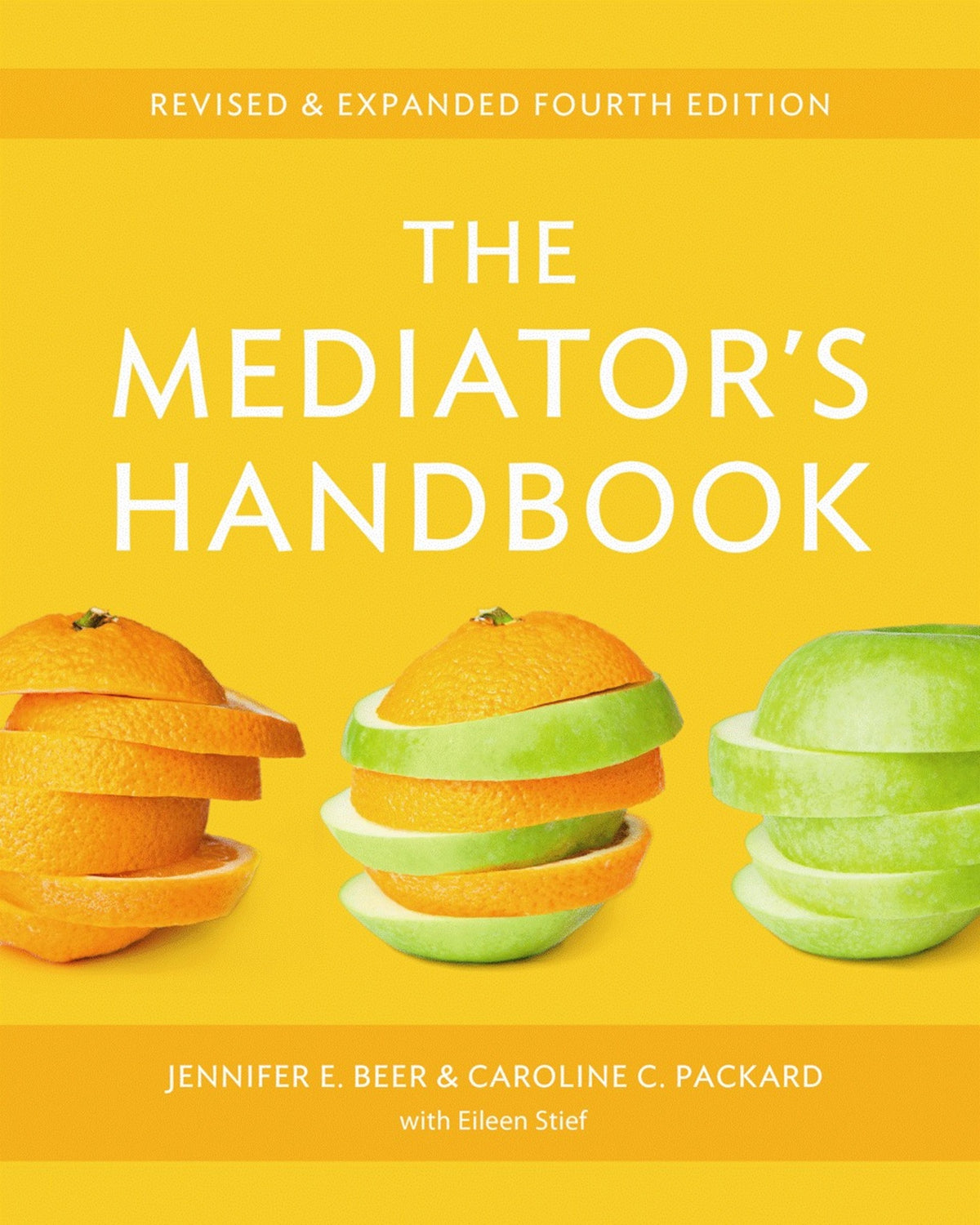
Resolve workplace and community conflicts with proven mediation frameworks that achieve 85% success rates. Professional mediators reveal step-by-step processes used in thousands of successful mediations, from family disputes to corporate negotiations, with complete guidance for both new and experienced practitioners.
Why Professional Mediation Skills Are Essential:
Litigation costs average $50,000-200,000 per workplace dispute. Mediation resolves 85% of conflicts at under $5,000 while preserving relationships and preventing recurring issues.
What You'll Master:
- Five-phase mediation process - systematic approach that works across all conflict types
- Advanced communication techniques - defuse emotion and focus on underlying interests
- Multi-party dispute strategies - manage complex organizational and family conflicts
- Cultural competency methods - navigate diverse community mediation successfully
- Professional development pathways - certification requirements and career advancement
Real-World Applications:
Used by Fortune 500 companies, family courts, and community organizations worldwide. Practitioners report 90%+ client satisfaction and 65% reduction in recurring conflicts.
Master the skills that turn adversaries into allies. Essential for HR professionals, managers, community leaders, and anyone who deals with conflict.

"Can you really make the classic book in its field even better? In this book, authors Jennifer Beer and Caroline Packard prove that, when it comes to mediation, the answer is a resounding "Yes!" This new edition of The Mediator's Handbook provides new tools, new scripts, and new frameworks that will assist experienced practitioners and novices alike. Based on up-to-date research foundations from anthropology, psychology, and behavioral neuroscience, the authors take us by the hand and lead us step-by-step through the mediation process, suggesting concrete strategies to help people in conflict work through difficult emotions to actionable ideas for resolving their disputes. Bravo!"
— G. Richard Shell, Thomas Gerrity Professor of Legal Studies and Business Ethics at the Wharton School of Business and author of Bargaining for Advantage: Negotiation Strategies for Reasonable People
"The fourth edition of The Mediator's Handbook continues to improve upon everything that made the original edition a success: user-friendly explanations for every step of the mediation process, starting with what mediation is, to dealing with the most difficult situations that can arise in the course of a dispute. While the Handbook presents itself as being for mediators, those who should have a copy of the Handbook on their shelf include lawyers representing clients in litigation, human resources executives, managers of complex international infrastructure projects, or school counselors dealing with difficult teenagers. In short, The Mediator's Handbook is a comprehensive and practical guide for anyone who regularly deals with conflict."
— Michael McIlwrath, co-author of International Arbitration and Mediation:A Practical Guide, and host of the podcast "International Dispute Negotiation"
"Plenty of mediation books will give you the kind of language ordinary mediators use - the same language we are used to hearing from other helping professions, such as lawyers, and therapists. What these authors let us in on - is the secret language of outstanding mediators. They generously share hundreds of examples of carefully chosen phrases mediators can use at every step that make the difference between knowing what needs to happen next in mediation, and being able to make it happen."
— Hideaki Irei, Associate Professor, Faculty of Law, Kyushu University
"The upgrades done to the 4th edition make it a VERY usable manual and I will most definitely recommend it to anyone looking for this kind of manual. When I run my course next year this will be THE manual I have students buy."
— Jonathon Rudy, Elizabethtown College, Global Peacemaking Scholar-in-Residence
"The Mediator's Handbook is the basic primer for anyone who is seriously interested in resolving conflicts constructively. I have used it in my classroom for the last twenty years.This new edition gives us even more insights and practical suggestions for how to deal with the complexity of disputes in many different kinds of situations. Beer, Packard and Stief are masters in the mediation field and have much to offer us. An essential addition to the current scholarship and practice."
— Susan Sgorbati, Jones Chair for Social Activism, and former Dean of Faculty, Bennington College
"The Mediator's Handbook continues to be solid, and speaks to the needs of the participants."
— Mohammed Abu-Nimer, Ph.D., International Peace and Conflict Resolution, School of International Service, American University
Dr. Jennifer E. Beer, PhD, combines mediation experience with her cultural anthropology background to lead courses and workshops in mediation, conflict resolution, and cross-cultural communication. She regularly teaches a negotiation course at Wharton (University of Pennsylvania). Author of the Mediator's Handbook and of Peacemaking in Your Neighborhood, she has mediated conflicts and facilitated meetings for communities and organizations for 30 years. She lives in Pennsylvania.
Caroline C. Packard, JD, is an organizational change and conflict response specialist and mediator with 30 years' experience in the field. A graduate of Yale College and NYU School of Law, and a former corporate litigator with extensive formal training in individual and group psychology, Caroline has a special interest in the evolutionary psychology of group conflict and cooperation. She provides mediation and conflict-resolution services and training to organizations, families, and family businesses. She lives in the United States
Eileen Stief developed the mediation process and principles documented in The Mediator's Handbook, and trained a generation of mediators to work with community, multi-party, and environmental disputes. Now retired, she led the Friends Conflict Resolution Program's experiment in community dispute settlement and later specialized in environmental mediation. She lives in the United States.
Elizabeth Elwood Gates provided the delightful cartoon illustrations in honor of her aunt, Ann Richan, who was a passionate champion of community mediation.
Preface
Overview
What is mediation?
A useful tool
What makes mediation work?
The mediator's role
The anatomy of the mediation process
The anatomy of a session
Process-centered mediation
Guiding principles
Mediation terms
THE PROCESS
Getting to the Table
Can mediation help this situation?
How people find a mediator
Voluntary or mandatory?
Initial conversations
Do they want to participate?
Defining the scope
Approaching the other parties
Should I be the mediator?
Pre-mediation agreements and review
Choosing a location
The Mediation Session Part I: Exploring the Situation
Preparing yourself, co-mediators
Setting up
Opening
Opening: Welcome & warm-up
Opening: Logistics
Opening: Orientation
Opening: Participants' role, willingness
Listening to Each Perspective
The Exchange
The Exchange: Facilitating
The Exchange: Tasks & flow
Clarify information
Check out interpretations
Listen for their concerns
Example + impact
Restate their interests
Note other relevant interests
Encourage empathy and reconciliation
Transition to Reaching Resolution
Separate Conversations
Uses for Separate Conversations
Breaking for Separate Conversations
Separate Conversations: Template
The Mediation Session Part II: Reaching Resolution
Reaching Resolution
Reaching Resolution: Sequence
Topic List
Topic List: Why it is crucial
Topic List: Drafting
Topic List: Wording
Midpoint check-in
Options
Options: Together come up with ideas
Options: Gut, interests, workability
Options: Reality testing
Decisions
Decisions: Gut, interests, workability
Decisions: Emotions, hesitations
Writing the Agreement
Writing the Agreement: Specifics
Writing the Agreement: Positive framing
Closing
Afterwards: Wrapping up
Multiple sessions
THE TOOLBOX
Understanding Conflict
Disputes & conflicts
Metaphors for understanding conflict
The conflict core
Common effects of conflict
The pleasures of conflict
When things heat up
The way out is through
The Conflict Triangle
People, Process, Problem
Which mode are you in?
Supporting the People
Supporting the people: Main skills
Setting the tone
Level of formality, taking notes
Confidentiality in practice
Giving your full attention
Elements of full attention
Acknowledging
Handling judgmental remarks
Protecting
From adversarial mode to cooperative mode
Avoid this Kettle of Fish
Attending to comfort & accessibility
Language and hearing difficulties
Working with people in all their variety
Finding commonalities
Scenarios: Emotionally difficult situations 111
Facilitating the Process
Facilitating the process
Impartial facilitation
Structuring the session
Structuring the discussion
When you can be directive
When to consult
Keeping on track
Crafting questions
Crafting questions: Word with care
Crafting questions: Spin it positive
Crafting questions: Follow up for clarification
Kinds of rewording
Reflecting back
Summarizing
Summarizing: Its many uses
Working visually
When to intervene
When to intervene: Stopping the momentum
When to intervene: Slowing the process down
Is it time to quit?
Ending a mediation
Scenarios: Facilitation challenges
Solving the Problem
Participants' starting point: Power & rights
Changing the "positions" mindset
Interests
Layers of interests
Why interests matter
Finding space for solutions
Reframing
Checking out (mis)interpretations
Lies, perceptions, deceptions
Plain description of facts and needs
Flip it! ? Outcome-focused interests
Tactful wording of interests and topics
Summary of interests
Topic List examples
Eliciting ideas: Brainstorming
Eliciting ideas: Opening up possibilities
Can mediators suggest options?
Visual aids for making decisions
Types of resolution
"Typical" or "good enough" resolutions
What-ifs
Fallbacks: Contingencies, uncertainties
Step-down agreements: Smaller scope
When there's no agreement
Final review: Workability
Final review: Future
Sample agreements
Scenarios: problem-solving challenges 173
Going Further
Going further
Adapting the process
Mediating with children & teens
Mediating across generations
Mediating family conflicts
Mediating employee conflicts
Participant evaluation
Mediator evaluation of a mediation
Evaluating yourself
The Handbook "soup pot"
Authors & contributors
Organizational support
Index