


Some error occured while loading the Quick View. Please close the Quick View and try reloading the page.
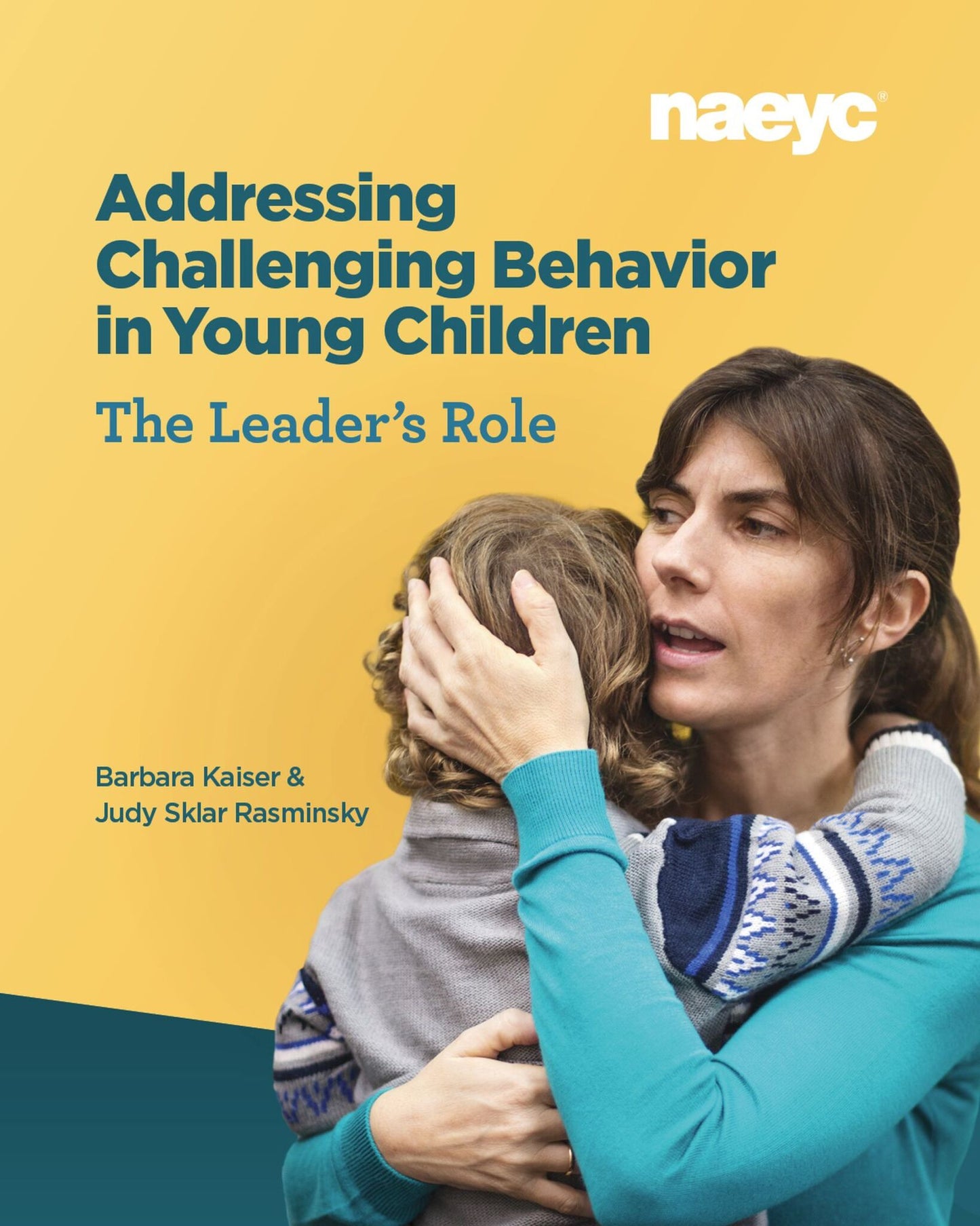
Why do children behave the way they do? And why do teachers respond to children’s behavior the way they do? And what can you do to support all of them?
There is no single script or one right answer. But with the realistic and practical strategies in this book, directors and administrators of early childhood programs and principles of schools can develop the skills to build a team that works together to support all children and staff. Topics include
- Defining your role as a leader and creating a positive social climate
- Recognizing the messages children are communicating with their behavior
- Examining the effects of your own and teachers’ biases and expectations on behavior
- Guiding teachers to develop strategies for preventing and responding effectively to challenging behavior, focusing on building relationships
- Collaborating with families
- Understanding the effects of trauma on behavior and implementing trauma-informed practices
Your support and guidance can make all the difference in the ability of teachers, children, families, and the program itself to flourish.

— Mary Graham
Barbara Kaiser is the coauthor of Challenging Behavior in Young Children (now in its 4th edition) and Meeting the Challenge. She has taught at Acadia University in Nova Scotia and at Concordia University and College Marie-Victorin in Montreal, Canada, and presented workshops, keynote speeches, and webinars on challenging behavior in the United States, Canada, and throughout the world. Barbara acted as chief consultant for the Mr. Rogers’ Family Communications project Challenging Behaviors: Where Do We Begin? and for Facing the Challenge, an instructional DVD produced by the Devereux Center for Resilient Children. Barbara also developed an intervention to address youth violence; created webinars and guides on bullying for the Nova Scotia Department of Education; and founded and directed two early childhood centers and an after-school program in Montreal. She has given webinars on leadership and on supporting children, families, and staff returning to school and child care programs during the COVID-19 pandemic. Barbara has an MA from McGill University.
Judy Sklar Rasminsky is a freelance writer who specializes in education and health. With coauthor Barbara Kaiser, she has written Challenging Behavior in Young Children and Challenging Behavior in Elementary and Middle School, which both earned Texty awards from the Text and Academic Authors Association; and Meeting the Challenge, a bestseller selected as a comprehensive membership benefit by NAEYC. In addition, the team has authored a guide for Canadian parents, The Daycare Handbook, and a fact book for educators on HIV/AIDS. Judy’s work has appeared in publications such as the Reader’s Digest and the Los Angeles Times, been anthologized in textbooks, and honored by the National Institutes of Health. For many years an editor and researcher for book publishers in New York, London, and Montreal, she holds a BA from Stanford University and an MA from Columbia University.
Introduction
- What’s in This Book?
- How We Came to Write a Book for Leaders
- Dedication
Chapter 1: Defining Yourself as a Leader
- Understanding Your Journey
- Learning to Lead
- How Do You Define Your Role?
- What Is Your Vision?
- What Leadership Style Works Best
- When Challenging Behavior Occurs?
- Getting to Know You
- Enhance the Climate
- Think About It
- For Further Learning
Chapter 2: What Is Challenging Behavior?
- Why Children Behave Inappropriately
- Risk Factors for Challenging Behavior
- For Further Learning
Chapter 3: How a Child with Challenging Behavior Impacts Your Leadership Skills
- Finding Ways to Welcome a Child with Challenging Behavior
- Being in the Classroom
- When Differences Arise
- Building a Team
- Developing a Common Approach Challenging Behavior
- For Further Learning
Chapter 4: Developing a Behavior Guidance Policy
- Start with Your Vision and Mission
- Focus on Prevention
- Intervention Strategies
- The Role of Families
- Supporting Staff
- Mental Health Consultation
- Collecting Data
- Exclusion
- For Further Learning
Chapter 5: Enabling Your Staff to Act
- Helping Staff to Understand Themselves
- The Amygdala Hijack
- Dealing with Stress
- Culture and Teachers’ Expectations
- Implicit Bias
- Using Data
- For Further Learning
Chapter 6: The Power of Prevention
- The Influence of Social Climate
- Physical Space
- Making Things Run Smoothly
- Teaching Strategies
- For Further Learning
Chapter 7: Why Change Is So Difficult
- Recognizing the Need for Change
- Why Do Educators Resist Change?
- Collaborate, Collaborate, Collaborate
- What Can You Do About Resistance?
- Implementing Change
- Take Care of Yourself
- For Further Learning
Chapter 8: The Role of Professional Development
- Begin with Your Staff
- A Learning Climate
- Create a Professional Development Policy
- Leaders Should Take Part, Too
- Looking for Professional Development Options
- How Can Staff Share Their Learning with Their Colleagues?
- For Further Learning
Chapter 9: Facing the Reality of Challenging Behavior
- How Does Your Staff Feel About Having a Child with Challenging Behavior in the Program?
- Getting Your Staff on Board
- Should the Child Remain in the Program?
- What About Moving the Child or the Teacher to Another Classroom?
- Supporting Teachers When There’s a Child with Challenging Behavior
- How Can Staff Meetings Help?
- When Is It Time to Call in Reinforcements?
- For Further Learning
Chapter 10: Working with the Family
- Open Communication Is Important
- Meeting with the Family
- The Role of Implicit Bias and Culture in Teacher–Family Interactions
- How Should You Handle Disagreements with the Family?
- What About Suggesting
- Families Seek Outside Help?
- How Do You Work with the Families of the Other Children?
- Is There a Better Alternative to Your Program?
- For Further Learning
Chapter 11: Helping Teachers Respond Effectively to Challenging Behavior
- Why Punishment Isn’t Effective
- Helping Your Staff Find Effective Alternatives
- The Importance of Responding to Early Signs of Challenging Behavior
- Several Effective Strategies
- When a Child Loses Control
- For Further Learning
Chapter 12: Functional Assessment and Positive Behavior Support
- How Does Functional Assessment Work?
- Observing Children with Your Teachers
- Creating a Behavior Support Plan
- Using Functional Assessment and a Positive Behavior Support Plan: Ryan
- For Further Learning
Chapter 13: Trauma‑Informed Practice
- What Is Trauma?
- What Can Trauma Do to the Brain?
- What Can Administrators and Teachers Do?
- Create a Safe, Predictable Environment
- Help Teachers to Develop Their Resilience
- Choosing Trauma‑Sensitive Care
- For Further Learning
Appendices
- Appendix 1: Sample Guidance Policy
- Appendix 2: Behavior Incident Report
- Appendix 3: Blank A‑B‑C Observation Chart
- Appendix 4: Ryan’s A‑B‑C Observation Chart
- Appendix 5: Ryan’s Behavior Support Planning Chart
References
Index
About the Authors
Acknowledgments