


Some error occured while loading the Quick View. Please close the Quick View and try reloading the page.
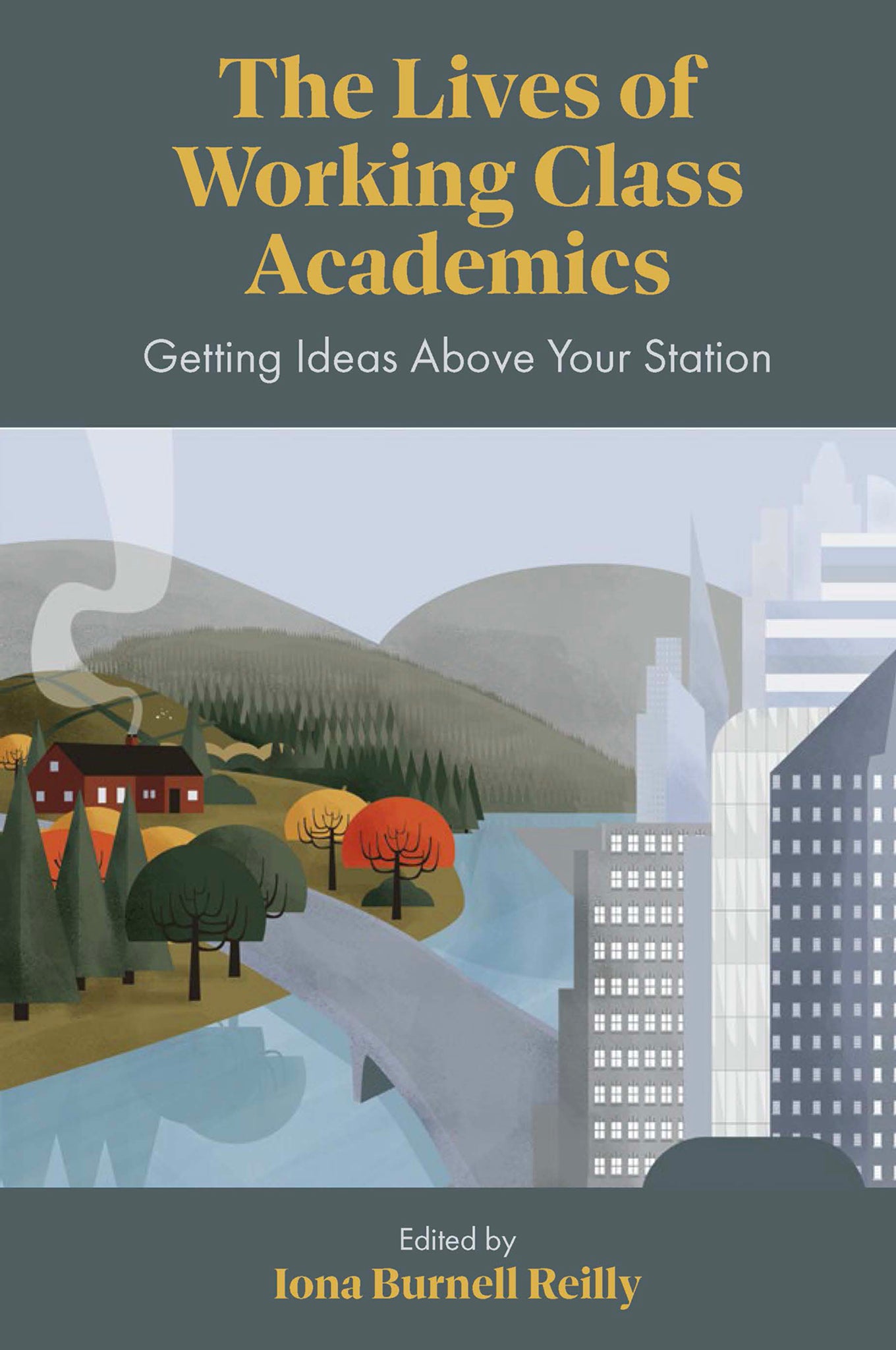
Traditionally academia has been seen as an elite profession, for those with an academic background and from the middle/upper classes. This is what makes the life of a working class academic all the more interesting, rich and powerful. How have they become who they are in an industry steeped in elitism? How have they navigated their way, and what has the journey been like? Do they continue to identify as working class or has their social positioning and/or identities shifted?
Iona Burnell Reilly presents a collection of autoethnographies, written by working class academics in higher education – how they got there, what their journeys were like, what their experiences were, if they faced any struggles, conflicts, prejudice and discrimination, and if they had to, or still do, negotiate their identities. Told in their own words the academics chart their journeys and explore their experiences of becoming an academic while also coming from a working class background.
Although a working class heritage under-pins the autoethnography of each of the writers, the interlocking sections between class, race, gender and sexuality will also be relevant.

This compelling anthology of stories from academics who identify as having a working-class background offers new insights into our understanding of the relationship between academia and class.
Offering a substantial contribution to the body of research that uses autoethnography, the volume opens a platform for academic authors to reflect on their own lived experience through critical study of oneself and one’s own socio-cultural context. The book is a useful resource for autoethnographic research and readers who want to understand the lived experiences of becoming a higher education professional; they will see farther and more clearly through the authors’ lenses.
Although a working-class heritage under-pins the autoethnography of each of the writers, the intersections of social class with race and gender are also explored, providing in-depth knowledge about personal journeys into academic life.
While the legacy of elitism remains in higher education, and with very little history or class culture in the field of higher education to identify with, the volume can, give voice to and authenticate their experiences, and more importantly, challenge the dominant discourses that maintain and perpetuate elitism and exclusion within higher education.
The collection provides a solid foundation for students and academics, of important questions being asked about transitioning into academic life.
Iona Burnell Reilly is a Senior Lecturer at the School of Education and Communities at the University of East London. Iona’s teaching background is in Further Education where she taught English (ESOL) and Access to HE courses for 10 years. She completed her doctorate at The University of Sheffield in 2013. Her research interests and published work are in social class and inequality in education, widening participation, equality and inclusion in higher education, and the experiences of working class students in higher education.
Chapter 1. Navigating the Relational Character of Social Class for Capitalism in the Academy; Alpesh Maisuria
Chapter 2. Mr. Airport Man & the Albatross: A reverie of flight, hope and transformation; Craig A. Hammond
Chapter 3. Power, corruption and lies: fighting the class-war to widen participation in higher education; Colin McCaig
Chapter 4. ‘Friends First, Colleagues Second’: A collaborative autoethnographic approach to exploring working-class women’s experiences of the neoliberal academy; Carli Rowell and Hannah Walters
Chapter 5. Coming to terms with the academic self: place, pedagogy and teacher education; ML White
Chapter 6. The Rubik’s Cube of Identity; Khalil Akbar
Chapter 7. Uptown Top Ranking: From a Council Estate to the Academy; Marcia A. Wilson
Chapter 8. One’s Place and the Right to Belong; Iona Burnell Reilly
Chapter 9. Who do you think you are? The influence of working class experience on an educator in a process of becoming; Peter Shukie
Chapter 10. John Constable was my first art teacher: Construction of desire in a working-class artist/academic; Samantha Broadhead
Chapter 11. Class is a verb: lived encounters of a minority ethnic academic who self-identifies with aspects of working-class cultures in the UK; Stephen Wong
Chapter 12. Reading the posh newspapers; Teresa Crew
Chapter 13. Thames Estuary Academic; Jo Finch
Concluding chapter: Tackling ‘the taboo’: the personal is political (and it’s scholarly too); Michael Pierse