


Some error occured while loading the Quick View. Please close the Quick View and try reloading the page.
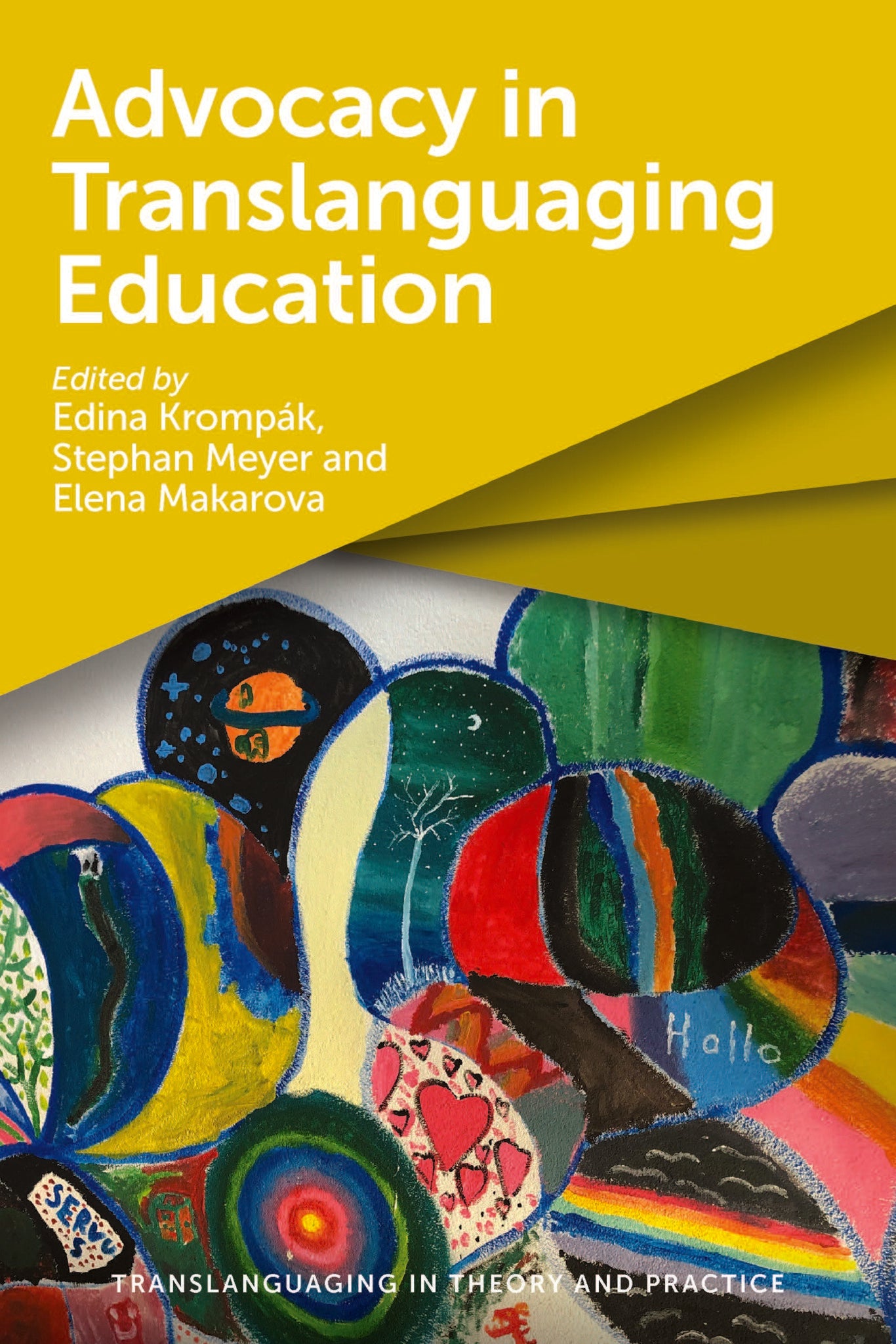
Vigorously advocates for realising translanguaging’s transformative potential in education.
This book examines diverse aspects of advocacy for translanguaging as a legitimate educational practice. It advances a practical theory of the translanguaging of education that is informed by deliberative advocacy and based in evidence. Combinations of quantitative and qualitative research from preschool to higher and adult education in different parts of the world give insight into current translanguaging strategies and pedagogies.
From translanguaging and transsemiotising in subject lessons such as Mathematics and Geography, to transdisciplinary engagement with poetry and music beyond the classroom, the findings contribute to the development of a practical theory of translanguaging in education, and demonstrate how translanguaging plays a part in everyday language learning and language use.
This book is open access under a CC BY ND licence.

Edina Krompák is Professor of Educational Sciences and Head of the Institute of Language Learning and Teaching and Educational Linguistics at the University of Teacher Education Lucerne as well as lecturer at the University of Basel, Switzerland. Her research encompasses the relationships between linguistic landscape and educational spaces, translanguaging in education, language and identity, and multimodality in language learning and teaching.
Stephan Meyer is Head of English and coordinator of Arabic, Chinese and Japanese at the Language Centre at the University of Basel, Switzerland, where he teaches English as an academic lingua franca and promotes multilingualism in higher education. His interests include academic discourse, transsemiotisation and social theory.
Elena Makarova is Professor of Educational Sciences and Director of the Institute for Educational Sciences at the University of Basel, Switzerland. Her research focuses on development, learning and teaching in the face of heterogeneity in the school context, inclusion and exclusion processes due to origin, and gender in educational settings and developmental trajectories.
Contributors
Chapter 1. Stephan Meyer, Edina Krompák and Elena Makarova: Towards a Practical Theory of the Translanguaging of Education: The Significance of Evidence-Based Deliberative Advocacy
Part 1: Translanguaging Strategies and Practices in Education
Chapter 2. Sonya Maechler-Dent and Catherine Blons-Pierre: Implementing Translanguaging in an Assessment-Based Education System: The Emerging Challenges for a Multilingual Primary School in the Canton of Zurich, Switzerland
Chapter 3. Gabriela Steffen and Audrey Freytag-Lauer: Translanguaging for Subject Knowledge Construction: Meso-Alternation in Swiss Plurilingual Education
Chapter 4. Rachel Bowden, Jean Claude Dushimimana, Innocente Uwineza and Alphonse Uworwabayeho: The Potential of Translanguaging for Pedagogical Research and Development in Rwanda
Chapter 5. Aysel Kart: Self-Regulated Translanguaging Strategies of Multilingual Students in Upper Secondary School in Austria
Chapter 6. Elizabeth J. Erling, Felicitas Siwik, Katharina Haslacher and Anouschka Foltz: Have Preservice English Teachers Embraced Translanguaging? Insights from Austria and Germany
Chapter 7. Holli Schauber and Slavka Pogranova: An Exploratory Case Study of Translanguaging Practices in a Primary and Secondary School Teacher Training Context in Switzerland
Chapter 8. Verbra Pfeiffer: Translanguaging as a Pedagogical Resource in Multilingual Classrooms in South Africa: Influence of Home Language on the Academic Writing of L2/L3 Preservice University Student Teachers
Chapter 9. Claudine Kirsch and Džoen Bebić-Crestany: Researching Translanguaging in Literacy Activities in ECE Centers in Luxembourg: Insights into Qualitative Methods and Ethical Considerations
Part 2: Translanguaging in Transregional and Transdisciplinary Educational Spaces
Chapter 10. Adrian Blackledge and Angela Creese: Translanguaging and Poetry
Chapter 11. Karin van der Worp and Itxaso Etxebarria Lekanda: Translanguaging in Cross-Border University Collaborations: Enhancing Linguistic Diversity
Chapter 12. Philipp Saner: Translanguaging in Music: Exploring Transmusicking among Experimental Musicians
Chapter 13. Chiara Facciani: Translanguaging and Education: Questioning Migrant Speakers’ Perceptions Regarding Translanguaging Practices
Chapter 14. Irène Zingg: Beyond Marginalized Multilingualism(s): What Perspectives Does the Concept of Translanguaging Offer for the Teaching and Learning of Heritage Languages?
Chapter 15. Ofelia García: Afterword: Translanguaging Voices that Stand for Themselves
Index